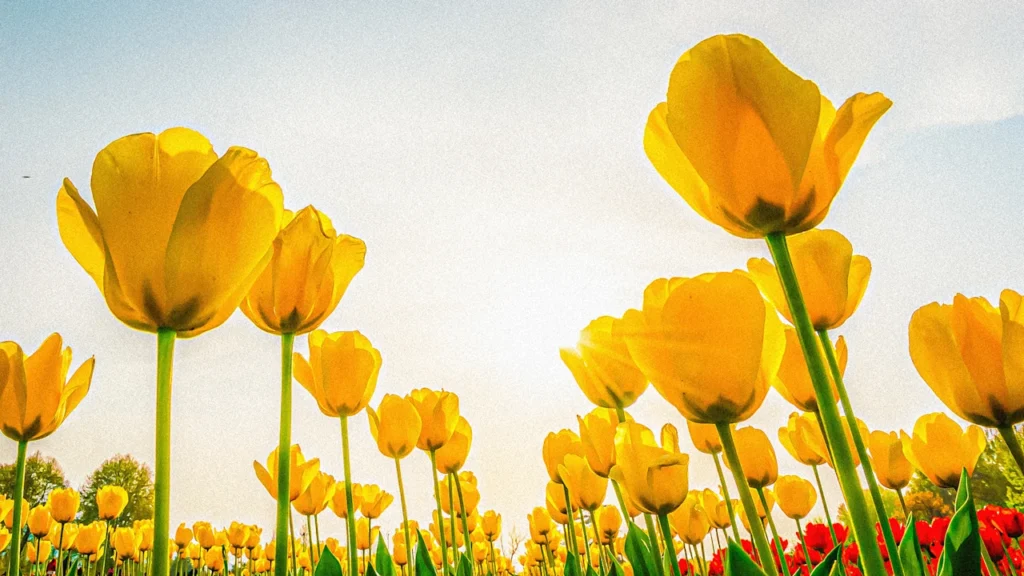
Spring is a glorious, warm season after the harsh cold of winter—filled with light and more sun-induced vitamin D.
Friday, March 20, 2026 (at exactly 10:46 a.m. ET), marks both its triumphant return in the Northern Hemisphere and the spring equinox.
Get ready for longer days, warmer weather, and flower blooms that may cause sneezes. Let’s take a deeper look at the science behind seasons and what exactly an equinox is.
What causes the seasons?
The tilt of the Earth’s axis as it orbits around the sun causes seasons. Different parts of the world receive different amounts of sunlight depending on that angle.
In the Northern Hemisphere, we experience winter from December to March, while the Southern Hemisphere soaks up the sun. They get their turn to be cooler in our summer, during June, July, and August.
Why does the first day of spring fall on different days?
Even though a year is 365 days long, it actually takes 365.25 days for the earth to travel around the sun.
Those extra hours add up, causing the need for a leap year every four years. This also messes with calendaring. The spring equinox can fall anywhere between March 19-21 as a result.
What is an equinox?
The word equinox comes from the Latin words aequus and nox, meaning equal and night.
During the exact moment of this biannual astronomical occurrence, the tilt of Earth’s axis is perpendicular to the Sun-Earth line right above the equator.
This causes a roughly equal day and night.
Before the spring equinox, the sun’s rays slowly move northward. After the spring equinox, they continue moving north of the equator, building to the summer solstice. From there, the rays change direction and head south again for winter.
What is the difference between a solstice and an equinox?
A solstice and an equinox are seasonal counterparts, opposite celestial occurrences that complement each other through contradiction.
A solstice marks the extreme tilt of the Earth’s axis, causing the longest and shortest days of the year. An equinox evens the day and night out.
What spring events can you look forward to?
The season of more sunshine brings with it special events to anticipate.
On the West Coast, the infamous outdoor concert palooza, the Coachella Valley Music and Arts Festival, takes place April 10–12 and 17–19 in Indio, California.
Brave the heat and the porta potties to see artists such as Sabrina Carpenter, Justin Bieber, the Strokes, and more this year.
Those on the East Coast can look forward to the fashion of the annual Met Gala, which takes place on May 4.
The museum exhibit that coincides with the gala will celebrate “Costume Art” and attendees of the big night are asked to dress in the theme of “Fashion Is Art.”
Coincidentally, a long-anticipated movie sequel loosely based on Met Gala co-chair Anna Wintour, The Devil Wears Prada 2, hits theaters on May 1.
For those East Coasters who aren’t into fashion, consider taking a trip to our nation’s capital to see the National Cherry Blossom Festival in Washington, D.C., beginning March 20 through April 12.
However you choose to celebrate, spring has sprung!