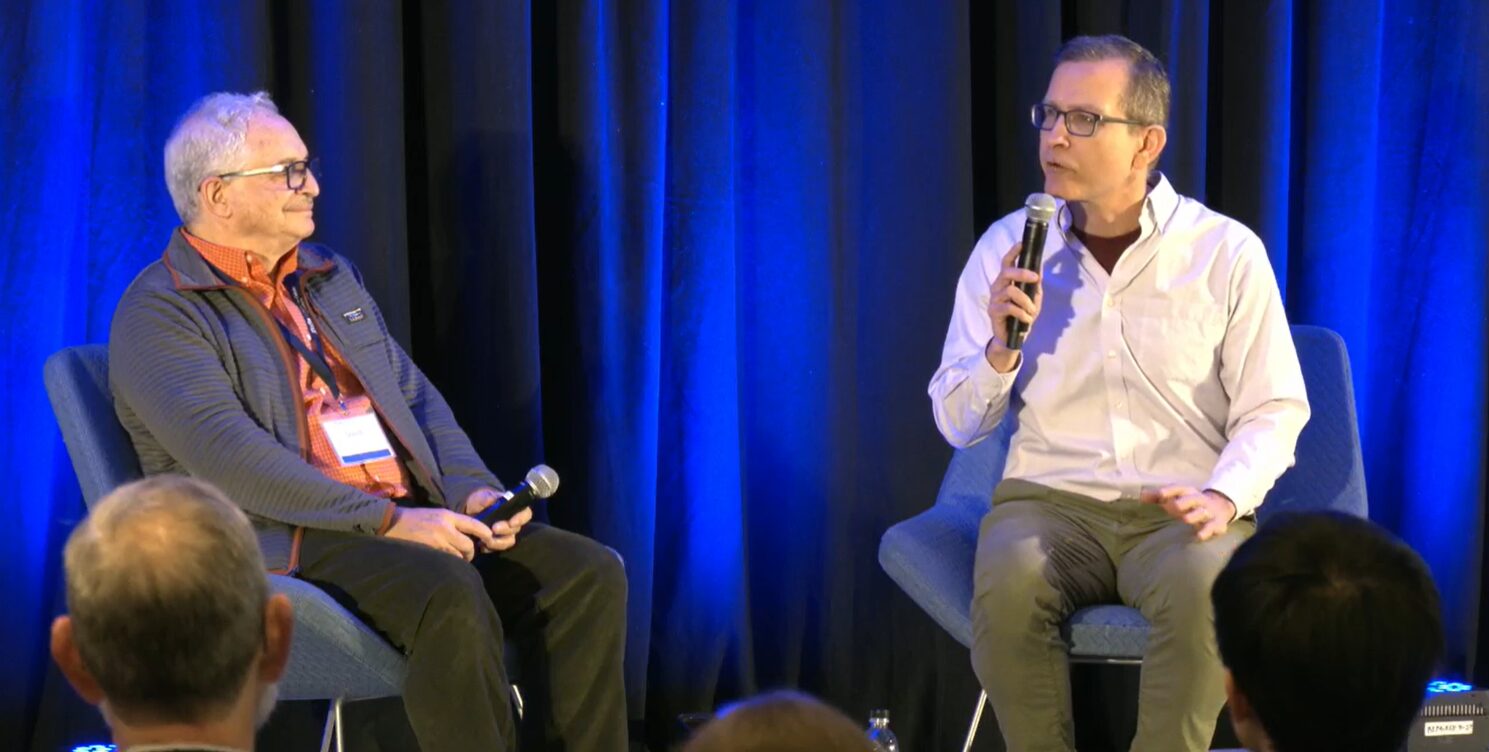
In what at times sounded like a group therapy session, foodtech leaders assembled at the Tufts Future of Food Innovation Day in Boston spoke candidly about a “harrowing” year of funding pullbacks, painful pivots, and what comes next.
For Tender Food, which recently rebranded as Lasso after raising $6.5 million to take its fiber spinning tech beyond alt meat into snacks and pet food, CEO Mike Messersmith said he faced a stark choice last year: “There was no money for me to continue raising on a sub small scale plant-based meat company in the year 2025. That path is over… and you’ve got to deal with that reality.”
He added: “When you start an email [to an investor] with, ‘Hey, I’m Mike from a plant-based meat company in Boston,’ it’s like, ‘delete.’ No one’s putting $10 in today on the hopes of getting $12 back in six years.
“And so… [it was a case of] can I reframe the conversation about the technology because, unfortunately, we got to a place in 2024 and 25 where nobody cared about the throughput or the COGS or the opportunity in plant-based meat. Just saying that phrase was a nonstarter for a lot of funds.
“So [it was a case of] what else can we do? What other categories would benefit from fundamentals of what this fiber spinning technology can create? So let’s start looking at snacking applications because that is a giant category that is fundamentally changing. Can we make something that is high protein, high fiber and clean label?”
‘I felt hollowed out’
Aryé Elfenbein, cofounder at cell-cultivated seafood startup Wildtype, one of a handful of firms to have secured regulatory approval and launched products on the market, albeit at a tiny scale, added: [The technology] actually does work. And yet the paradox is that all these companies are running out of money, and we certainly are not exempt from that.
“This has been a harrowing last year. I, in many ways, have felt hollowed out from what we’ve endured, even after FDA approval. We’re in a place right now that feels like, I wouldn’t say it’s a valley of disappointment. It’s a valley of what’s next.
“I think what will come out of that is a kind of hope and optimism, because if you play the tape forward, in the case of seafood, are the oceans going to be any cleaner or more sustaining in the next 20,30, years? Is it getting any better? Of course not. And so I actually don’t know what the world looks like without some of what we’re creating here actually working.”
Scaling out, not up
To move forward, however, firms in this space need to work out how to scale out, as well as up, he said.
“For a long time, people are just kind of like, what volumes are you working with? What size tanks do you have? We need to find a way to scale this out… how we can make a modular, scaled out version of this that is able to achieve the textural complexities… not just some enormous slurry that somehow gets turned into different products.
“For us, just thinking about producing 1% of all the seafood in the world; we’d need all of the steel tanks in the world to do that. And so there needs to be another way.”
Plant cell culture: ‘exceptionally cheap’ vs animal cell culture
For fellow startup California Cultured, which grows plant cells in low-cost bioreactors, plant cell culture is an easier pitch in the current funding environment, said VP of science at technology Steven Lang, PhD.
Firms in this space are looking to debut with high-value botanicals for which there is already an established market, but traditional supply chains are under pressure. California Cultured, for example, is starting with high flavanol cocoa powder before moving to conventional cocoa powder, coffee and cocoa butter, he explained. “High flavanol is one that will allow us to charge a premium and then we can use that profit to put back into our R&D and beat down the COGS for our next products.”
Plant cell culture is “exceptionally cheap compared to animal cell culture,” claimed Lang, who previously led bioprocess development at cultivated meat firm UPSIDE Foods. “And then you have the societal and consumer demand side. The yuck factor is going to be much less of a problem for plant-derived products [vs cultivated meat] just because the complexity is much less. And then also, then you have this societal pushback that we’re seeing from the Cattleman’s Association. Plant cell culture products have avoided that completely, so I think there are lots of advantages.”
The focus now, he said, is nailing down the process. “I come from a biopharmaceutical background, where the process is the product.”
“In 2026, leading with social good and environmental impact is a tricky sell. You will find your people, but if you’re looking for scaled ubiquity and impact, unfortunately, I don’t know that that is the thing you need to lead with. “Mike Messersmith, CEO, Lasso
The politics of protein
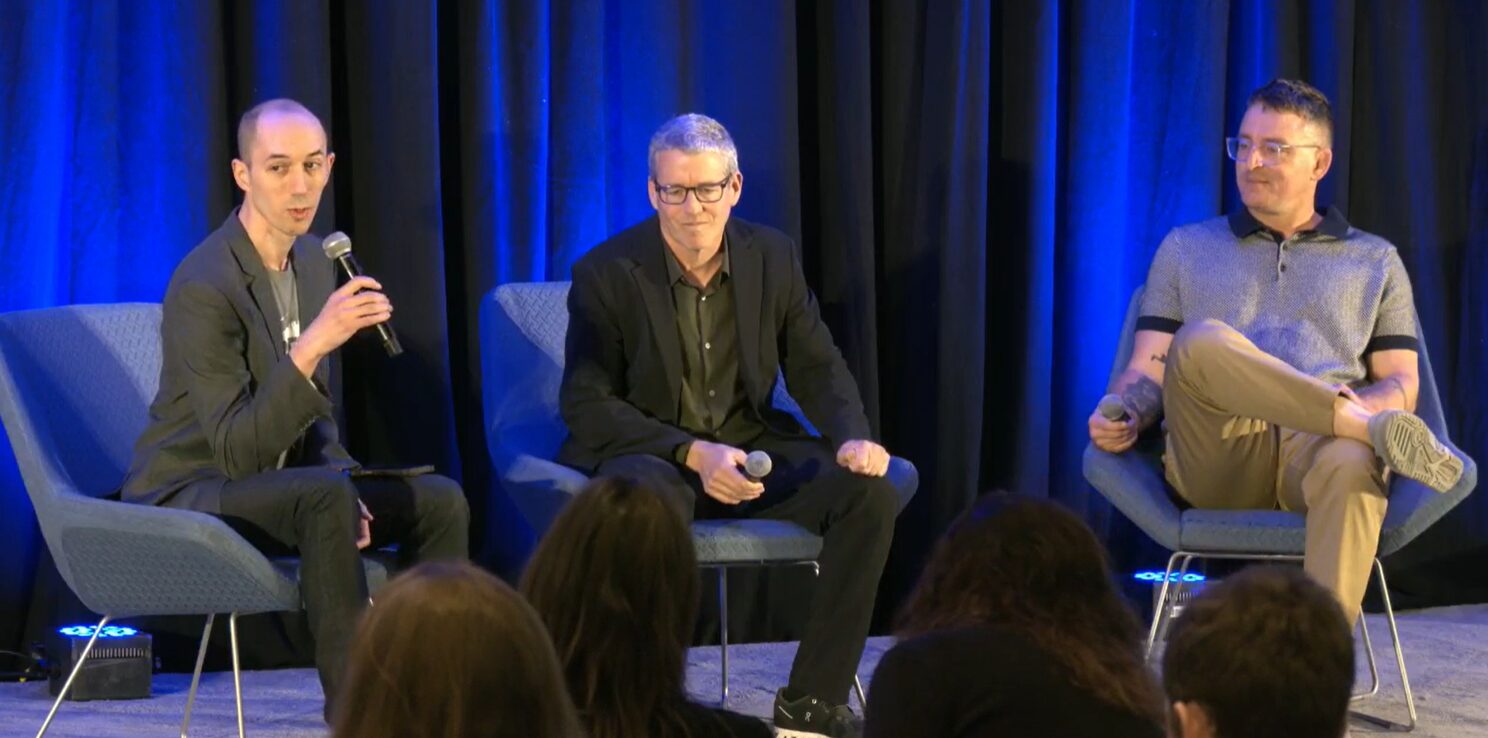
Earlier in the day, political economist Jan Dutkiewicz and ‘We are eating the Earth’ author Mike Grunwald addressed the challenges facing the alt protein industry in the US in an increasingly hostile political environment.
Grunwald, who argued that animal agriculture is a leading driver of climate change and deforestation, antibiotic resistance, and habitat destruction, said regulation was required to “change the incentives for what we produce and how we produce it.”
He added: “I’m not saying we should hamstring factory farms so they can’t exist. I’m saying they should be regulated like factories. To the extent that we can treat agriculture like any other business, that would be a step forward in public policy. Factory farms… can dump their poop wherever they want, they treat animals badly, they treat people badly, they use too many antibiotics, and there are a pandemic risk. Yet they’re exempt from just about all environmental regulations. They don’t have to keep track of their chemicals, they don’t have to report their emissions. They’re exempt from overtime laws and labor laws and even the laws governing how many hours a trucker can drive without taking a break, as there’s an exemption for agricultural deliveries.”
Dutkiewicz added: “If you were to build a condo right across the street that housed 2,000 people, and then you just said, we’re just not going to run plumbing, that would be unthinkable. But factory farms don’t have to run plumbing. They have manure lagoons into which manure is dumped. If you were to close that loophole, the per unit cost of mass producing let’s say pigs would go up tremendously, which would change the calculus for people going into the pig business.”
Government funding
Moderator Daniel Blaustein-Rejto, director of food & ag at think tank The Breakthrough Institute, however, noted that “there doesn’t seem to be much appetite to further regulate the agricultural industry” and that increasing costs for farmers such that the price of meat reflected its “true [environmental] cost of production” was not likely to win much political support.
In this environment, alt proteins only have a hope of competing if they can reach taste and price parity with conventional meat, which is going to take time and money, said Grunwald. And while the cultivated meat sector has suffered some recent setbacks, writing off a completely new industry before it even gets out of the starting blocks is premature.
“People talk about how $3 billion has already been spent on cultivated meat … but we invested $500 billion in the solar industry just last year, and solar has been around for 50 years, and it didn’t take off until 10 years ago. So I think we’re still early with alternative proteins, but I’m still very bullish about them as a better solution.
“Human beings are not that awesome at changing our behavior to save the planet, but we’re really good at inventing stuff and solving existential problems. And so to the extent that we treat these problems as really big problems, and set hundreds of great scientific and engineering minds to it, you know, I assume things will get better.”
Dutkiewicz added: “If you look at any major tech industry, so many individual components came out of decades of investment by government and decades of research in national labs and public institutions, until the basic science was done.”
Twiddling at the margins: ‘You’re never going to have a carbon neutral cow’
As for arguing whether money should go to alt proteins or tech to make animal ag less environmentally destructive, it’s a false dichotomy, said Grunwald. Reducing the impact of animal ag may be “twiddling at the margins,” but is better than nothing, he said.
Denmark, for example, is pursuing both goals, he noted, “But they’re not going to shut down their dairy industry and their pork industry; they have some of the most efficient farms on the planet. Shutting them down would just outsource production to the developing world where it would use even more land.”
But we shouldn’t kid ourselves, insisted Dutkiewicz, noting that “low impact beef” from cows fed additives to reduce methane emissions was “still orders of magnitude more emitting than, let’s say, soybeans. We really need to be putting our efforts into meat reduction or the promotion of a ‘Bean New Deal,’ cellular agriculture, or plant based. You’re never going to have a carbon neutral cow or a sustainable factory farm.”
Food security
In a fireside chat at the opening of the event, Good Food Institute founder Bruce Friedrich said he remained optimistic for alt proteins, adding that, “The private sector has been a little tough this year, but everything else has been on fire. How we get to success, which at GFI, we define as products that are priced and taste competitive, is [developing] a maximally robust scientific ecosystem. And how we create the maximally robust scientific ecosystem from which the industry can spring is through government support for these technologies.
“And over the last year, government support is deepening in India, Israel, Brazil, Korea, Japan, China, a bunch of countries across Europe, including Germany.”
He added: “All of these governments are funding science. None of them are doing it for climate or biodiversity or global health or hunger and malnutrition, they’re all doing it for food self-sufficiency, food security, food systems resilience… Our pitch to governments is that this is a multi-trillion dollar opportunity that can help you move toward food self-sufficiency.”
GFI: ‘MAHA RFK Jr focus on protein not obviously bad’ for alt protein
Despite the grim funding environment, he said, “We are much further along than I think anybody would have had the right to hope just 10 years ago.” Meanwhile, “The MAHA RFK Jr focus on protein is not obviously bad for us,” he postulated. “The plant-based meat products that are closest in taste parity to animal meat actually have significantly more protein.”
As for “recent obituaries” for alt-meat in the media, he said, “During the dotcom bubble, NASDAQ lost 80% of its value and more than half of the dotcom companies failed. Amazon fell from $213 a share to less than $6 and the media response was why did anybody think somebody would buy pet supplies online? When is this Jeff Bezos character ever going to turn a profit? But this is what innovation looks like.”
Tufts University Center for Cellular Agriculture (TUCCA) director David Kaplan PhD added: “We’re now in that second wave where new companies are focused on doing one thing really, really well, and then trying to partner with others.”
Elliot Swartz, PhD, noted that the GFI had already received 40 expressions of interest from academic labs and companies interested in accessing cultivated meat IP that the GFI recently acquired from defunct startup SCiFi Foods. “It’s a good signal to us that people also see the value in these cells and being able to just sort of level up and jump in at a starting point that allows you to skip probably years of R&D and millions of dollars.”
Startups to watch
👉 EdiMembre: Spun out of Merck last summer, EdiMembre has built edible hollow fiber bioreactors that create whole cuts of cultivated meat and other products such as high-protein pasta. The “CraftRidge” reactors can produce “the world’s first whole cut, cultivated meat that you can actually harvest directly from the bioreactor system,” claimed cofounder Dr. Tim Olsen.
“If you’re really going after a structured whole cut piece of muscle you need vasculature… and we think that edible hollow fiber systems are the only system that can actually unlock this capability.”
“We can also scale out. Rather than having to build out many large stainless steel tanks, we actually can use one in a semi continuous, or continuous approach, and then just feed it into as many CraftRidge devices as you could possibly imagine.”
👉 Deco Labs: “For cultivated meat to capture just 0.1% of global meat demand at price parity, we will need much larger supplies of much cheaper albumin [a protein used in most media formulations],” said Deco Labs cofounder Natalie Rubio. “The approach that we’re taking is not to make recombinant albumin cheaper, but to find a totally different functional replacement [a plant protein isolate].”
👉 EntoCellular is making protein for pets from insect cells.
👉 Truemeat has a platform that “recreates the fibrous architecture of muscle tissue,” said CEO Rickey Kallicharan. “Instead of trying to approximate meat using extrusions or blends, we are engineering individual fibers, twisting and bundling them in a way that mirrors real muscle tissue. To date, we’ve shown that we can make complex scaffolding. The next tangible milestone is a plant based, workable prototype to which we would later incorporate cells to have a cultured meat prototype.”
The post Scaling out, not up: foodtech leaders rethink growth at Tufts event as capital dries up appeared first on AgFunderNews.