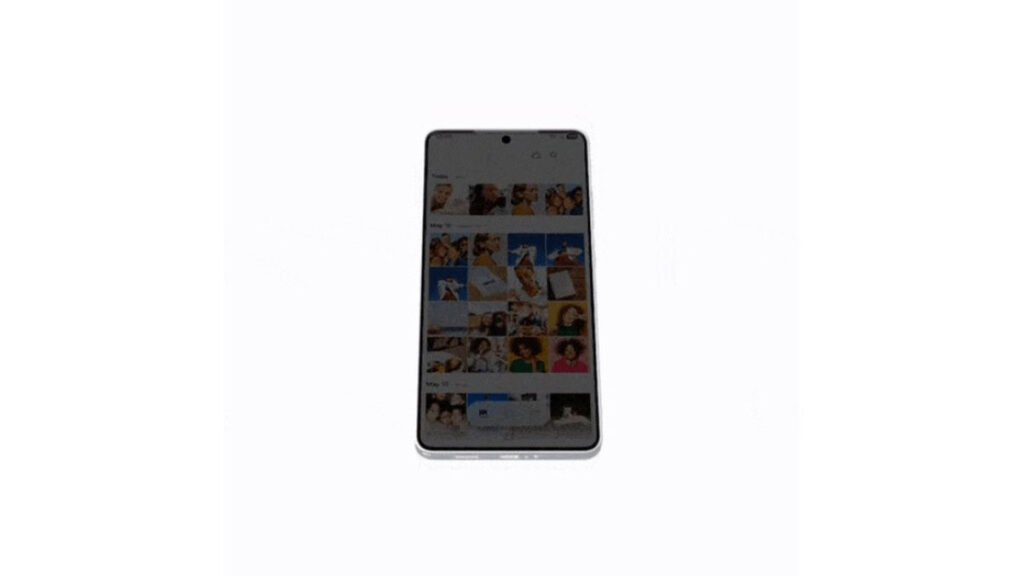

Ice Universe talked about the Samsung Galaxy S26 Ultra’s Privacy Display tech in the past, but he just went into more details. He shared a ‘Deep Dive’ post via X, explaining exactly how this tech will work. Do note that he provided an extremely technical explanation, so read on if you’re interested.
The light passes freely until you enable Privacy Mode
He says that the first security gate is Micro ‘Louvers” (bottom grating). The light emitted by the OLED screen originally scatters in all directions. Before you enable Privacy Display, the first security gate is completely invisible. Why? Because the refractive indices across all layers are exactly the same. All light passes freely, basically.
After you enable Privacy Mode aka Privacy Display (voltage on), the liquid crystal layer instantly changes state. That causes a shift in its refractive index. At that moment, the microscopic grating (Diffraction Structure), which is carved into the surface of the first refractive layer, reveals itself. It acts as a series of microscopic “louvers,” says the tipster.

Those light rays that are trying to escape at wide angles to the left and right are forced to change their path as they pass through these louvers, which deviate from their original trajectory.
The second security gate decides the life or death of the light emitted by the display
The second security gate is Optical “Refraction Slopes” (top prism/lens). The light rays, which have had their path scrambled by the first gate, crash into the optical structure (prism or lens) at the top of the refractive index conversion layer. The tipster says that “this is where the life or death of the light is decided.”
Those wide-angle light rays originally destined for the snooper’s eyes hit the prism slopes at extremely awkward angles, it is said. Why? Because there is now a refractive index difference between the liquid crystals and the top refractive layer. That portion of light cannot penetrate the screen surface.
The light gets distorted or totally reflected, bouncing back into the screen
Instead of going to the screen surface, it gets distorted or totally internally reflected, bouncing back into the screen. So Samsung basically corners the light that was going to get out, to prevent it from going there.
The light rays heading straight forward (the second exit light) smoothly penetrate the prism slopes, but due to the optical refraction effect, their exit angle is further “squeezed” and compressed. In other words, the screen remains crystal clear when you’re looking at it head-on as the user.
The Samsung Galaxy S26 Ultra will debut this technology. The phone will launch on February 25, along with the Galaxy S26 and Galaxy S26+.
The post Samsung Galaxy S26 Ultra Privacy Display Tech Explained in Deep Technical Detail appeared first on Android Headlines.