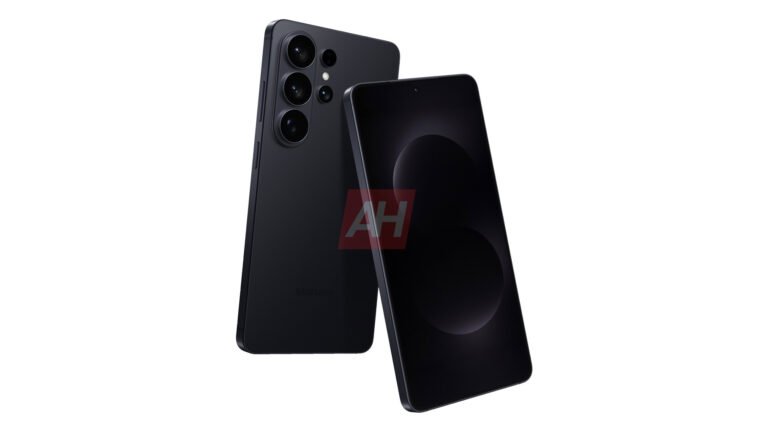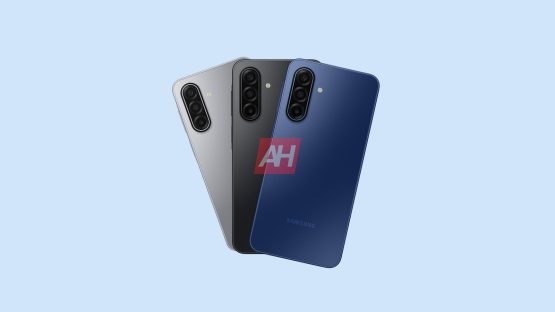
Samsung prides itself on having a phone at quite literally every price point. That includes the Galaxy A17 5G, which has an MSRP of $199 (though it’s currently on sale for $169 and likely will be offered for “free” from carriers).
Typically, we wouldn’t be too interested in reviewing a phone like the Galaxy A17, but its predecessor, the Galaxy A16, was the best-selling Android device of 2025. Coming in fifth behind the iPhone 16, iPhone 16 Pro, iPhone 16 Pro Max, and iPhone 16e. Rounding out the top 10 includes the Galaxy A06, Galaxy A36, Galaxy A56, Galaxy A16, and the iPhone 17 Pro Max. This shows just how important Samsung’s Galaxy A series really is.
So what does $200 get you, in terms of smartphones? Well, when it comes to Samsung, you’re getting a big display, big battery, and a pretty good amount of storage, surprisingly. Let’s find out if it’s worth your $200 in our full review.
Samsung’s Galaxy A17 5G promises everything budget buyers want for just $200.
Pros
- Affordable price, under $199
- Large 6.7″ high refresh rate AMOLED display
- Wideline L1 support
- 5,000mAh battery and 25W charging
- Great software update promises
Cons
- Performance is a big problem with the Exynos 1330
- No WiFi 6/6E/7
- No HDR Playback
- Camera system is really lacking
Samsung provided AndroidHeadlines with a review unit of the Galaxy A17 5G in the black color. We’ve used it for a little over a week before writing this review. This is not a sponsored review, Samsung did not see this review before it was published.

Samsung Galaxy A17 Specs
Samsung Galaxy A17 Specs
| Display | 6.7″ FHD+ 90Hz |
| Dimensions | 164.4 x 77.9 x 7.5mm |
| Weight | 192g |
| Processor | Exynos 1330 (5nm) |
| RAM/Storage | 4GB/128GB, 6GB/128GB, 8GB/128GB, 4GB/256GB, 8GB/256GB |
| Cameras | 50MP primary; 5MP ultrawide; 2MP macro; 13MP front-facing |
| Battery and Charging | 5,000mAh; 25W wired |
| Colors | Black, Gray and Blue |
| MSRP | $199 |
Samsung Galaxy A17 Review: Design and Build Quality
The Samsung Galaxy A17 carries over the design from last year’s Galaxy A lineup, with the mostly flat sides but a protruding area for the volume rocker and power button. It also has a flat back, and of course, the display does have a chin. This is mostly because this is a budget device, though surprisingl,y it does have an AMOLED panel.
Samsung is calling this an “ultra slim design” measuring in at 7.5mm, which is not actually all that thin. In fact, the Galaxy S25 Plus is 7.3mm. But it is nice to have a somewhat thinner design on a budget phone, especially with there still being a 5,000mAh capacity battery inside. It also weighs 192g, shaving 8g off of the Galaxy A16’s weight. Which at this weight, it’s likely unnoticeable, though how many people are actually upgrading from the Galaxy A16 to the Galaxy A17?
Samsung is not using glass on this device, as you might expect given the price, but instead glass fiber. So it does have a slightly different feel than other budget and even high-end devices. The frame is still plastic, though it is getting harder and harder to tell whether its plastic or metal these days. It’s a good-looking device, especially in this black color.


One of the great things that devices like the Galaxy A17 have going for it is that much thinner camera bump. Of course, the cameras aren’t as good as higher-end devices, but this does not wobble when sitting on a table anywhere near as much as some other Samsung devices. Technically, Samsung has a triple-camera setup here, but it’s really just a single camera that’s usable. That’s the primary camera which is a 50-megapixel sensor, there’s also a 5MP ultrawide and a 2MP macro.
Of course, the front has some rather thick bezels, and we mean very thick. But they are right on par with the Pixel 10 Pro XL’s bezels which a bit crazy. It’s still using the teardrop camera and it has a noticeably thicker chin. It does still have a SIM card slot on the left side as well. Though, we don’t expect many smartphones to ditch that for few more years, even longer on budget phones.
Overall, the hardware is pretty decent. I’d say you get what you pay for with the Galaxy A17.
Samsung Galaxy A17 Review: Display
As mentioned already, Samsung has equipped the Galaxy A17 with a 6.7-inch FHD+ display, which refreshes at 90Hz. It’s somewhat bright, advertised with a 800nit max for high brightness mode (this is different from peak brightness and honestly more important). I’ve used this outdoors, and while there’s not much sun in Michigan in January, there’s a lot of snow so its even brighter than usual. And there were virtually no issues with seeing the display, even at full brightness.
Unfortunately, it’s not all puppy dogs and rainbows with this display, as there is no support for HDR video playback, which does really limit the experience when streaming HDR content on streaming services like YouTube, Netflix, and even Instagram. Though many despise HDR content, so maybe this is a good thing. It does come with Widevine L1 certification out of the box, so you can still stream HD content from all of your favorite platforms. This is quite common for Samsung devices, but some budget devices often times will skip out on Widevine L1. So good to see Samsung did not.

Despite these shortcomings, the Galaxy A17 5G’s display remains one of the best in its class. When competitors like Motorola are still shipping LCD panels with inferior viewing angles, color accuracy, and contrast at the same price, Samsung’s AMOLED advantage is impossible to ignore. For streaming, social media, and everyday use, this screen delivers a genuinely enjoyable experience that belies the phone’s budget positioning.
Samsung Galaxy A17 Review: Performance
Performance is where things really start to fall apart. Now, going into this review, I had recently reviewed the Moto G 2026, which is a direct competitor and is priced the same. But the Moto G does perform a whole lot better. We’ll get to benchmarks in a little bit.
The big annoyance with the Galaxy A17 is how slow it reacts to touches. You press a button in an app, and the Galaxy A17 takes a very long time to actually register where you touched. Now, I expected that performance would be pretty bad, but I wasn’t expecting it to be this bad.
On top of this, the internet is also very slow. Now, this is because the Galaxy A17 does not support WiFi 6, 6E, or WiFi 7. So you’re stuck with WiFi 5GHz speeds or slower. This was especially noticeable when setting up the device and downloading apps. Outside of setting it up, I don’t think this issue will really affect a lot of people, but it is worth mentioning.
Keep in mind here that you get what you pay for. A $200 smartphone is not going to perform as well as a $1,000 phone. Or even a $500 phone.
Benchmarks
Now let’s talk about those benchmarks. That’s where you can really see the difference. In these benchmarks, we’re going to compare it to the Moto G 2026, since that is the direct competitor to the Galaxy A17 in terms of pricing and availability. Keep in mind that the Moto G 2026 does run on the MediaTek Dimensity 6300, which is a 6nm chip, while the Galaxy A17 is a 5nm Exynos 1330.
Starting with AnTuTu, the Galaxy A17 scored pretty well, actually. We’re looking at a score over 600k, whereas a lot of other people saw much lower scores on this same device.
| Device | AnTuTu Score |
|---|---|
| Samsung Galaxy A17 | 610,377 |
| Motorola Moto G 2026 | 424,938 |
Now, let’s talk about Geekbench 6. These numbers are a tad higher than the Moto G 2026, but still very similar, particularly in the multi and GPU scores.
| Device | Geekbench 6 Single-Core | Geekbench 6 Multi-Core | Geekbench 6 GPU |
|---|---|---|---|
| Samsung Galaxy A17 | 927 | 1,776 | 1,286 |
| Motorola Moto G 2026 | 696 | 1,991 | 1,448 |
Pretty decent benchmark scores here, though it is also still quite a bit lower than flagship devices as we’d expect. Even compared to the Pixel 9a, which has much higher scores (its AnTuTu score is double that of the Galaxy A17).
Samsung Galaxy A17 Review: Battery and Charging
The Galaxy A17 5G packs a 5,000mAh battery, the same capacity as its predecessor and pretty much the industry standard for budget smartphones in 2025. The combination of this sizeable cell with the power-efficient Exynos 1330 chipset and AMOLED display should theoretically deliver excellent endurance, but the reality is a bit more nuanced.
In real-world use, the Galaxy A17 5G was able to last all day, but I do believe that optimization is an issue here. With this size battery and this very efficient (and slower) chipset, the 5,000mAh capacity battery should last longer. But when you look at who’s likely to buy the Galaxy A17, this is likely perfectly fine. For me, I was able to get through the day with around 30% charge left, after 6 hours of usage. So it’s not the end of the world.

In our battery test, it was able to a little over 12 hours which is quite low even for budget devices. But I do believe that the reason for this is because it is not as well optimized for video playback – which is what our battery test is based on.
Charging, we’re looking at 25W wired charging. No wireless or reverse wireless and no charger in the box as you might expect. Charging time is actually pretty decent for 25W and a 5,000mAh capacity battery. It took about an hour and 15 minutes. Now, yes, sure there are plenty of Chinese phones that charge faster at around this price, but again those are charging over USB-A, while Samsung is doing USB-A and using PPS, which is safer and much more widely adopted. Meaning you won’t need to use only a Samsung charger to get the full 25W speed.
Samsung Galaxy A17 Review: Software
The Galaxy A17 5G launches with Android 15 and Samsung’s One UI 7 out of the box, however when I received my unit, it already had Android 16 and One UI 8 installed. This isn’t too surprising since this device was technically announced back in August, but it’s only just now getting to the US and into reviewers hands. It’s good to see that Samsung is updating its sub-$200 phones pretty well, however.
As far as the software goes, it’s basically what you’d expect from One UI 8. Though there are some things that are being omitted here. Like Galaxy AI. It’s actually not even on this phone. But you do have a few useful features like Circle to Search and Gemini Live (Google-built AI features, instead of Samsung-built AI features). Honestly, these are the two AI features that I use the absolute most, so I’d prefer to have these over some others like Generative Edit, Live Translate, and Writing Assist.

A lot of these features are likely omitted because of the processor. The Exynos 1330 isn’t exactly a powerhouse, and a lot of Galaxy AI features are on-device, meaning they need a good amount of power to work.
Overall, the software is quite good. It could use some optimization, but where the Galaxy A17 is likely not on Samsung’s priority list, that might never happen.
The bigger concern is whether the hardware can actually keep up with six years of software updates. As Samsung is promising six years of updates here, which is going to be really interesting to see how the 4GB of RAM models hold up, come 2031 or 2032.
Samsung Galaxy A17 Review: Camera
The Galaxy A17 doesn’t have the best camera setup, and to be honest, you’re not buying this phone for its cameras. It’s a $199 phone that will most likely be free for most people at prepaid and MVNO carriers. But here’s a refresher on the specs.
| Camera | Specs |
|---|---|
| Primary | 50MP, f/1.8, 1/2.76″ |
| Ultrawide | 5MP, f/2.2, 1/5.0″ |
| Macro | 2MP |
| Front-Facing | 13MP, f/2.0, 1/3.1″ |
So as you can see, the primary lens should actually be quite decent, but the macro and ultrawide should be pretty crappy. And reality, that’s all true. You do, of course, still have Samsung’s over-saturated color-science here, which some people like. I prefer it to be more natural, more like what my eyes see in real life.

Below, you’ll find some camera samples from the Galaxy A17. For the most part they’re okay. The main camera is pretty good, especially for its price range, but it does leave a lot to be desired. The auto-focus on the main camera is also not good, along with the minium focusing distance. Auto-focus tends to keep trying to focus on the object when lighting isn’t perfect. Even in pretty good lighting, it keeps moving around trying to figure out what to focus on, even when you tap to focus.


Obviously, you’re not buying this phone for the camera, but I feel like the camera could be better. Samsung should focus more on the primary sensor and ditch the other two. The Ultrawide is a 1/5.0″ sensor for crying outloud, that is freaking tiny, when we have other budget phones in this class with 1/3″ and 1/4″ sensors. Of course, the 2MP macro sensor is also pretty useless. But these are all here, so Samsung can check that off the spec sheet: three cameras.
Should you buy the Samsung Galaxy A17?
Similar to most other budget phones, this all depends on what you need from your phone and what you do with your phone. If you just need a phone to make phone calls, send texts, and check the score of the game, then the Galaxy A17 is a great, affordable option.
But if you’re looking for a better camera, battery life, display, and performance, then you’ll want to look elsewhere. Another good option that doesn’t break the bank is going to be the Galaxy S25 FE, Galaxy A36, and Galaxy A56. More expensive but still typically under $500.
How does the Samsung Galaxy A17 stack up to the competition?
Now, how does Samsung stack up to the competition, particularly in this sub-$200 space? Not well, actually. I will preface this by saying that I have not reviewed a lot of sub-$200 phones, most recently the Moto G 2026. We have also reviewed the Moto G Power 2026 and Moto G Play 2026, all of which are under $200 and would be better options.
What really makes the Moto G 2026 stand out in this price range is the camera quality (thanks to the Pantone partnership), the much better performance out of its MediaTek chipset, and of course, the colors/fabric.
The post Samsung Galaxy A17 5G Review: Your Mom’s Next Phone appeared first on Android Headlines.