
“If there’s a painted line and it’s clearly marked, you can drive hands-free,” once a new update for Rivian’s R1S and R1T battery-electric vehicles is released later this month, according to James Philbin, the automaker’s vice president of autonomy and AI.
Related: Rivian’s New $2,500 Autonomy+ Package Undercuts Tesla FSD by Thousands
Giving motorists access to 3.5 million miles of U.S. and Canadian roadways, that’s more 20 times the coverage Rivian currently offers – and nearly three times more than what General Motors’ latest Super Cruise update now can handle. But that’s just the beginning, Rivian officials said during a technology briefing on Thursday.
When the new Rivian R2 debuts late next year it will offer “hands-free, eyes-off” driving. The automaker’s next step – perhaps as early as 2027 – will be “Level 4” capabilities, allowing Rivian vehicles to operate fully autonomously – in fact, entirely without a driver onboard.
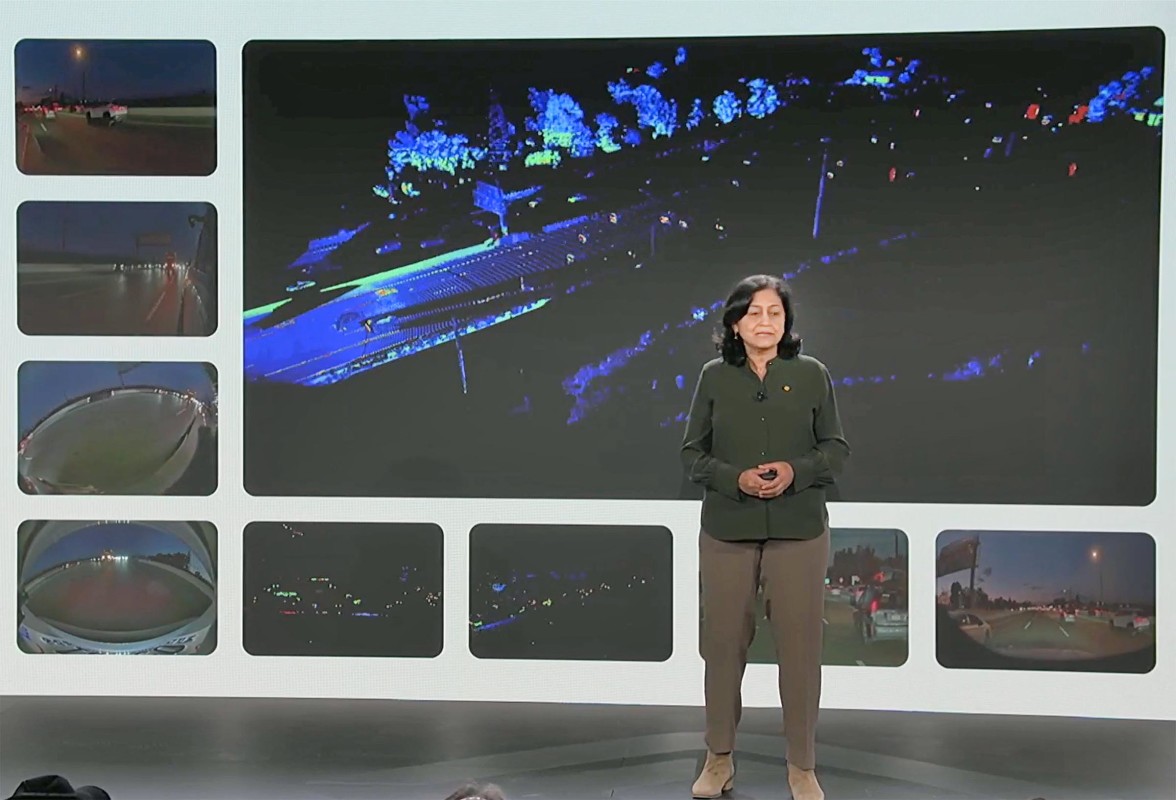
The secret to this rapid rollout? More advanced sensors, including one of the auto industry’s first applications of laser-based LiDAR, sophisticated new software and a new microprocessor developed entirely in-house that’s at least 10 times faster than what’s in use in Rivian’s current vehicle line-up.
Whats New
Plenty of automotive brands now offer some form of hands-free or assisted driving technologies: General Motors’ Super Cruise, Ford’s Blue Cruise, Nissan’s ProPilot Assist and, of course, Tesla’s original Autopilot and newer Full Self-Driving. Two things typical matter to owners: how well the systems work on different types of roads and the number of miles of roadway they can be operated on. Over the last several years, for example, Super Cruise has increased about five-fold, to 1.2 million this year. Currently, Rivian’s R1S and R1T models can manage a barely competitive 120,000 miles. With a simple, smartphone-style over-the-air update due before year-end, however, that will grow to 3.5 million. And that’s just the start for the EV maker.
But that’s just the beginning, during their presentation, Rivian officials revealed plans to aggressive upgrade the capabilities of their autonomous driving technology. Significantly, this should rapidly position the company as a serious competitor to Tesla, both in terms of retail systems and by allowing Rivian to start rolling out its own robotaxis, as its arch-rival began doing in Austin, Texas last June.
Chipping In
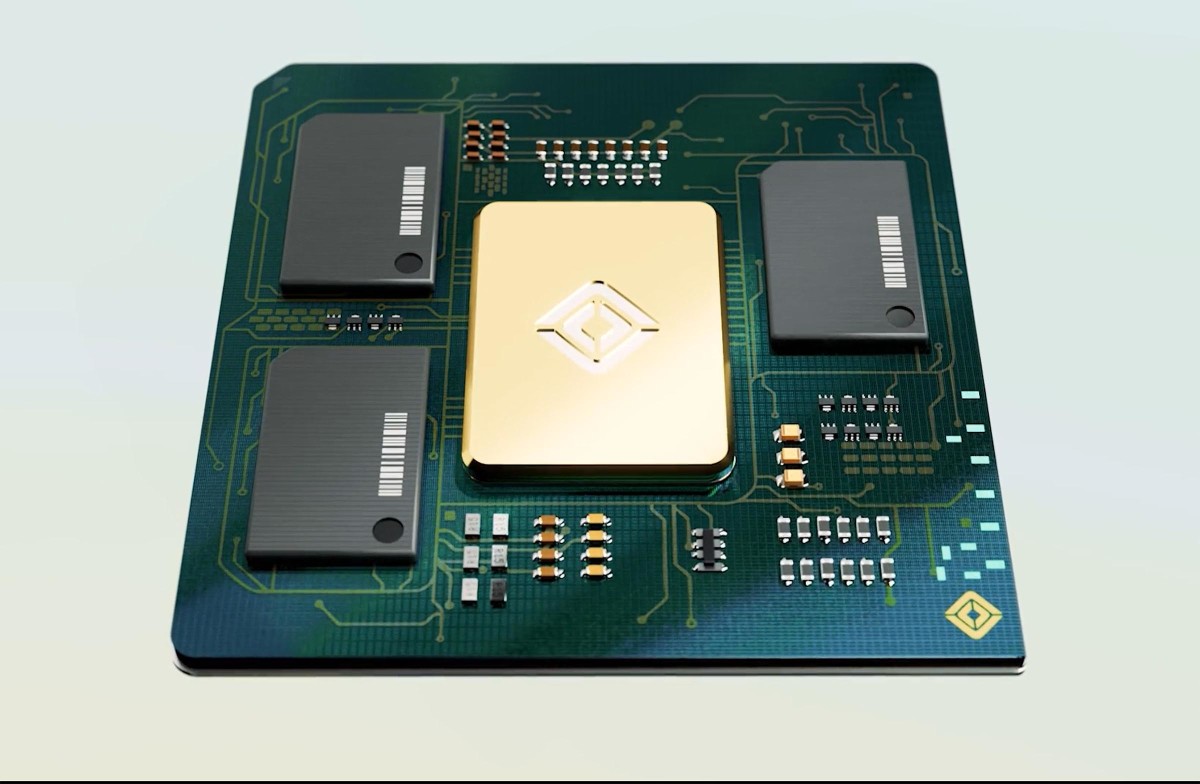
During a Thursday presentation, Rivian officials revealed the new software and hardware technologies that will make this possible, starting with its new chip. Developed entirely in-house, it “allows us to get the best performance for dollars spent,” said Vidya Rajagopolan, Rivian’s Senior Vice President of Electrical Hardware Engineering. She says the company has designed in “a lot of hooks and bells and whistles” that will make the new chip flexible and scalable and “functionally safe,” with the sort of backup capabilities needed when it operates a vehicle that might have no driver behind the wheel.
From a functional standpoint, the new microprocessor can handle 800 TOPS. In lay speak, that’s 800 trillion operations per second, with a bandwidth of 205 gigabytes per second. More importantly, the processing system using this new chip will be more than able to handle all the data coming in from 11 cameras, five radar sensors and a new LiDAR unit, processing up to 5 billion pixels of data every second.
Why that Matters
Rivian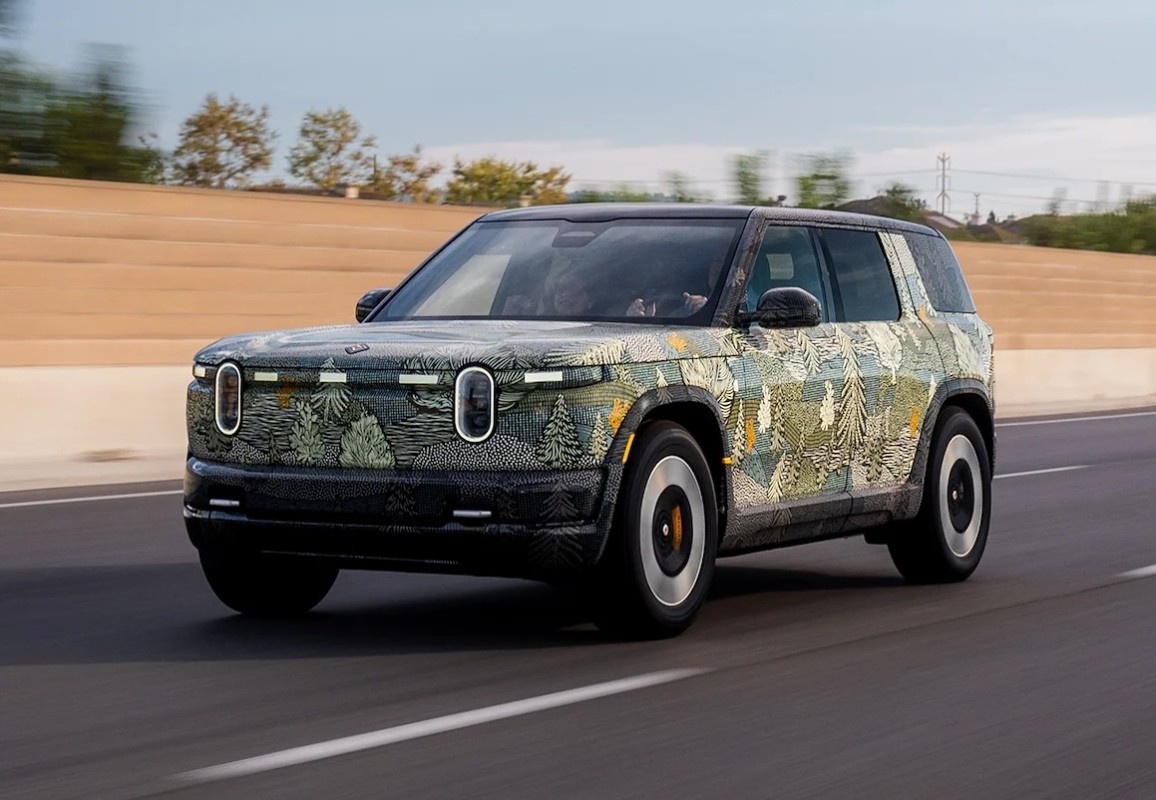
“I expect that to be the most powerful combination of sensors and inference computing in consumer vehicles in North America,” boasted Rajagopolan.
While the new computer chip is the critical lynchpin, the other big development that will debut on the Rivian R2 next year is the new LiDAR sensor mounted just above the forward-facing camera at the top of the windshield. LiDAR is a sort of 3D laser-based camera system which, Rajagopolan contends, will be essential to safe autonomous driving. That’s where Rivian and Tesla go head-to-head. The bigger EV manufacturer remains firm in its belief it can go completely driverless using only cameras and onboard processing – though most experts disagree and believe other sensors are needed, especially LiDAR and radar. “Cameras alone have some shortcomings,” asserted Rajagopolan, “They do not perform well under non-ideal lighting conditions,” such as fog, heavy rain or snow, or on especially dark roads.
Rivi
While the debate is likely to rage for some time, what will matter to potential Rivian buyers is the fact that adding the new sensors, processing power and software smarts will take the capabilities of the R2 to the next level. Literally, what the industry calls Level 3 autonomy. That’s often referred to as “hands-free/eyes-off” driving. Today, while many systems may allow you to take your hands off the wheel on designated roadways, motorists need remain vigilant, keeping eyes focused on the road and ready to take over at a moment’s notice. Level 3 systems let you turn your attention elsewhere: to text, for example, or even watch videos – though it’s not going to let you take a nap. Not yet.
Going to the Next Level
Rivian
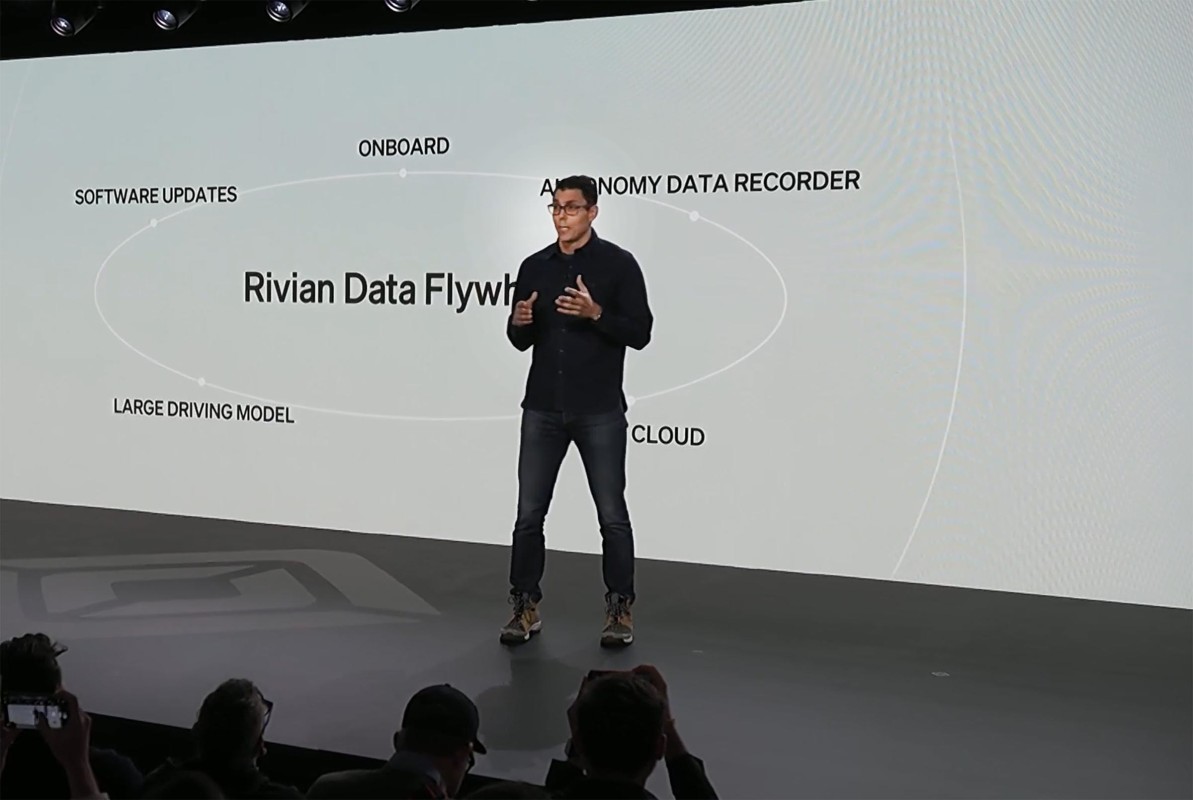
Rivian’s new hardware and AI technology – which it calls a “Large Driving Model” – are destined for still bigger things, according to CEO RJ Scaringe, who said they “will enable us to achieve dramatic progress in self-driving to ultimately deliver on our goal of delivering L4” driving. That’s pretty much the Holy Grail of autonomy, the ability to simply set a destination into your navi system and relax – even take that nap – while the vehicle does all the work without any more involvement by the “driver.”
The automaker’s next step is to provide that point-to-point driving capability in Level 3 mode, then add full Level 4 capabilities, according to Scaringe and his team. And when that happens, the CEO said, “the vehicle (will be able) to operate entirely on its own. That means the vehicle can drop the kids off at school and pick you up at the airport” without having you or anyone else in the driver’s seat.
Today, only a handful of specialized robotaxis can achieve that, and in carefully defined “geofenced” operating areas. Rivian wants to make it possible pretty much anywhere. When it can achieve that – some would caution “if” – remains to be seen. Perhaps as early as 2027, Rivian suggests. But Tesla provides a cautionary note. CEO Elon Musk has been promising to make Full Self-Driving live up to its name for some years. The latest release comes closer, but it’s only in the company’s robocabs it has gotten there. (Almost. Unlike robo-ride-share competitor Waymo, Tesla robotaxis still have human back-up operators onboard.)
Related: Rivian CEO Warns of ‘Existential Threat’ as Trump Moves to Let Chinese EVs Into U.S.
Unified Intelligence
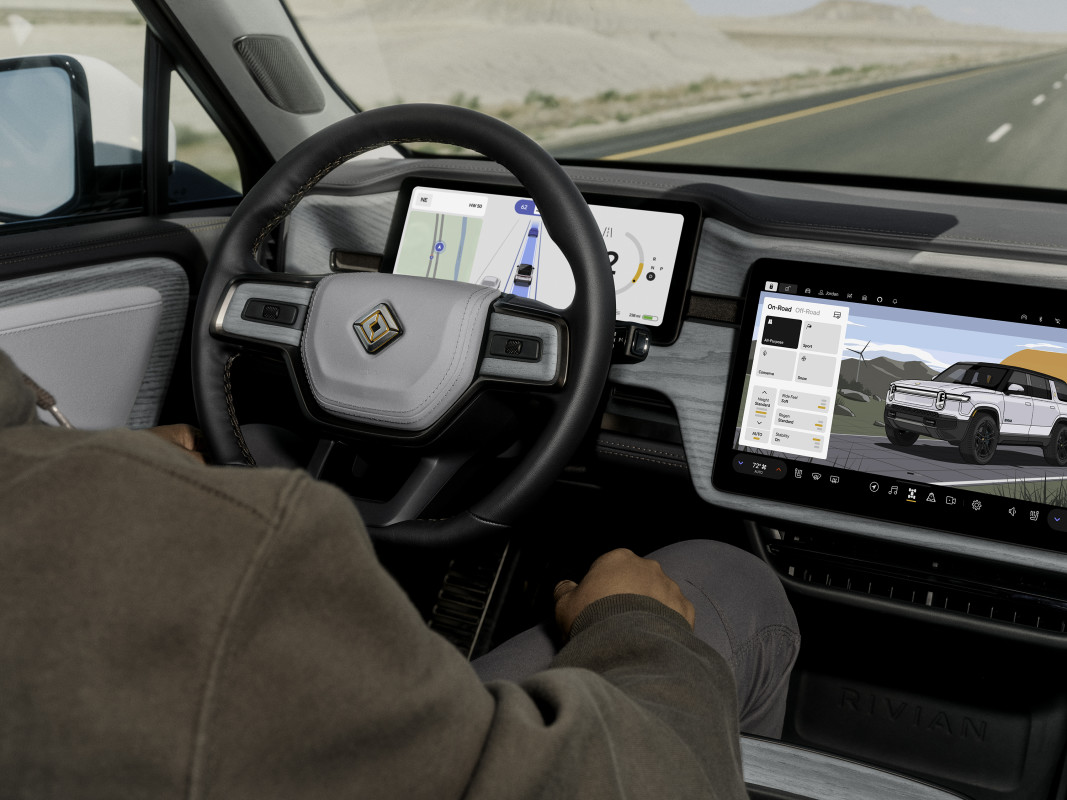
When you’re putting all that computing power onboard you might find other uses for it. And, so, Rivian is also rolling out a new, Alexa-style voice assistant based on its Unified Intelligence software. Where General Motors is phasing out both Apple CarPlay and Android Auto, Rivian never offered those technologies in the first place. It now seems ready to justify that decision with technology far more deeply embedded in the vehicle’s operation. Ask it to check your messages, the weather, your calendar, then get it to find the best route to your meeting and set up a reservation for lunch once you get there. Oh, and make sure your EV is in the most efficient operating mode so you have enough charge left to get back home. “This will fundamentally reshape how we all interact with our Rivians,” said Wassym Bensaid, the carmaker’s software chief.
Rivian’s new voice assistant system also will debut in 2026. As for the Level 3 system that will debut in the Rivian R2 next year, expect to pay $2,500 up front or, if you prefer, $49.99 per month.


