
The President has cars on his mind
In an announcement on the afternoon of December 3, President Donald Trump announced the administration’s agenda to dramatically reverse his predecessor’s fuel efficiency standards in a bid to lower new car prices for American consumers.
In an Oval Office event with representatives of Detroit’s major automakers, including the CEO of Jeep and Dodge parent Stellantis, Antonio Filosa, Ford CEO Jim Farley, and John Urbanic, the plant manager at General Motors’ Orion, Michigan plant, Trump noted that the actions taken are a “victory” for what he deems “common sense and affordability.”
“Today, my administration is taking historic action to lower costs for American consumers, protect American auto jobs, and make buying a car much more affordable for countless American families, and also safer,” Trump said.
Chip Somodevilla/Getty Images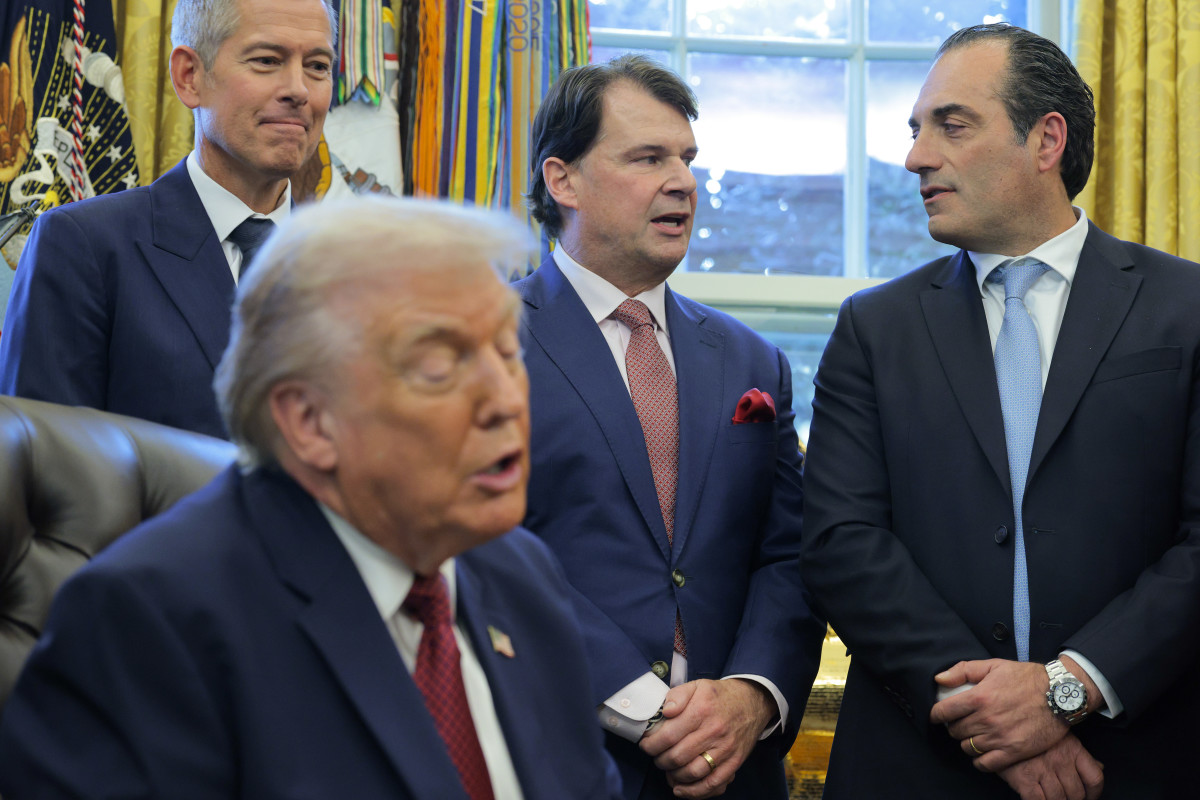
Lowering the bar
The issue at hand is the Corporate Average Fuel Economy (CAFE) requirements for cars and light trucks, which were tightened under the administration of former President Joe Biden. In June 2024, the NHTSA established new goals, which tasked automakers with increasing the fleetwide average fuel economy of passenger cars by 2% per year between model years 2027 and 2031, and light trucks by 2% per year between model years 2029 and 2031.
Under these rules, the agency aimed for the average car to achieve a fuel economy of about 50.4 miles per gallon by the 2031 model year, a policy that Trump derided as “ridiculously burdensome” and “imposed expensive restrictions and gave all sorts of problems to automakers.” The new proposal would dramatically lower these requirements to about 34.5 miles per gallon for the 2031 model year and would also reclassify crossovers and small SUVs as passenger vehicles instead of light trucks.
In a fact sheet published by the White House on its website, the administration claims that if it did not take action, the stringent fuel economy regulations under the previous administration “would have raised the average cost of a new car by nearly $1,000.” Additionally, they also claim that the proposal “will save American families $109 billion in total over the next five years,” and “save more than 1,500 lives and prevent nearly a quarter-million serious injuries through 2050.”
Joe Raedle/Getty Images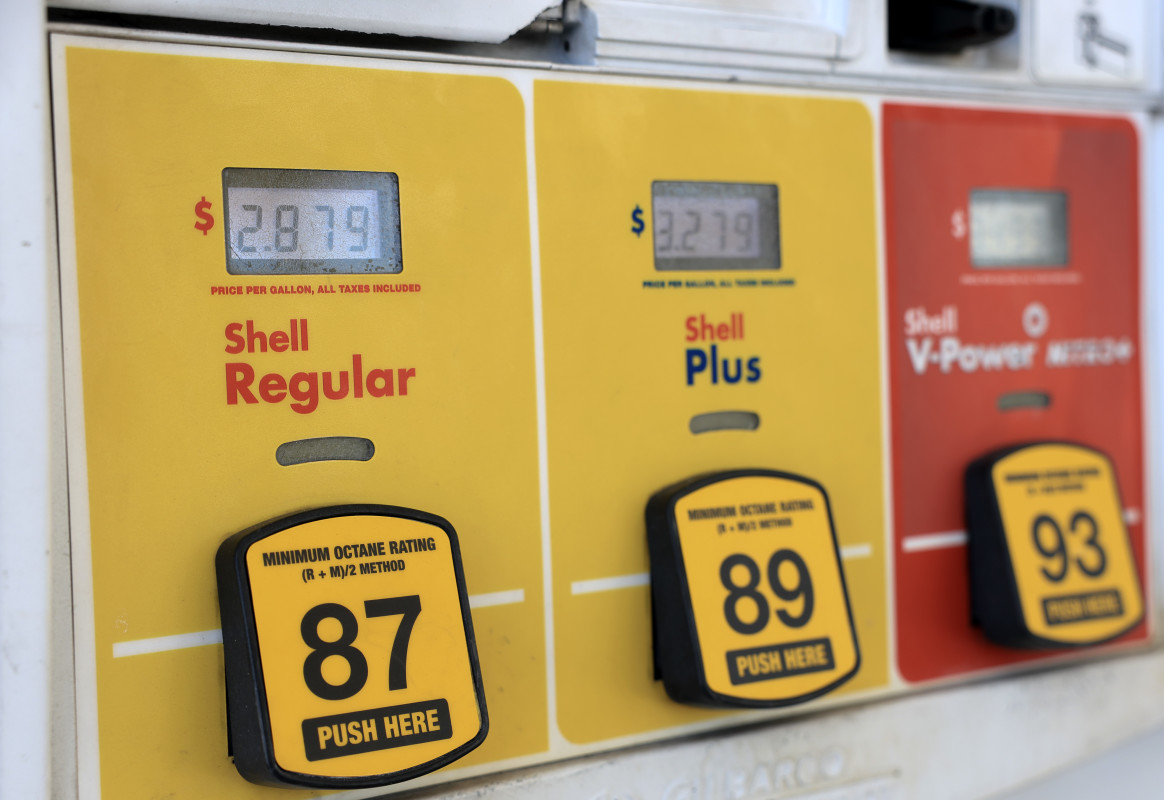
Automakers welcome the rollbacks
The proposed CAFE regulations are part of a broader Trump administration agenda to untangle and streamline a set of rules he previously deemed an “EV mandate.” In July, lawmakers in Congress have steadfastly pushed for the elimination of fines for car manufacturers who failed to meet the Corporate Average Fuel Economy (CAFE) standards. In addition, through the passing of the tax and spending bill known as the “big, beautiful bill” earlier this year, they eliminated the $7,500 federal tax credits for EV purchases.
In separate statements made before the Oval Office announcement, Detroit’s automakers welcomed the new changes.
“Stellantis appreciates the Trump Administration’s actions to re-align the Corporate Average Fuel Economy (CAFE) standards with real-world market conditions as part of its wider vision for a growing US automotive industry,” Stellantis CEO Antonio Filosa said in a statement. “We look forward to working further with NHTSA on environmentally responsible policies that also allow us to offer our customers the freedom to choose the vehicles they want at prices they can afford.”
“As America’s largest auto producer, we appreciate President Trump’s leadership in aligning fuel economy standards with market realities,” Ford CEO Jim Farley said in a statement. ”We can make real progress on carbon emissions and energy efficiency while still giving customers choice and affordability.”
Final thoughts
On the flipside, environmental group representatives like Will Anderson, a zero-emissions vehicle policy advocate on Public Citizen’s Climate Program, told Automotive News that Americans are actually in favor of strong fuel economy standards. He claimed that a whopping 96% of American drivers said that “fuel economy is at least somewhat important to them when considering what vehicle to purchase or lease.”
Nonetheless, this development is still occurring at a time when new car prices remain at an all-time high. The latest data from Kelley Blue Book and Cox Automotive shows that the average transaction price (ATP) of a new car in the US was $49,766, a slight dip from the all-time high of $50,080 reached in September, an environment that Cox Automotive Executive Analyst Erin Keating says is led by sales of more expensive vehicles.
“We’ve been expecting to break through the $50,000 barrier,” Keating said. “It was only a matter of time, especially when you consider the best-selling vehicle in America is a pickup truck from Ford that routinely costs north of $65,000. That’s today’s market, and it is ripe for disruption.”