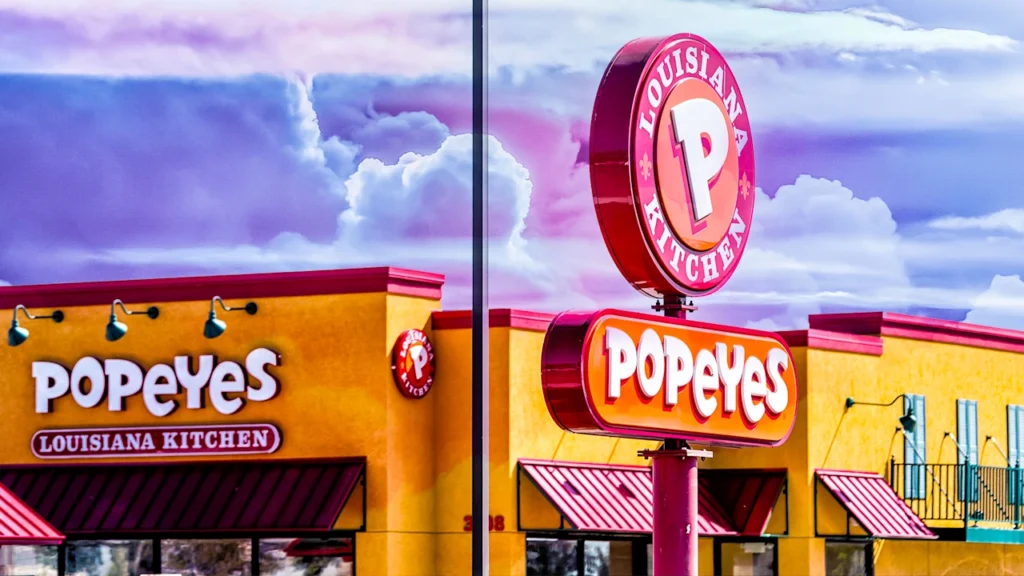
Once the king of the chicken sandwich, Popeyes faces a lot of competition for the crown these days.
Ascendant fried chicken hotspot Raising Cane’s exploded in growth last year, knocking off KFC to become the third most-popular fast food chicken chain in the U.S. behind Chick-fil-A and Popeyes. Meanwhile, upstarts like Dave’s Hot Chicken and Hangry Joe’s Hot Chicken & Wings are growing fast and eyeing a similar trajectory.
Popeyes once inspired feverish hordes and all-day lines for its top-selling chicken sandwich, but it’s been a rocky ride as of late. Popeyes parent company Restaurant Brands International (RBI) just reported its quarterly earnings, and In the last quarter, the chicken chain’s U.S. sales were down nearly 5%—its fourth consecutive quarterly slide.
Other fast food brands under RBI’s umbrella saw sales tick up during the same time period.
Beyond Popeyes Louisiana Kitchen, RBI also owns Burger King, Tim Hortons, and Firehouse Subs. With almost 20,000 locations, Burger King is RBI’s biggest chain, dwarfing the 5,000 Popeyes locations around the globe.
“We’ve had weaker performance than we’d like over the last few quarters, and that’s why you saw us make the change in leadership,” RBI CEO Josh Kobza said on the company’s earnings call.
He noted the company’s decision to bring former Burger King COO Peter Perdue in as Popeyes U.S. and Canada president. Popeyes also plans to triage its lowest-performing locations with targeted support, coaching visits and “experience rallies” for Popeyes restaurant general managers across the U.S.
Kobza said that Popeyes plans to double down on operations and “narrow the focus” back to chicken on the marketing and product side.
“We know Popeyes is capable of much more and we’re taking decisive action to put the brand back on the right path while supporting our franchisees to deliver stronger results at the restaurant level,” Kobza said.
Reviving Popeyes
In January, almost 20 Popeyes locations in George and Florida closed their doors after one of the chicken chain’s major operators declared bankruptcy. While Popeyes says that the majority of the 100-plus locations operated by franchisee Sailormen Inc. were profitable, borrowing rates, high inflation, and dwindling foot traffic contributed to the closures.
Popeyes insists that the closures don’t reflect the broader brand, which is owned by quick-service restaurant conglomerate RBI. Perdue reportedly reassured other franchisees that Sailormen’s bankruptcy “does not reflect the healthy unit economics that you are experiencing in your restaurants.”
For Popeyes, the problem clearly isn’t chicken. Persistent inflation continues to take a toll on the restaurant industry, but Americans are still opting for poultry on the go at Popeyes’ competitors like Raising Cane’s and Dave’s Hot Chicken. Traffic is down at fast food joints broadly too, but chicken restaurants lapped their lagging peers last year. For Popeyes, the problem is Popeyes—something the company seems well aware of right now.
“Our performance this year reinforces a clear reality,” Kobza said in the earnings report, noting the intense level of competition in the quick-service chicken game. “At its core, the chicken business is a service business and winning requires consistent speed, accuracy and reliability in every restaurant every day.”