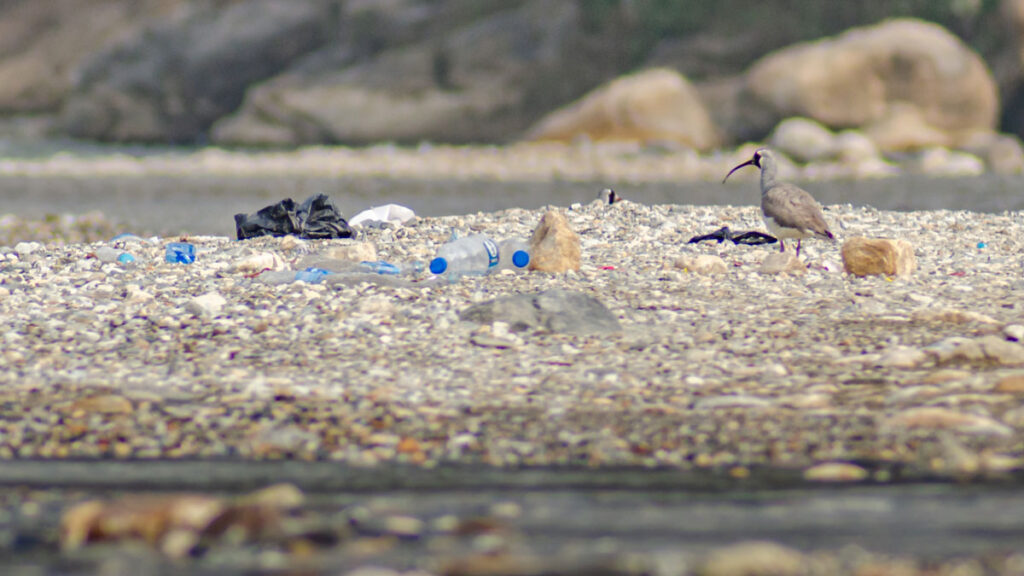
When representatives of 197 countries ratified the Montreal Protocol to phase out ozone-depleting substances in 1987, they probably didn’t anticipate creating a new method for estimating the age of groundwater.
But the Montreal Protocol paved the way for a chemical called trifluoroacetic acid, or TFA, to become widespread in the atmosphere, and therefore in rainwater. Because the concentration of TFA has increased steadily since 1987, it’s a helpful tool for gaining a rough idea of how recently an aquifer has been recharged—which is what is meant by “groundwater age.”
Using TFA as a quick and easy tracer is one of several research techniques that rely on the mass amounts of anthropogenic material that enter the environment every moment of every day. Scientists are using pollution to study processes both small-scale and worldwide, from the history of a single bird’s nest to the history of humans on this planet.
Novel Tracers
TFA is one of thousands of per- and polyfluoroalkyl substances (PFAS), which are also known as “forever chemicals” because they take thousands of years to degrade. Fortunately, TFA seems to be much less toxic than the long-chain PFAS, such as perfluorooctanesulfonic acid (PFOS) and perfluorooctanoic acid (PFOA), that have been associated with human health problems.
TFA’s omnipresence is a side effect of the move from using ozone-depleting chlorofluorocarbons (CFCs) in refrigerants. The alternative refrigerants, originally thought to be less harmful than CFCs, have consequences of their own, however, making this a case of what scientists have called “a regrettable substitute.”

When modern refrigerants evaporate into the atmosphere, they break down into TFA, which then falls to the ground in the rain, explained environmental geochemist Christian Nyrop Albers from the Geological Survey of Denmark and Greenland.
Groundwater becomes drinking water, so part of Albers’s job is to screen groundwater for pollutants. But to convince politicians they need to regulate a pollutant, he and his colleagues need to show that the substance is entering groundwater because of how it’s used today, not in decades past. So they need to know how old the groundwater is.
More sophisticated methods “are not always very easy to use, or they are very expensive or time-consuming.”
“There are many sophisticated methods for that, but they are not always very easy to use, or they are very expensive or time-consuming,” Albers said. The gold standard is to measure the decay of a substance called tritium into helium, but only a few labs in the world have the capacity to do the test, and the water sample must be stored for 6 months to see the decay.
Measuring TFA is not as precise as measuring tritium decay, and those using the technique have to be cognizant of any farms in the area, because agricultural chemicals can also release TFA into the groundwater and affect results. But measuring TFA is fast and easy, so “we use it on a regular basis now,” Albers said. He and his colleagues recently published the method, and a research group in Germany has begun using it, too.
In general, PFAS in the environment are the “subject of huge amounts of discussion,” said environmental radiochemist Andy Cundy from the University of Southampton, who was not involved in developing the method. “As the measurement of PFAS becomes more routine, I think we will see more and more people using PFAS as tracers,” he added.
Plastic Cuts Both Ways
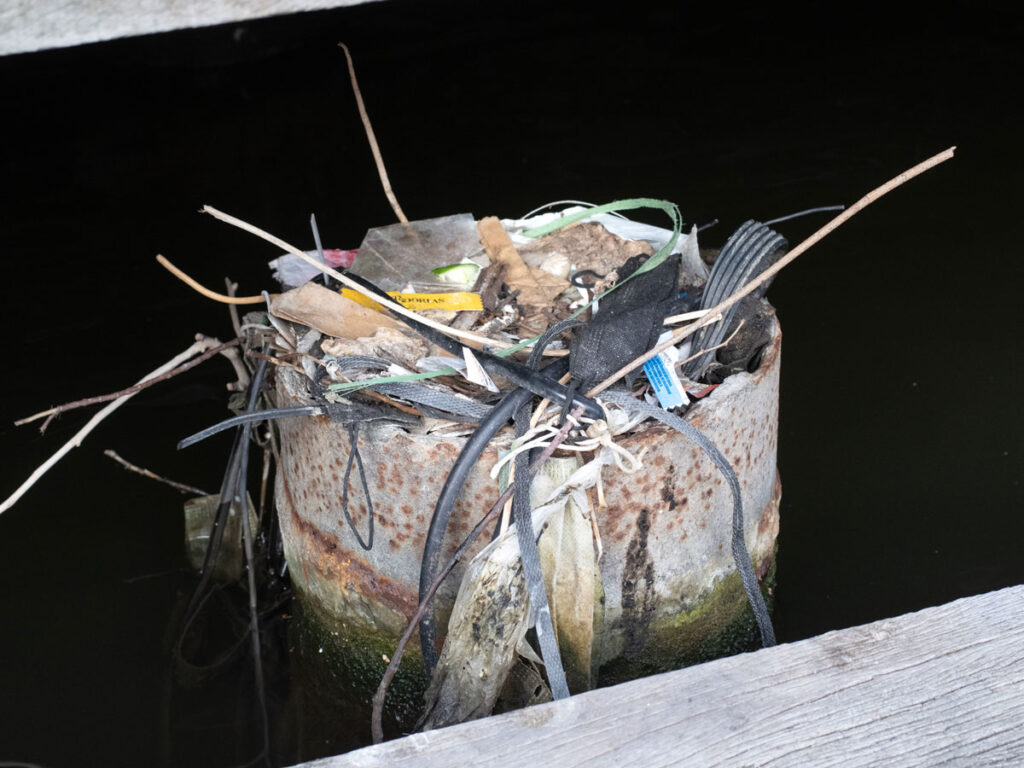
More than 460 million metric tons of plastic are produced each year, with that number growing all the time. When it’s used as food packaging, plastic often comes with an expiration date stamped on it. Auke-Florian Hiemstra of the Naturalis Biodiversity Center in Leiden, Netherlands, is a nidologist, or a scientist who studies birds’ nests. He used those expiration dates to trace the history of birds’ nests found along the canals in Amsterdam. In the past, carbon-14 dating has been applied to some very old nests, but using plastic proved to be a far easier process.
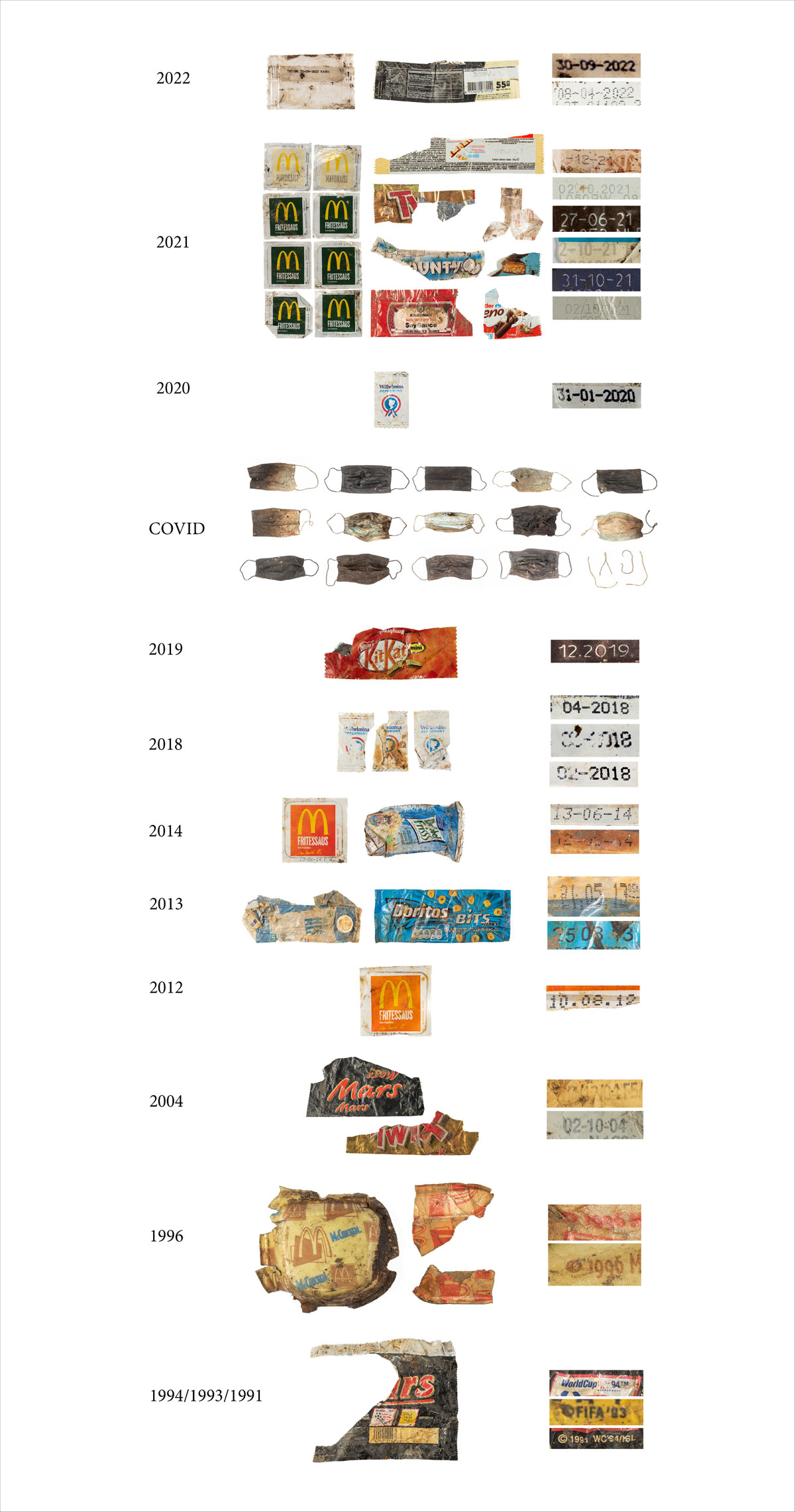
“This one bird nest that we found turned out to be like a history book,” Hiemstra said. The trash within it ranged from face masks from the COVID-19 pandemic to a candy bar wrapper advertising the 1994 FIFA World Cup. Of course, a piece of plastic’s expiration date doesn’t correspond exactly to the date when a bird incorporated it into its nest, but finding several pieces from the same time frame is suggestive. To increase confidence in the method, the researchers integrated their findings with the archives of Google Street View, which showed the presence of the nest at various points in time.
But even as plastic opens opportunities to estimate the ages of some natural materials, it may make it harder to tell the ages of others. That’s because plastic is derived from long-dead plants and animals that have negligible amounts of the carbon-14 isotope that’s used for carbon dating. Plastic carbon may dilute natural carbon and make materials appear older than they are.
This could be problematic for the study of ocean processes. One way of measuring how long it’s been since water was at the surface relies on carbon-14 dating. If 1% of the carbon in a sample of water is from microplastics—a conservative estimate given that up to 5% of ocean carbon is from plastic in some samples—then that would make the sample appear 64 years older than it actually is, calculated environmental oceanographer Shiye Zhao from the Japan Agency for Marine-Earth Science and Technology.
Ocean circulation proceeds over thousands of years, so adding 64 years doesn’t change the overall picture by very much. But the amount of plastic is always increasing, so “think about this in a future scenario,” Zhao said. Especially in plastic hot spots, the material could obscure the study of ocean circulation substantially.
“That could be an issue as more microplastics enter the ocean,” said Cundy.
The Anthropocene
Anthropogenic pollution can help scientists understand how nature is responding to other aspects of human influence.
We’re living in a period that’s colloquially called the Anthropocene because markers of human activity are obvious in environmental records worldwide. Although no formal date has been agreed upon, scientists have proposed a range of dates for when the Anthropocene began. One definition suggests that the period began in the mid-20th century and is marked by many human-made substances, such as plastic, that are evident in geological strata, including ice and sediment cores. But one of the most ubiquitous and reliable candidate markers for the start of the Anthropocene is plutonium-239. Atomic bomb tests conducted in the 1940s and 1950s were the main sources of plutonium-239, which went flying into the atmosphere and around the globe, depositing a layer across Earth and “labeling the entire planet,” said Cundy.
Having a marker for when anthropogenic activities began to affect the geological record is a powerful research tool.
Having a marker for when anthropogenic activities began to affect the geological record is a powerful research tool because it provides a benchmark against which scientists can measure how nature has responded since, said environmental geochemist Agnieszka Gałuszka from Jan Kochanowski University of Kielce, in Poland.
In a study of pollen in paleoecological records from across North America, for example, scientists looked at how the diversity of plant species has changed since the mid-20th century and compared that with previous time periods. They found that rates of species appearing and disappearing have been higher at any other time since the end of the last ice age, about 13,000 years ago. That’s probably because of land use changes, as well as of introduction of pests and invasive species to the continent, all driven by humans.
Likewise, in a study of peatlands in the Izery Mountains of Europe, researchers investigated how coal burning has affected microorganisms since the mid-1960s. By analyzing microbial communities, scientists discovered that amoebae picked up titanium, aluminum, and chromium from inorganic coal residue and incorporated these elements into their shells. “It was quite shocking news to all of us,” Gałuszka said.
Identifying pollutants as markers of the plausible start of the Anthropocene has led scientists to ask, “What has been the change over time?” said Cundy. “And, importantly, what have been the causes of that change over time? Is it human induced, or is it natural?”
—Saima May Sidik (@saimamay.bsky.social), Science Writer
Citation: Sidik, S. M. (2026), Pollution is rampant. We might as well make use of it., Eos, 107, https://doi.org/10.1029/2026EO260039. Published on 30 January 2026.
Text © 2026. The authors. CC BY-NC-ND 3.0
Except where otherwise noted, images are subject to copyright. Any reuse without express permission from the copyright owner is prohibited.