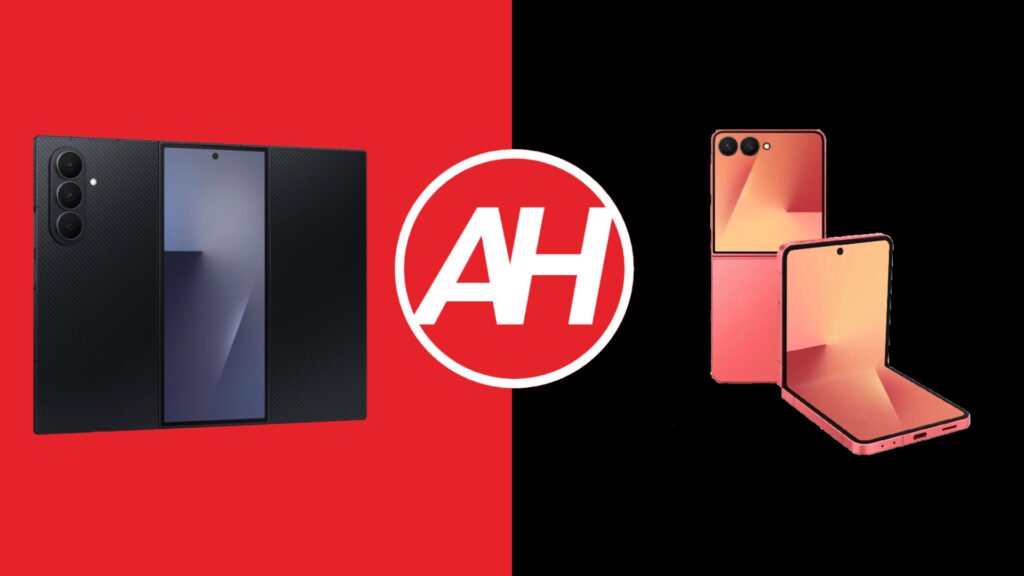

We’re back with yet another foldable comparison. This time around, we’re comparing a tri-fold with a regular, clamshell foldable. In other words, we’ll be comparing the Samsung Galaxy Z TriFold vs Samsung Galaxy Z Flip 7. Do note that we didn’t review the Galaxy Z TriFold just yet (we did have some hands-on time with it though), it’s not even out in the market (its global variant) at this point. We did, however, review the other two most recent foldables from Samsung.
The Galaxy Z TriFold has an identical camera setup to the Galaxy Z Fold 7, for example. We’ll first list the specs of both of these phones, and will then move to compare their designs, displays, performance, batteries, cameras, and audio performance. Let’s just get straight to it, shall we?
Specs

Samsung Galaxy Z TriFold

Samsung Galaxy Z Flip 7
| Samsung Galaxy Z TriFold | Samsung Galaxy Z Flip 7 | |
|---|---|---|
| Dimensions (unfolded/folded) | 159.2 x 214.1 x 3.9-4.2 mm / 159.2 x 75 x 12.9 mm | 166.7 x 75.2 x 6.5 mm / 85.5 x 75.2 x 13.7 mm |
| Weight | 309 grams | 188 grams |
| Main display | 10-inch Dynamic LTPO AMOLED 2X (120Hz) | 6.9-inch Foldable Dynamic LTPO AMOLED 2X (120Hz) |
| Cover display | 6.5-inch Dynamic LTPO AMOLED 2X (120Hz) | 4.1-inch Super AMOLED (120Hz) |
| Resolution | 2160 x 1584 / 2520 x 1080 | 2520 x 1080 / 1048 x 948 |
| Chipset | Qualcomm Snapdragon 8 Elite for Galaxy | Samsung Exynos 2500 |
| RAM | 16GB | 12GB (LPDDR5X) |
| Storage | 512GB/1TB | 256GB/512GB (UFS 4.0) |
| Main camera | 200MP (f/1.7 aperture, 1/1.3-inch sensor size, OIS, multi-directional PDAF) | 50MP (f/1.8 aperture, 1/1.57-inch sensor size, dual pixel PDAF, OIS) |
| Ultra-wide camera | 12MP (f/2.2 aperture, 1/2.55-inch sensor size, 120-degree FoV, dual pixel PDAF) | 12MP (f/2.2 aperture, 1/3.2-inch sensor size, 123-degree FoV) |
| (Periscope) telephoto camera | 10MP (f/2.4 aperture, 1/3.94-inch sensor size, 3x optical zoom, OIS, PDAF) | N/A |
| Selfie camera | 10MP (f/2.2 aperture, 1/3.0-inch sensor size) | 10MP (f/2.2 aperture, 1/3.0-inch sensor size, 1.22um pixel size) |
| Battery size | 5,600mAh | 4,300mAh |
| Charging | 45W wired, 15W wireless, 4.5W reverse wireless | 25W wired, 15W wireless, 4.5W reverse wireless (charger not included) |
| Colors | Crafted Black | Blue Shadow, Jet Black, Coral Red |
Samsung Galaxy Z TriFold vs Samsung Galaxy Z Flip 7: Design
These two phones look considerably different, of course. The Galaxy Z TriFold is a much larger smartphone when unfolded, and even if we look at both of them in a folded state, you’ll come to the same conclusion. The Galaxy Z TriFold is a thick phone that unfolds into a 10-inch tablet. The Galaxy Z Flip 7 is a tiny phone that unfolds into a regular-sized phone. The Galaxy Z TriFold kind of looks like a supersized Galaxy Z Fold 7, to a degree.
Both smartphones have a frame made out of aluminum. The backplate of the Galaxy Z TriFold is made out of fiber-reinforced polymer, while the Galaxy Z Flip 7 has a glass back. Both phones have a flat frame all around, and both have physical buttons on the right-hand side. The power/lock button sits below the volume up and down keys on both of them. You’ll also notice that both devices have a display camera hole on their main displays. All four displays on these phones are flat, by the way.
The Galaxy Z TriFold’s cover display sits on the back when the phone is unfolded, and becomes the main one when it’s folded. That one also has a display camera hole. The Galaxy z TriFold has only two folding states, a 10-inch display, and a 6.5-inch panel, unlike the Huawei Mate XTs. The Galaxy Z Flip 7 also has two folding states, its cover display from the rear becomes the main panel when it’s folded.
The Galaxy Z TriFold has the same rear camera setup as the Galaxy Z Fold 7, and it even looks the same. Three vertically-aligned cameras that sit in the top-left corner, on top of a camera island. The Galaxy Z Flip 7 has two horizontally-aligned cameras, both of which are placed in the top-left corner of the cover panel. Neither of these two phones is particularly grippy, which is not surprising considering the materials used here. Both smartphones are IP48 certified for water and dust resistance, while the Galaxy Z TriFold is much heavier.
Samsung Galaxy Z TriFold vs Samsung Galaxy Z Flip 7: Display
The Samsung Galaxy Z TriFold has a 10-inch Tri-Foldable Dynamic LTPO AMOLED 2X display with an adaptive refresh rate of up to 120Hz. That is its main panel. It’s flat, and it has a peak brightness of 1,600 nits. The screen-to-body ratio is around 90%, and the resolution is 2160 x 1584 pixels. The display aspect ratio here is 4:3. The cover display measures 6.5 inches, and it’s a Dynamic LTPO AMOLEX 2X panel with an adaptive refresh rate of up to 120Hz. The peak brightness here is 2,600 nits, while the Gorilla Glass Ceramic 2 protects it. The resolution is 2520 x 1080 pixels.

The Samsung Galaxy Z Flip 7’s main panel is a 6.9-inch Foldable Dynamic LTPO AMOLED 2X display. It offers an adaptive refresh rate of up to 120Hz, and it supports HDR10+ content. The peak brightness is 2,600 nits. The screen-to-body ratio here is around 89%, while the resolution is 2520 x 1080 pixels. The display aspect ratio is 21:9. On the flip side, the cover display measures 4.1 inches, and it’s a Super AMOLED panel. Its refresh rate goes up to 120Hz, while the peak brightness is 2,600 nits. The resolution here is 1048 x 948, while the Gorilla Glass Victus 2 protects this panel.
All four of these displays are actually really good and serve their purpose well. They’re all vivid, have good viewing angles, and good touch response. The main panel on the Galaxy Z TriFold could use more brightness, though it’s bright enough, we’d say. We did have some brief time with it, and it did seem dimmer than the Galaxy Z Flip 7’s display while in use, that’s for sure. All of those displays are solid, though.
Samsung Galaxy Z TriFold vs Samsung Galaxy Z Flip 7: Performance
The Samsung Galaxy Z TriFold is fueled by the Snapdragon 8 Elite processor. That is Qualcomm’s flagship chip for last year, and it’s a 3nm processor. That chip is backed by 16GB of LPDDR5X RAM here, and UFS flash storage. Do note that you cannot expand the storage in this smartphone.
The Samsung Galaxy Z Flip 7, on the flip side, is fueled by the Samsung Exynos 2500 processor. That is a 3nm chip as well, and it’s boosted by 12GB of LPDDR5X RAM. Samsung is also using UFS 4.0 flash storage here. This smartphone doesn’t support microSD card storage expansion either.
Samsung’s flip phone actually performs really well. It’s very smooth during usage, and while it won’t be as snappy as the Galaxy Z Fold 7, you really cannot see that much of a difference, not even in a direct comparison. It performs really well. The Galaxy Z TriFold, considering its specs, should offer the same performance as the Galaxy Z Fold 7, pretty much. Both of them are also able to run the most demanding games in the market, and all that, so there’s no problem in that regard. The Galaxy Z TriFold should be a bit more careful in that regard.
Samsung Galaxy Z TriFold vs Samsung Galaxy Z Flip 7: Battery
Samsung opted for a 5,600mAh battery for the Galaxy Z TriFold. The Galaxy Z Flip 7 includes a 4,300mAh battery on the inside. We still haven’t tested the Galaxy Z TriFold, so we can’t really say how good its battery is, though it will depend a lot on how you use the phone and how much you use the main display. That battery pack is the same size as the one included in the Huawei Mate XTs, though.
The Galaxy Z Flip 7, on the other hand, isn’t exactly particularly impressive in terms of battery life. If you end up using the main display a lot, the battery life may not be what you expect. However, in mixed usage, it can provide plenty of battery life. So it will all depend on how you use the phone. It’s a shame Samsung didn’t go for a silicon-carbon battery life; it would make a lot of difference.
When it comes to charging, the Galaxy Z TriFold supports 45W wired, 15W wireless, and 4.5W reverse wireless charging. The Galaxy Z Flip 7 supports 25W wired, 15W wireless, and 4.5W reverse wireless charging. We’re not really sure how fast will the Galaxy Z TriFold charge, but it should be faster than the Galaxy Z Fold 7. The Galaxy Z Flip 7 takes about an hour and a half to fully charge, with a compatible charger.
Samsung Galaxy Z TriFold vs Samsung Galaxy Z Flip 7: Cameras
The Galaxy Z TriFold has three cameras on the back. A 200-megapixel main camera (1/1.3-inch sensor size) is backed by a 12-megapixel ultrawide unit (1/2.55-inch sensor size, 120-degree FoV), and a 10-megapixel telephoto snapper (1/3.94-inch sensor size, 3x optical zoom). The Galaxy Z Flip 7, on the other hand, has a 50-megapixel main camera (1/1.57-inch sensor size) and a 12-megapixel ultrawide unit (1/3.2-inch sensor size, 123-degree FoV).

Samsung’s tri-fold handset has the exact same camera setup as the Galaxy Z Fold 7, and considering its specs in general, we’re expecting basically the same camera results. If that ends up being the case, the Galaxy Z TriFold will trump the Galaxy Z Flip 7 across the board. The main camera should be able to offer sharper images with more detail. We’re hoping that Samsung managed to gain some control over saturation, though.
The ultrawide camera on the tri-fold should also be better in comparison, especially in low light, as that’s a larger sensor we’re looking at. When it comes to telephoto shots, it’s not even a comparison, as the Galaxy Z Flip 7 does not include a telephoto camera at all. That’s a clear win for the Galaxy Z TriFold, no matter how you slice it.
Audio
Yes, there are stereo speakers included on both smartphones. The ones on the Galaxy Z Flip 7 are good, not great, just good. They’re loud enough and have good sound output. We still haven’t tested the ones on the Galaxy Z TriFold.
Neither of these two smartphones includes an audio jack, unfortunately. They do support wired audio connections via their Type-C ports, however. Both smartphones also support Bluetooth 5.4 for wireless audio connectivity.
The post Phone Comparisons: Samsung Galaxy Z TriFold vs Samsung Galaxy Z Flip 7 appeared first on Android Headlines.