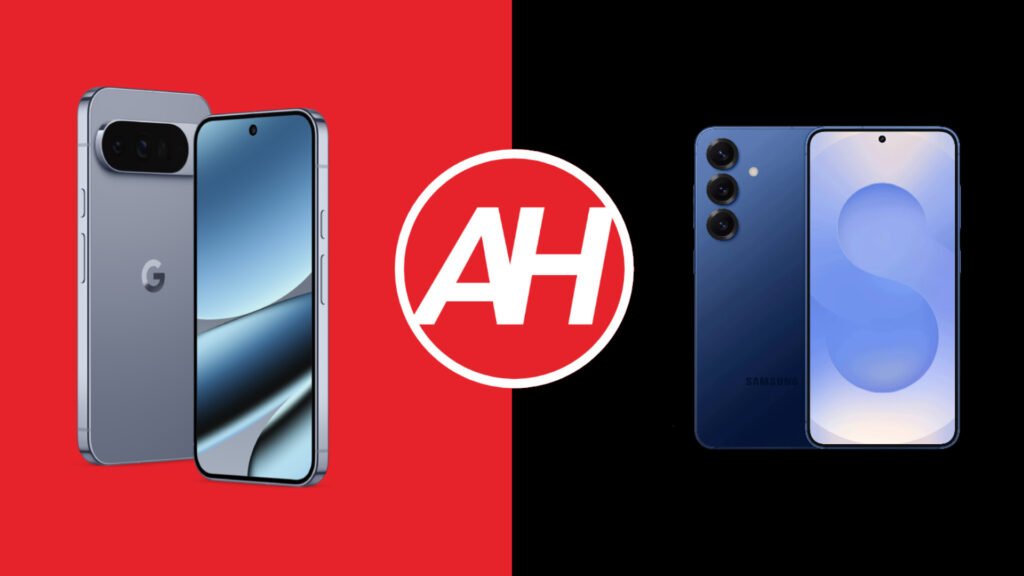

The Google Pixel 10 Pro XL is one of two flagship smartphones from the company. It’s the largest of the two models, and we’re here to compare it with the smallest flagship from Samsung. In other words, we’ll compare the Google Pixel 10 Pro XL vs Samsung Galaxy S25. The Galaxy S26 series is right around the corner, that’s true, but until that happens, the Galaxy S25 still stands as a member of the flagship series.
With that in mind, we’ll first list the specs of both phones and will then move to compare them across a number of categories. We’ll compare their designs, displays, performance, battery life, cameras, and audio output. They do have some similarities, but for the most part, these two phones are considerably different. So, let’s get to it, shall we?
Specs

Google Pixel 10 Pro XL

Samsung Galaxy S25
| Google Pixel 10 Pro XL | Samsung Galaxy S25 | |
|---|---|---|
| Dimensions | 162.8 x 76.6 x 8.5mm | 146.9 x 70.5 x 7.2 mm |
| Weight | 232 grams | 162 grams |
| Display | 6.8-inch Super Actual LTPO OLED display | 6.2-inch Dynamic LTPO AMOLED 2X |
| Refresh rate | Smooth Display (1-120Hz) | 1-120Hz (adaptive) |
| Resolution | 2992 x 1344 | 2340 x 1080 |
| Chipset | Google Tensor G5 | Qualcomm Snapdragon 8 Elite for Galaxy |
| RAM | 16GB (LPDDR5X) | 12GB (LPDDR5X) |
| Storage | 256GB/512GB/1TB (UFS 4.0) | 128GB/256GB/512GB (UFS 4.0) |
| Main camera | 50MP (f/1.68 aperture, 1/1.3-inch sensor size, 82-degree FoV) | 50MP (wide, f/1.8 aperture, 1/1.56-inch sensor size, 1.0um pixel size, dual pixel PDAF, OIS) |
| Ultra-wide camera | 48MP (f/1.7 aperture, 1/2.55-inch sensor size, 123-degree FoV) | 12MP (f/2.2 aperture, 1/2.55-inch sensor size, 120-degree FoV, 1.4um pixel size) |
| Telephoto camera | N/A | 10MP (f/2.4 aperture, 1/3.94-inch sensor size, 1.0um pixel size, PDAF, OIS, 3x optical zoom) |
| Periscope telephoto camera | 48MP (f/2.8 aperture, 1/2.55-inch sensor size, 5x optical zoom, 22-degree FoV) | N/A |
| Selfie camera | 42MP (f/2.2 aperture, 103-degree FoV) | 12MP (f/2.2 aperture, 1/3.2-inch sensor size, 1.12um pixel size) |
| Battery size | 5,200mAh | 4,000mAh |
| Charging | 30W wired, 25W Qi2 wireless (charger not included) | 25W wired, 15W wireless (Qi2 Ready), 4.5W reverse wireless (charger not included) |
| Colors | Moonstone, Jade, Porcelain, Obsidian | Icy Blue, Mint, Navy, Silver Shadow, Pink Gold, Coral Red, Blue Black |
Google Pixel 10 Pro XL vs Samsung Galaxy S25: Design
You’ll notice that these two phones have a similar shape. They both have rounded corners, which are not identical but similar. They also include flat displays with a centered display camera hole up top. The bezels on both phones are also uniform and quite thin. The bezels on the Galaxy S25 are thinner than the ones on the Pixel 10 Pro XL, though. The difference is not massive, but it’s noticeable. That camera hole is also smaller on the Galaxy S25.
Both phones have a flat frame all around, though on both of them, it does round up towards the edges, for comfort’s sake. The Pixel 10 Pro XL includes a power/lock key above the volume up and down buttons on its right side. The Galaxy S25 features a power/lock key below the volume up and down keys. There are no buttons on the left side of either one of these two smartphones. Speaking of which, both frames are made out of aluminum, and there’s glass on the back of the two devices.
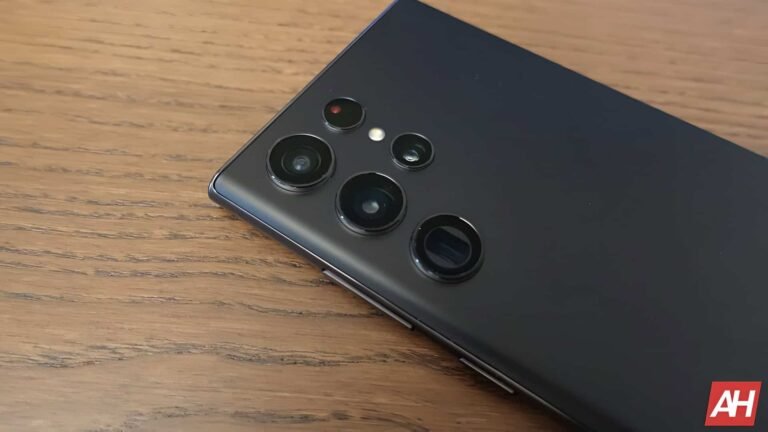
Speaking of the back, their back sides do look quite different. The only commonality is the flat backplate. The Pixel 10 Pro XL has a horizontal camera visor back there. It’s placed up top, and it does protrude quite a bit. The Galaxy S25 has three vertically-aligned cameras in the top-left corner. Each of those cameras protrudes directly from the backplate. The camera hardware is quite different in comparison, by the way.
The Pixel 10 Pro XL is a considerably larger phone. It has a notably larger display, so that’s not a surprise. It also weighs quite a bit more at 232 grams, compared to 162 grams of the Galaxy S25. Both phones are IP68 certified for water and dust resistance, and both of them are quite slippery.
Google Pixel 10 Pro XL vs Samsung Galaxy S25: Display
The Google Pixel 10 Pro XL includes a 6.8-inch LTPO OLED display, a flat panel. It has a refresh rate of up to 120Hz, and supports HDR10+ content. The peak brightness here is 3,300 nits. The screen-to-body ratio is at around 88%, while the resolution is 2992 x 1344 pixels. The display aspect ratio is 20:9. This display is protected by the Gorilla Glass Victus 2, in case you were wondering.

The Samsung Galaxy S25, on the other hand, has a 6.2-inch Dynamic LTPO AMOLED 2X display. That panel has a refresh rate of up to 120Hz and supports HDR10+ content. The peak brightness is 2,600 nits. The screen-to-body ratio here is around 91%, while the resolution is 2340 x 1080 pixels. The display aspect ratio is 19.5:9. This display is protected by the Gorilla Glass Victus 2.
Both of these displays are really good, actually. There’s really not much to complain about here. They’re both vivid and sharp, and have good viewing angles. Both of them are also well-protected and have good touch response. The Pixel 10 Pro XL’s panel does technically get a bit brighter, but in all honesty, it’s not too noticeable. Both displays are good, albeit a bit differently-tuned out of the box. You do have additional options for each, though.
Google Pixel 10 Pro XL vs Samsung Galaxy S25: Performance
The Google Pixel 10 Pro XL is fueled by the Google Tensor G5 processor. That is a 3nm chip from Google, and it’s paired with 16GB of LPDDR5X RAM. Google also included UFS 4.0 flash storage here. The Samsung Galaxy S25, on the other hand, is fueled by the Snapdragon 8 Elite chip. That is also a 3nm processor, and in the case of this phone, it’s backed by 12GB of LPDDR5X RAM and UFS 4.0 flash storage. Neither phone supports storage expansion.
The Snapdragon 8 Elite is technically a bit more powerful, that’s true. However, the Google Tensor G5 is not a slouch either, and it’s made to work properly with Pixel devices. Both of these phones fly through everything you throw at them on a daily basis. They’re snappy when it comes to opening and closing apps, multitasking, image and video processing… basically anything you can think of. It should also stay that way for quite some time.
What about gaming, though? Well, the Galaxy S25 is the better option for gaming because of its CPU. The thing is, both phones can run pretty much any game on the market. If you’re running not graphically demanding games, it really doesn’t matter. However, when it comes to truly demanding games, the Galaxy S25 is the better call. Neither of these two devices is made for gaming, though.
Google Pixel 10 Pro XL vs Samsung Galaxy S25: Battery
There is a 5,200mAh battery included inside the Pixel 10 Pro XL. The Galaxy S25, on the other hand, has a 4,000mAh battery on the inside. Yes, the Galaxy S25 has a smaller battery, but it also has a considerably smaller display. These two phones are actually not that different in terms of battery life. They’re both good, but not great, not great at all. There are flagships out there with much, much better battery life.
In all honesty, with more intense use during the day, we managed to kill both of these phones ahead of time. Any form of gaming does drain them quite a bit, and even without gaming, they’re not exactly rock solid in terms of battery life. We do reckon that for most people, they’ll be fine. It would be an easier pill to swallow if they charged blazingly fast, but that’s not exactly the case either.
The Pixel 10 Pro XL supports 45W wired, 25W wireless (Qi2), and 5W reverse wired charging. The Galaxy S25, on the other hand, supports 25W wired, 15W wireless (Qi2 Ready), and 4.5W reverse wireless charging. Neither phone ships with a charger in the box. With a compatible charger, however, the Pixel 10 Pro XL can reach a full charge in around an hour and 20 minutes, while it takes the Galaxy S25 around the same time, perhaps around 5 minutes less. That’s not in line with the fastest-charging phones out there.
Google Pixel 10 Pro XL vs Samsung Galaxy S25: Cameras
The Google Pixel 10 Pro XL has three cameras on the back. Its main camera is a 50-megapixel unit (1/1.31-inch sensor size), while it’s backed by a 48-megapixel ultrawide unit (1/2.55-inch sensor size, 123-degree FoV). The third camera on the back is a 48-megapixel periscope telephoto unit (1/2.55-inch sensor size, 5x optical zoom).

The Samsung Galaxy S25, on the flip side, has three cameras on the back also. A 50-megapixel main unit (1/1.56-inch sensor size) is backed by a 12-megapixel ultrawide camera (1/2.55-inch sensor size, 120-degree FoV). The third camera on the back of Samsung’s phone is a 10-megapixel telephoto camera.
The Pixel 10 Pro XL has the upper hand on all three cameras, hardware-wise. And yes, the results are also better across the board on the Pixel 10 Pro XL. The images may not look realistic, but they look great even in their processed form. They’re nice and contrasty. The Galaxy S25 simply can’t get the balance right, and the images are often oversaturated. They’re good, but not to the level of the Pixel 10 Pro XL. That goes for all three cameras, and for low-light as well.
Audio
Both of these phones have stereo speakers on the inside. Those speakers are nice and loud on both devices, though they’re louder on the Pixel 10 Pro XL. The sound output is also good on both phones.
What they do not have is a 3.5mm headphone jack. You can use their Type-C ports for the same purpose, though, if you have a dongle. Bluetooth 6.0 is supported on the Pixel 10 Pro XL, while the Galaxy S25 supports Bluetooth 5.4.
The post Phone Comparisons: Google Pixel 10 Pro XL vs Samsung Galaxy S25 appeared first on Android Headlines.