When I was a kid, I had a chore chart which listed what I was “supposed” to do every week — fold towels, clean the bathrooms, etc. For every chore I did, I would typically earn an allowance. Now, some parenting experts say that paying kids to do chores is actually counterproductive in some way, and kids should help around the house without the expectation of financial compensation because, obviously, one day, they’re going to grow up and have a house of their own. And as we all know, no one is paying us to make our beds when we’re grown.
Others argue that kids need that financial motivation to get a jump start on chores and do anything to help their family with household responsibilities. So, which is it? Well, one family seems to have found the sweet spot, combining both of these ideologies.
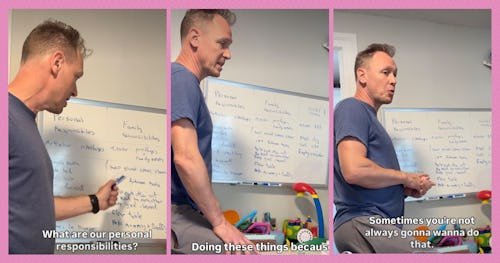
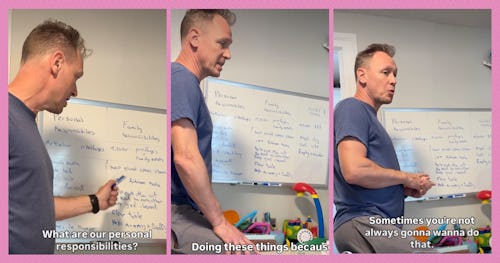
On her Instagram account, Ashley Hutchings filmed her husband explaining how responsibility works in their house to their kids. They’re calling it the “Year of Allowance,” and here’s how it works.
Hutchings and her husband put together a “Family Responsibilities Framework” and explained to their kids that this is a system that will (eventually) get them some cash for their piggy banks.
First, there are two pillars of responsibility. The first two pillars need to be fulfilled before the kids have a chance to earn money.
“Personal Responsibilities earn PRIVILEGES,” she wrote in her caption.
For example, if the kids keep their rooms clean, they earn TV time. Practicing piano and getting dressed after breakfast leads to playtime.
Then, the kids also need to fulfill their “Family Responsibilities,” like helping mom with laundry or setting the table, which earn family privileges like special outings. If the kids contribute to the betterment of the family, then they can do fun things as a family.
Lastly, the kids need to do “work” to earn money.
“This has gone through several iterations with switching up chores and offering a weekly bonus to those who are consistent, but the chores remain: feeding the dog, feeding the cats, and emptying the dishwasher. Our kids are 8, 6, and 4, and this model works for us!” she wrote in the caption.
She has also gained major insight into each of her kids from this new development.
“I’ve seen who is a hustler and who is not, but have watched all of my kids grow and contribute more than they ever have. They know what we expect, and they know the rewards.”