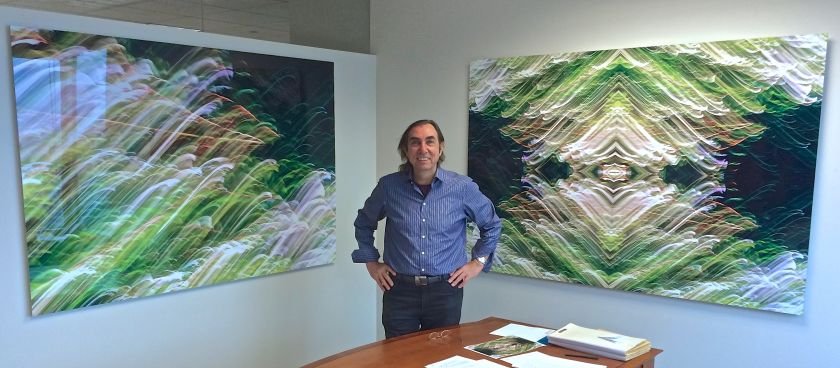
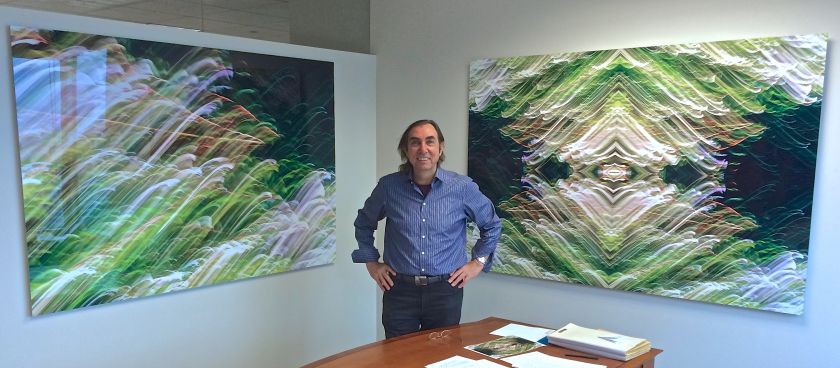
Pen Densham with the R. Wyman office installation “Fluent Chords”
The writer and producer of Robin Hood: Prince of Thieves is currently forging a fresh career in photography. Pen Densham shares his life lessons on creative courage and the crippling cost of holding back.
After more than 50 years in the creative industries, Pen Densham‘s list of achievements is as long as your arm. The founder of Trilogy Entertainment Group, he’s written, directed and produced countless films, including Robin Hood: Prince of Thieves, Backdraft, Moll Flanders and Houdini, as well as TV revivals of The Outer Limits and The Twilight Zone. He’s been mentored by Norman Jewison, decorated by Queen Elizabeth II and earned two Oscar nominations. He left school at 15 and hasn’t stopped working since.
Yet when you ask what he wants to be remembered for, he doesn’t mention any of that. “I don’t want to be looked at as a ‘success’,” he says today. “I want to be looked at as somebody who stumbled forward and just kept exploring, and never let the dream die.”
It’s a disarming sentence, but entirely consistent with his philosophy. Which turns out to be one built less on mastery than on the willingness to be imperfect in public; to push past your inner critic, and to do the work. Even—especially—when nobody thinks it’s a good idea…
The cost of holding back
Born in Ruislip, Middlesex, in 1947, Pen grew up in the orbit of cameras. His father made short theatrical films, and he was dragged along to sets from the earliest age (partly, he suspects, because his parents couldn’t afford a babysitter). He rode a live alligator in one production at four years old. Cameras felt like magic from the start.
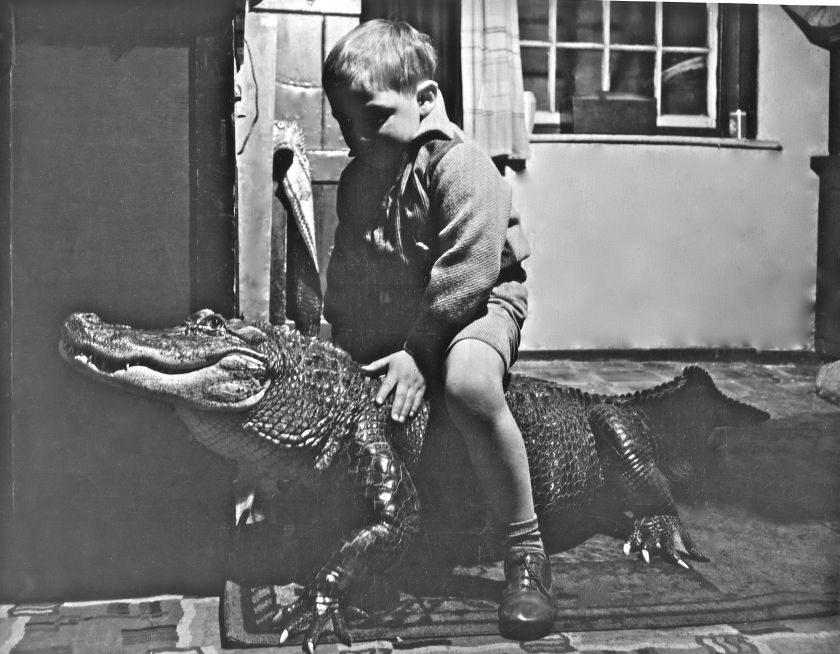
Pen Densham riding an alligator in the short film Strange Cargo
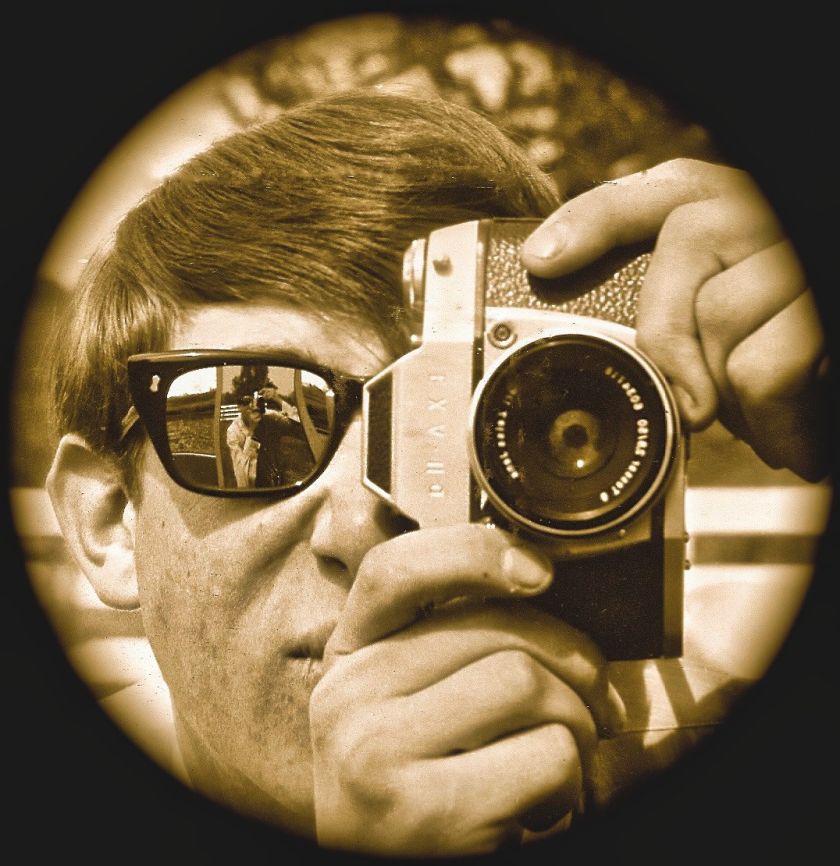
Pen Densham Reflected at 15 years. Taken at his New Forest home
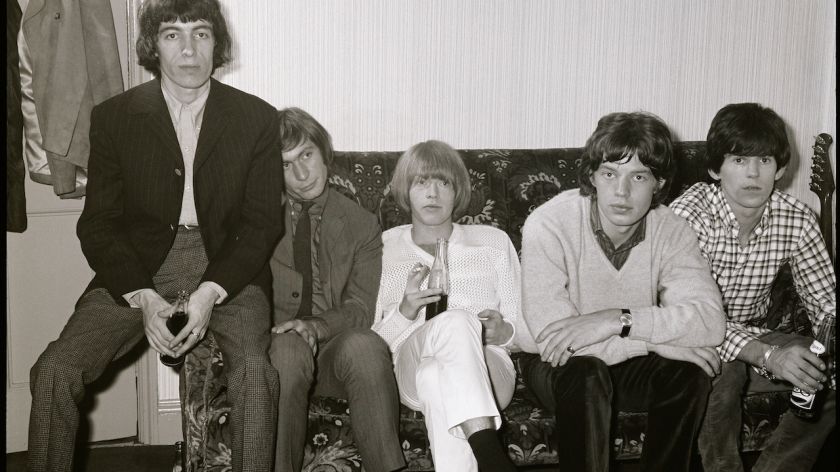
Photo by Pen Densham. Taken at Gaumont Theatre, Southampton, 25-9-65
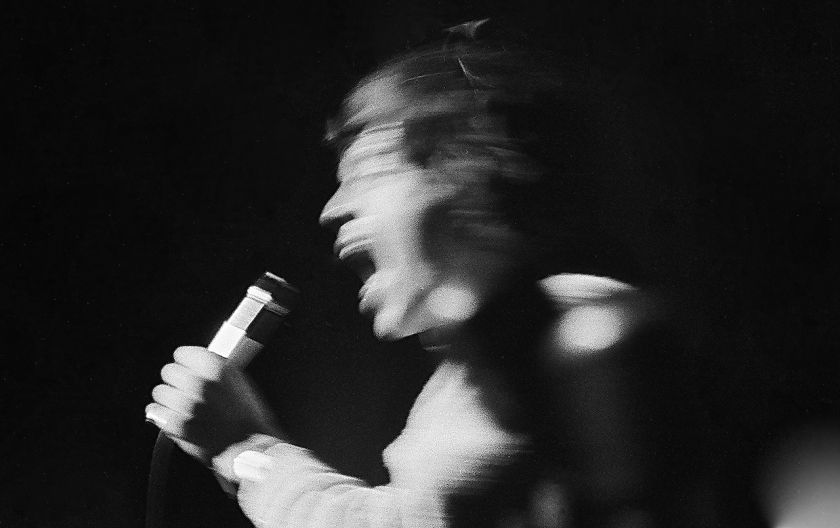
“Mick” by Pen Densham. Taken at the Rolling Stones concert at Gaumont Theatre, Southampton, 25-9-65
But his childhood was marked by difficulty. His mother died when he was eight, aged just 32. His father subsequently married a woman Pen describes as “truly Cruella de Vil on acid”. She was an alcoholic who tried to have Pen and his siblings placed in care. At 14, he spent time in an orphanage and was accused of being an “egomaniac” for loving photography.
“That difficulty gave me an outsized sense of wanting to protect other people’s creativity,” he reflects today. “When you’re trying to create something that doesn’t yet exist—something ephemeral, with no flight path —and you have instincts that it can be achieved, then having someone constantly stepping on you gave me a sense that I wanted to give back.”
It was an encouraging English teacher, DJ Moss, who changed the course of his life. He ignored Pen’s terrible handwriting and poor spelling, gave him the school photography prize, two articles in the school magazine and the lead in the school play. Years later, once Robin Hood: Prince of Thieves had become one of Warner Brothers’ biggest-ever movies, Pen tracked him down in retirement to call and thank him.
“I got the school to give me his number, and I felt that was really important,” he says, visibly moved as he retells the story. “I said: ‘You probably don’t even remember me, but I wanted you to know.'”
This anecdote points to what he considers Pen’s most important lesson for any creative: not technique or timing, but the huge cost of inaction. “My errors of omission have cost me far more than my errors of commission,” he explains. “The places where I cowarded out, because I was embarrassed or thought I would look too pushy—where I held myself back—those are the things I regret.”
Writing the unsellable script
Robin Hood: Prince of Thieves was an example of this principle in action. Pen didn’t develop it as a commercial proposition. He’d recently had a son and wanted to write about “altruistic heroism”. The story revolved around a spoiled baron’s son who learns he’s willing to die for his peasants’ children, with a Muslim and a Christian working side by side.
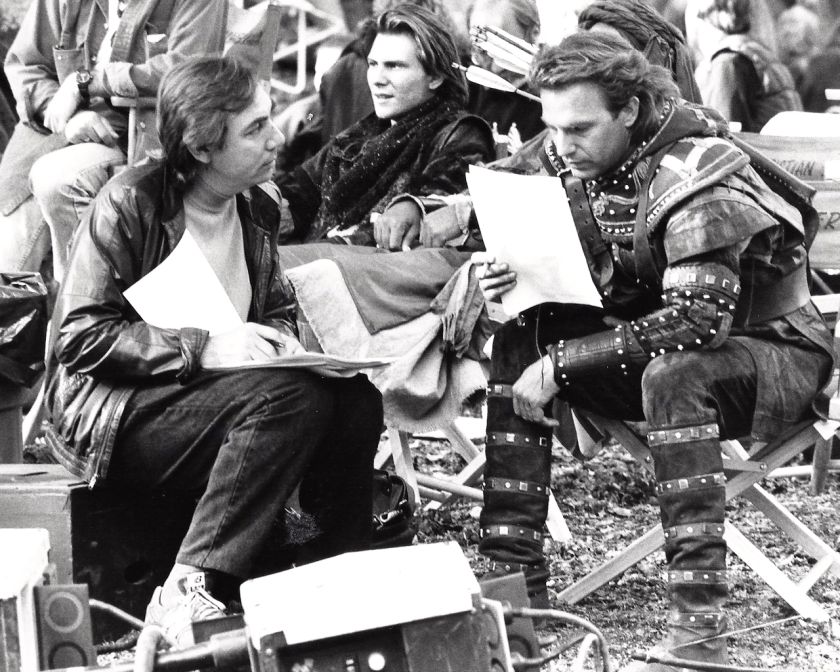
Pen Densham on set with Kevin Costner for Robin Hood: Prince of Thieves, with Christian Slater in the background
Pen pitched the idea to three studios. Each told him it was the stupidest idea they’d ever heard. They said nobody wanted films with swords when guns were where the action was. He wrote it anyway. “This was what I call a life script,” he explains. “Something that comes out of an unconscious passion. I needed to write it to explore myself, never expecting it to become what it did.”
His typist said she thought it was a great idea and would help however she could. Pen started writing. With a cast including Kevin Costner, Alan Rickman and Morgan Freeman, the film went on to generate one of Warner Brothers’ largest-ever grosses. The Bryan Adams song ‘Everything I Do (I Do It For You)’ was number one in 19 countries.
Yet none of that, for Pen, is the point. The point is that he wrote the movie because he had to. And he believes the same principle should apply to all creative work… whether it reaches an audience or not.

Pen Densham on set with Kevin Costner for Robin Hood: Prince of Thieves
It’s a philosophy that stemmed in part from an incident early in his career. The celebrated director Norman Jewison was so impressed with Pen’s first drama as a solo writer/director that he offered to mentor him into Hollywood. Yet he very nearly turned him down.
“I didn’t think I was good enough,” he recalls. “That was my imposter syndrome speaking. Luckily, Norman could see how good I could be. And that’s one of the things I love sharing: the imperfection I’ve had in my career. I want to make the process of imperfection a normality; the experimentation justified, the rejections part of the learning process.”
Letting go of the camera
As well as a filmmaker, Pen’s always been a keen photographer. He photographed the Rolling Stones at 17, sold images as a teenager, and spent time doing industrial photography. But for many years, his still images disappointed him. He was shooting Kodachrome slides, following the rules, holding the camera still. But the results felt emotionally flat. He gradually set his cameras aside and channelled his visual energies into film. Until one day, his teenage daughter picked up his old Nikons… and it was a revelation.
“Her untrained image-making was so much more fluid and ethereal than mine,” Pen recalls. “She wasn’t following the rules. She was just exploring.” A digital Lumix LX2, given to him for Christmas, started a new chapter.
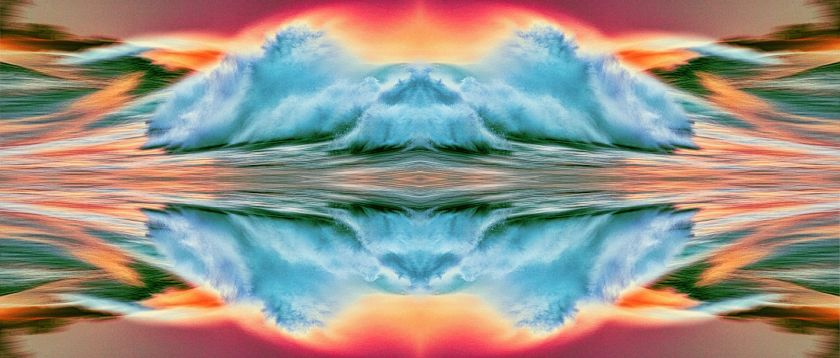
“Aquaessence” by Pen Densham. Part of the Wavelife Series. Taken in Oahu, Hawaii, 2019
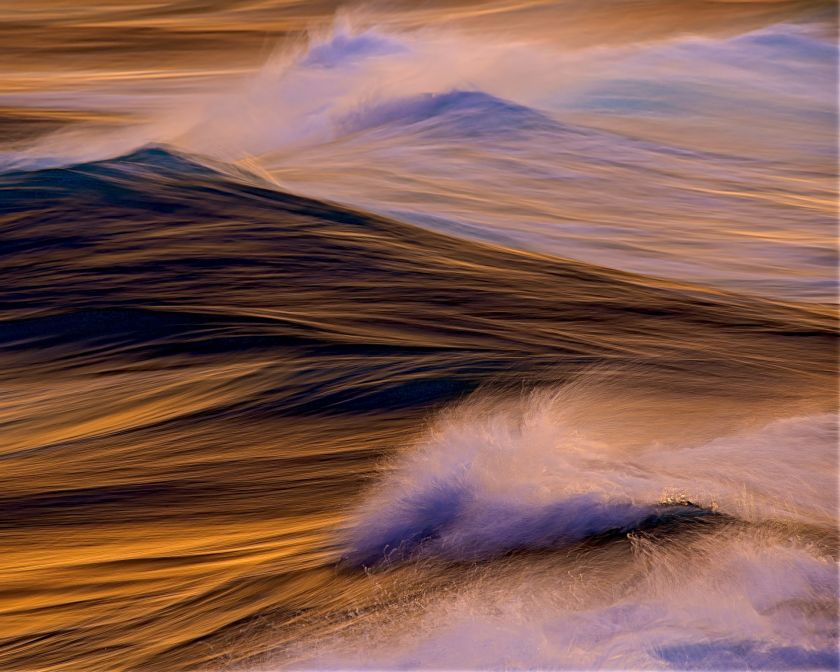
“Windborn” by Pen Densham. Part of the Wavelife Nocturne Series. Taken in Oahu, Hawaii, 2019
Pen waded out into the Hawaiian ocean at sunset, holding the camera up arm high as the waves came at him. When they retreated, he lowered the camera to within inches of the moving water and came away with images he describes as “these maelstroms of water, light and colour”. He showed them to friends. People said they were very cool.
What followed was a long process of what Pen calls “unlearning”. In the Okefenokee Swamp in Georgia, the dark, particulate water acted like a moving mirror. Pen began moving his camera as the boat created ripples in the light, revealing unexpected forms, striations, and sculptures in his images.
Pen began thinking about an Inuit concept from his collection of native American art; the idea that a sculptor releasing an animal from soapstone isn’t imposing a form, but discovering one. “I started to approach what was in my images by saying ‘I don’t know what this is’, as opposed to ‘this is supposed to be’, he explains. “I realised that a lot of photography is about teaching us what we’re supposed to do to make pictures that look like what other people’s good pictures look like. And I decided I didn’t want to do that any more.”
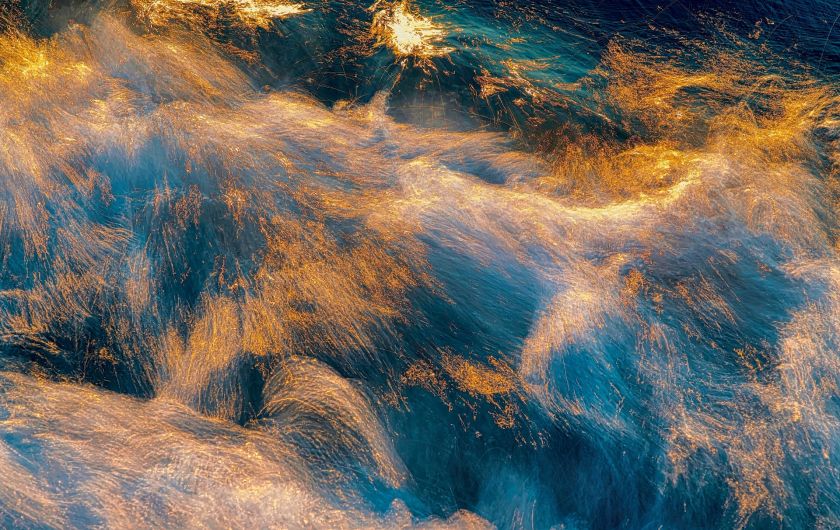
“From Water We Came” by Pen Densham. Taken at Lake Huron Series, Ontario, Canada, 2022
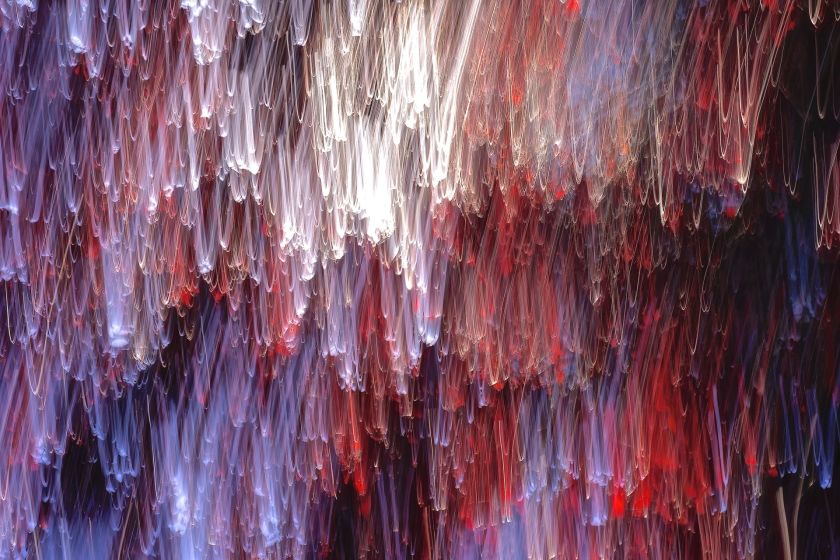
“Wavelength” by Pen Densham. From the Napa Crimson tree series. Taken in Napa Valley, 2013
Pen’s editing process is deliberately simple. Apple Photos, a couple of plugins, noise-reduction software run multiple times, and adjustments are layered until something clicks. The inner critic is still present (he quotes it colourfully and at length), but he’s learned to work through it. “When it feels right, it literally gets emotional,” he says. “I choke up when I’m working on a photo, and it comes together.”
His impressionistic studies of water, trees, koi ponds and waves now hang in galleries in Los Angeles and in private collections from California to Monaco. He’s also gathered them in a book, Qualia – named for a philosophical term describing sensory experiences that resist verbal description – which he offers as a free download.
What comes next
Pen is honest about the reception he’s received. “I’ve not found the photography world particularly receptive to my work,” he says. “But I do have people in the art world who go nuts for it. And I’m on a journey, letting go of the dogmas of an art that I love.”
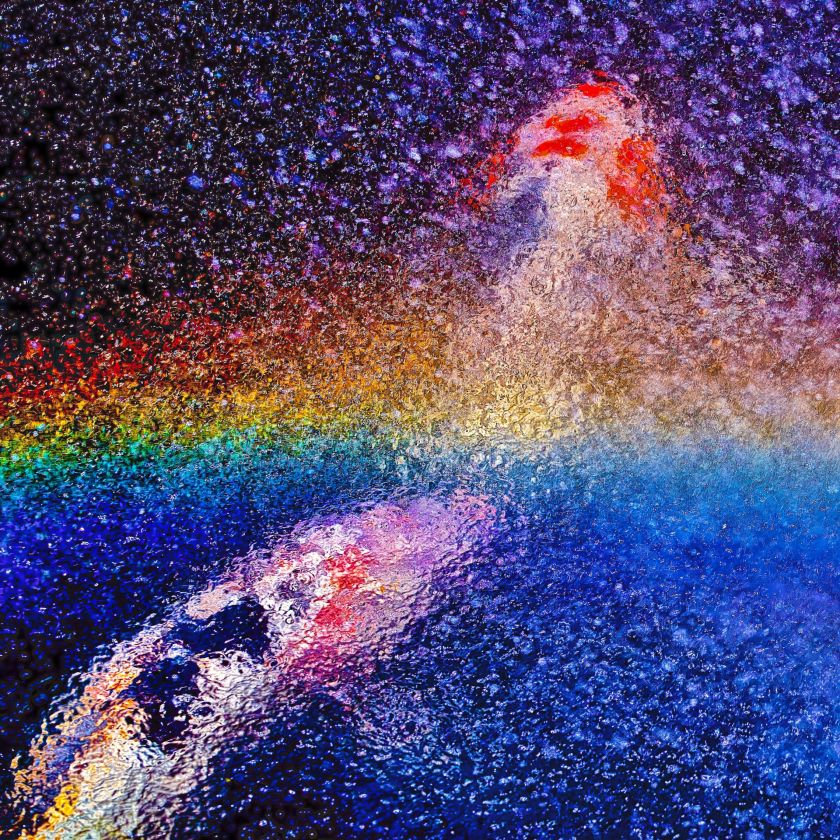
“The Dragon’s Gate” by Pen Densham. Part of the Dragon’s Gate Koi series. Taken in LA, California, 2014
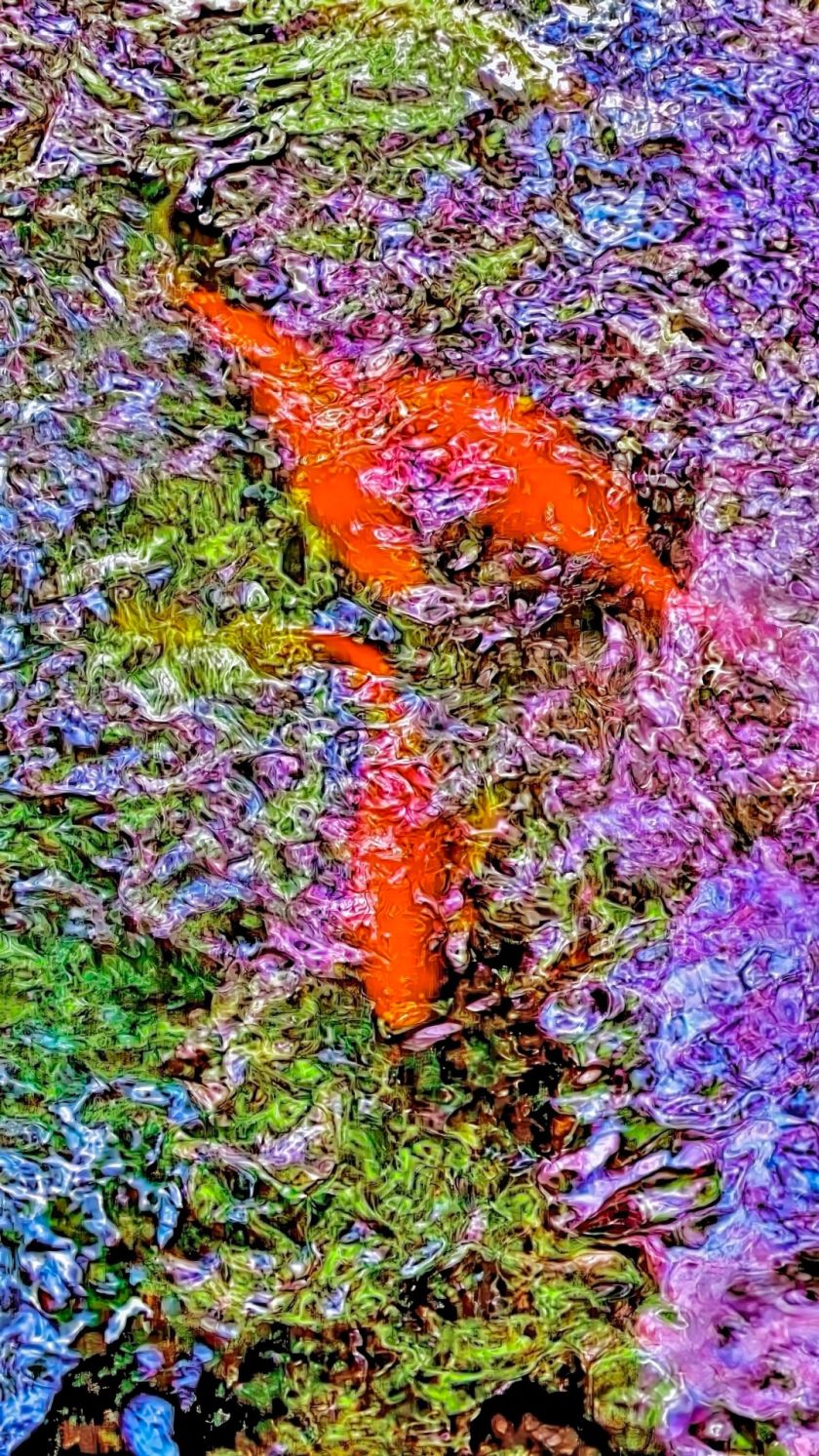
“Pen’s Koi Pond with blossom reflections” by Pen Densham. Part of the Dragon’s Gate Koi Series. Taken in LA, California, 2009

“Anything is Possible” by Pen Densham. Part of the Plant Life Series. Taken at The Guggenheim in Balboa, Spain, 2019
He still has no clear destination in mind, yet seems genuinely unbothered by the fact. “I’m very excited just to see what keeps coming out of me,” Pen enthuses. “I’d love to actually make a contribution to photography; to be considered to have a style worthy of contributing something to a medium I love. But right now, that’s not the point. Right now, just seeing what comes next is enough.”
Whatever your creative discipline, if you’re wrestling with self-doubt, market pressure or the fear of looking foolish, it’s a perspective worth sitting with. In Pen’s world, the stumbling is the point. The dream just has to stay alive.