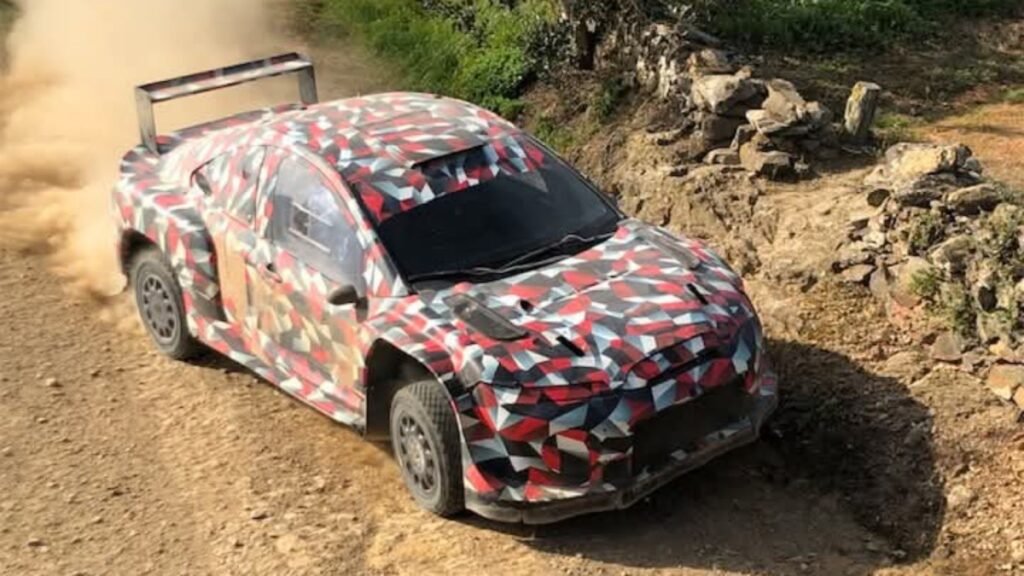
A camouflaged Toyota two-door rally car prototype has been spotted testing on a gravel rally stage in Portugal, and the intriguing thing about it is that it looks like no existing model from the automaker’s current lineup.
Wearing Toyota Gazoo Racing’s trademark red, black and white camouflage livery, the coupe prototype was caught on camera by rally fan Marcio Pereira, and the images and videos he took were shared on X.com and picked up by Australia’s Drive. According to rally specialist website DirtFish, the images and videos of the mysterious prototype are genuine, not AI-generated.
Toyota Gazoo Racing WRT Confirmed It Is Testing a New Prototype
🚗 Toyota WRC27?
🎥 Márcio Pereira pic.twitter.com/xkKNzQhM8a— eWRC-results (@eWRCresults) February 26, 2026
Corroborate that with the fact that the publication got official confirmation from Toyota Gazoo Racing WRT technical director Tom Fowler that a new prototype is currently being tested, and it’s pretty clear that the current GR Yaris WRC car will be replaced next year by a different model.
This has got to be one of the most exciting news for Toyota fans this year, as the early prototype seen in the photos likely also previews the long-awaited next-generation production GR Celica, which has been reported to adopt a mid-engine layout for the first time in the nameplate’s history.
Mind you, the mid-ship configuration hasn’t been confirmed by Toyota yet, and this particular rally prototype appears to be front-engined, judging from the large front air intakes and bonnet vents. It’s perfectly natural to be so because WRC27 regulations for next year mandate a front-engine layout with a 1.6-liter turbo engine. Toyota must abide by these rules if it wants the upcoming Celica—or whatever model this is—to compete in the WRC; and it certainly wants to, seeing as it’s testing it hard on a WRC rally stage.
Premières images de la Toyota WRC27 en essais au Portugal #WRC
Photos : Marcio Pereira pic.twitter.com/JLDMR9ejMn
— Rallye Sport (@RallyeSport) February 26, 2026
That said, WRC27 regulations will give manufacturers more design freedom as aerodynamics will be reduced to allow for a more “playful” driving experience, increasing spectator appeal in the process.
The chassis will be a common standardized tubular space frame, but manufacturers will be allowed to design various bodyworks, including production-based or bespoke concepts. This probably explains the chubby proportions of this Toyota rally prototype—the production version will most likely be lower and sleeker.
Common Design Cues With the Rally Car But Radically Different Mechanical Layout?
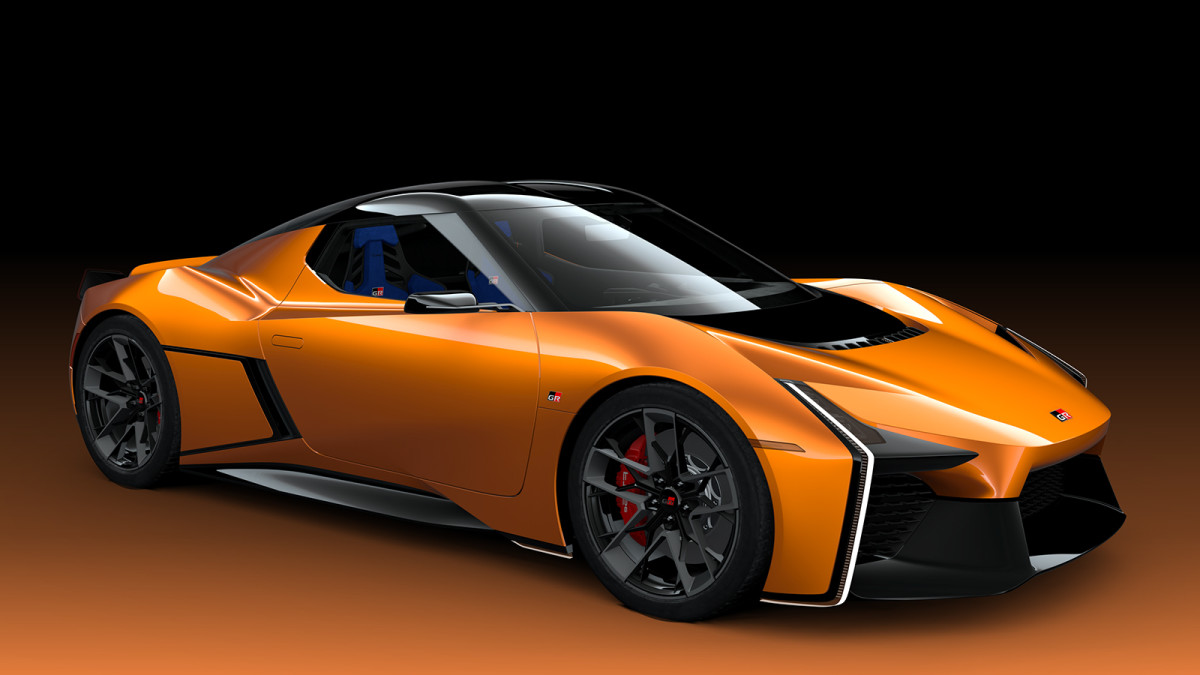
Speaking about the production model, Toyota can go for a different mechanical layout, and judging by how broad the rear wheel arches are on this prototype, it’s not hard to imagine some air intakes integrated in them. The automaker will definitely want the rally car to resemble the production version as much as possible to abide by the “Win on Sunday, sell on Monday” marketing mantra coined by Ford dealer Bob Tasca in the 1960s.
Since Toyota chose to give its WRC27 car a coupe shape, it most likely means it will bear the iconic Celica badge, one of the brand’s most successful WRC nameplates with driver’s titles in 1990, 1992, 1993 and 1994, as well as manufacturers’ titles in 1993 and 1994.
Now, if the upcoming production Celica indeed goes mid-engined, it likely means there won’t be a next-gen MR2, as the Celica and MR2 might fuse into a single model—the compact dimensions of the WRC27 prototype seen here certainly give credence to that theory.
Japanese magazine Best Car claims the next Celica will use Toyota’s next-generation 2.0-liter turbo four-cylinder engine producing more than 400 hp and 400 lb-ft of torque, without hybrid assistance. It’s expected to offer AWD, but it’s not clear if that will be standard or an option above a base RWD setup.
Six-speed manual and eight-speed automatic transmissions are also rumored, along with carbon fiber roof, hood and decklid. The publication claims the GR Celica will debut at the 2027 Tokyo Auto Salon in January and go on sale in 2028.