Invented in India: The Structural Shift from Service-First to IP-First
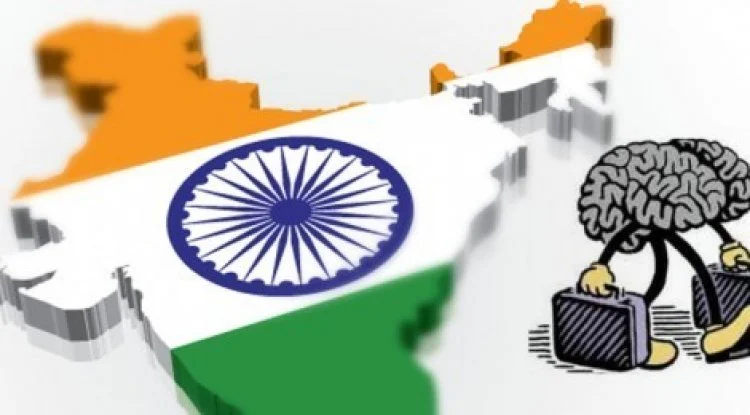
For a considerable decade, India’s technology mechanism has been largely synonymous with its services, ranging from software engineering to IT outsourcing, to larger business process services that have undoubtedly generated meaningful economic value through their proper execution, rather than prioritising the ownership of proprietary technologies. Interestingly, in the past decade, there has been a shift towards the IP First model, wherein the creation, ownership, and associated commercialisation of various technologies have gained an upper hand, and simultaneously, intellectual property drives economic development and growth.

Establishment of the Research, Development and Innovation Scheme
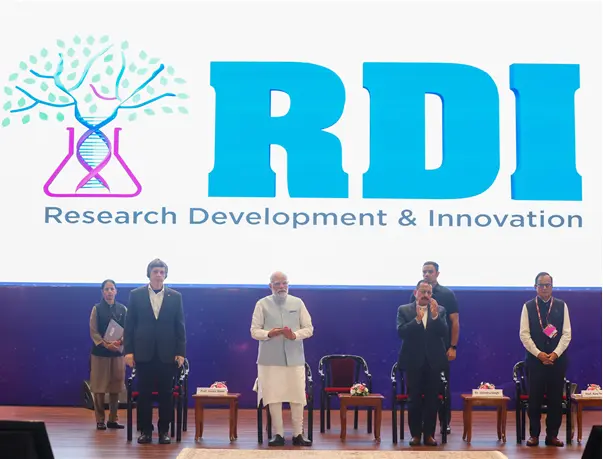
Recently, the Department of Science and Technology (DST) launched its Research, Development, and Innovation Scheme, which was sanctioned by the Union Government on 1st July, 2025. With a historic outlay of around 1 lakh crore, this scheme aimed to strengthen and catalyse private sector participation and involvement in R&D, which would foster India’s national capabilities in sectors of strategic technologies to promote technological self-reliance, which would align with the optimistic Atmanirbhar Bharat vision of the country.
The initiative is executed through the implementation of a two-tier financing structure: a Special Purpose Fund under the Anusandhan National Research Foundation that would cascade funds to second-level fund managers such as Alternative Investment Funds, NBFCs, and other research organisations. They would allocate capital to high-technology readiness level projects, equity investments, and Deep Tech Funds. This entire mechanism is targeted towards projects that are beyond TRL 4 to accelerate innovation from just prototypes to market-ready products. This scheme is explicitly created to cater to solutions to the various challenges surrounding India’s innovation ecosystem, such as historically low R&D expenditure relative to GDP.
Biotechnology for Economy, Environment, and Employment
Parallel to this R&D scheme stands the BioE3 policy (Biotechnology for Economy, Environment, and Employment), approved by the Union cabinet to foster a high-performing biomanufacturing unit which would enable India to position itself as a global leader in biotechnology. Strategically crafted to support technological advancement and commercialisation in sectors like bio-based chemicals, biotherapeutics, climate-resilient agriculture, and carbon capture, this initiative supports entrepreneurship and innovation-led job generation.
The entire BioE3 framework inculcates broader sustainability objectives like net-zero carbon targets and concepts like circular bioeconomy, which would help expand India’s skilled workforce in life sciences while at the same time advancing environmentally sustainable solutions. Similarly, the national Quantum Mission is a pivotal initiative exemplifying India’s growing preference towards deep tech, foundational research, and IP creation. Approved in 2003 with a fund of around 6000 crore through 2030-31, this initiative aims at nurturing a vibrant pool for quantum technologies encompassing several crucial dynamics like computing, communicating, and sensing quantum materials by building intermediate-scale quantum computers and securing communication devices.

Support towards the initiatives
With the help of thematic hubs at leading research institutes and targeting global institutional collaborations, this strategy seeds and scales India’s share in a field where dominating core IP determines future technological leadership. These changes are commercially significant and huge, especially when global technology giants are recalibrating their R&D footprints in India. Companies like Microsoft, Bristol Myers Squibb, and Google are moving towards Indian innovation hubs while citing access to a deep STEM talent pool and competitive operating costs.

The rise of even deep-tech startups embodies India’s journey towards a more IP-led economy. From AI and machine learning to quantum hardware and synthetic biology, Indian startups have been tackling complex problems. Through governmental support with funding schemes, incubation, and missions like NQM, coupled with growing venture capital interest in hard science startups, India has expanded various deep tech ventures.
Conclusion
As India makes an effort towards higher innovation outputs, it also simultaneously undertakes broadening the participation in STEM education and prioritises inclusion, especially among women, underrepresented groups, and scholars from Tier 2 and Tier 3 cities through targeted scholarships, mentor training, and acknowledging early challenges to research. Initiatives like BioE3 and RDI emphasise workforce development by embedding training within research infrastructure, thereby linking academic excellence with industry needs.
Written by – Aakansha Sengupta
The post Invented in India: The Structural Shift from Service-First to IP-First appeared first on The Economic Transcript.