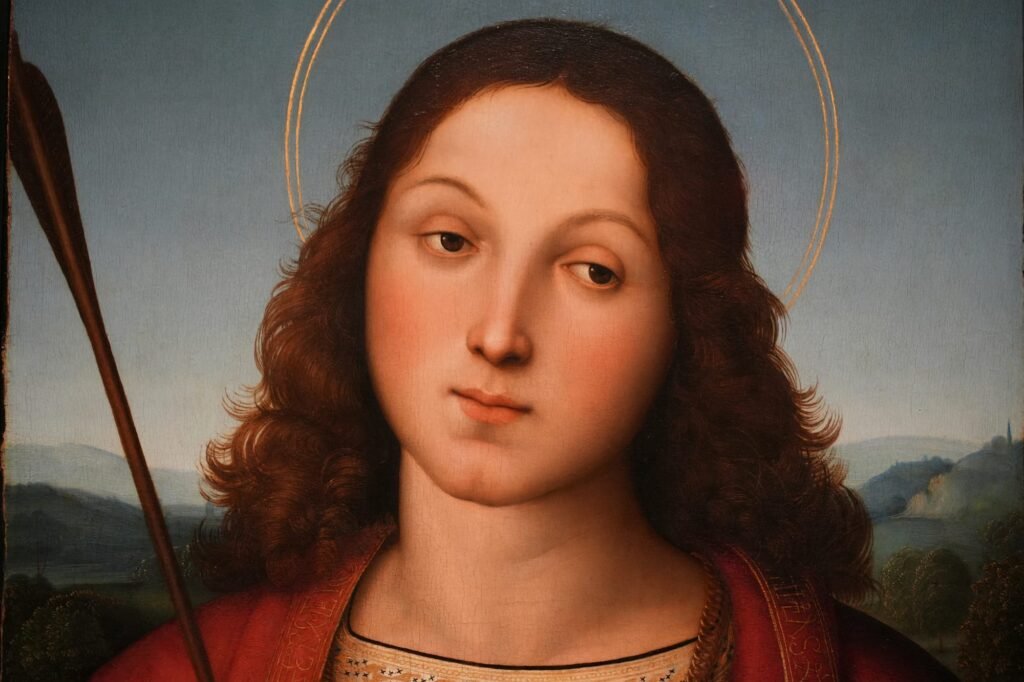
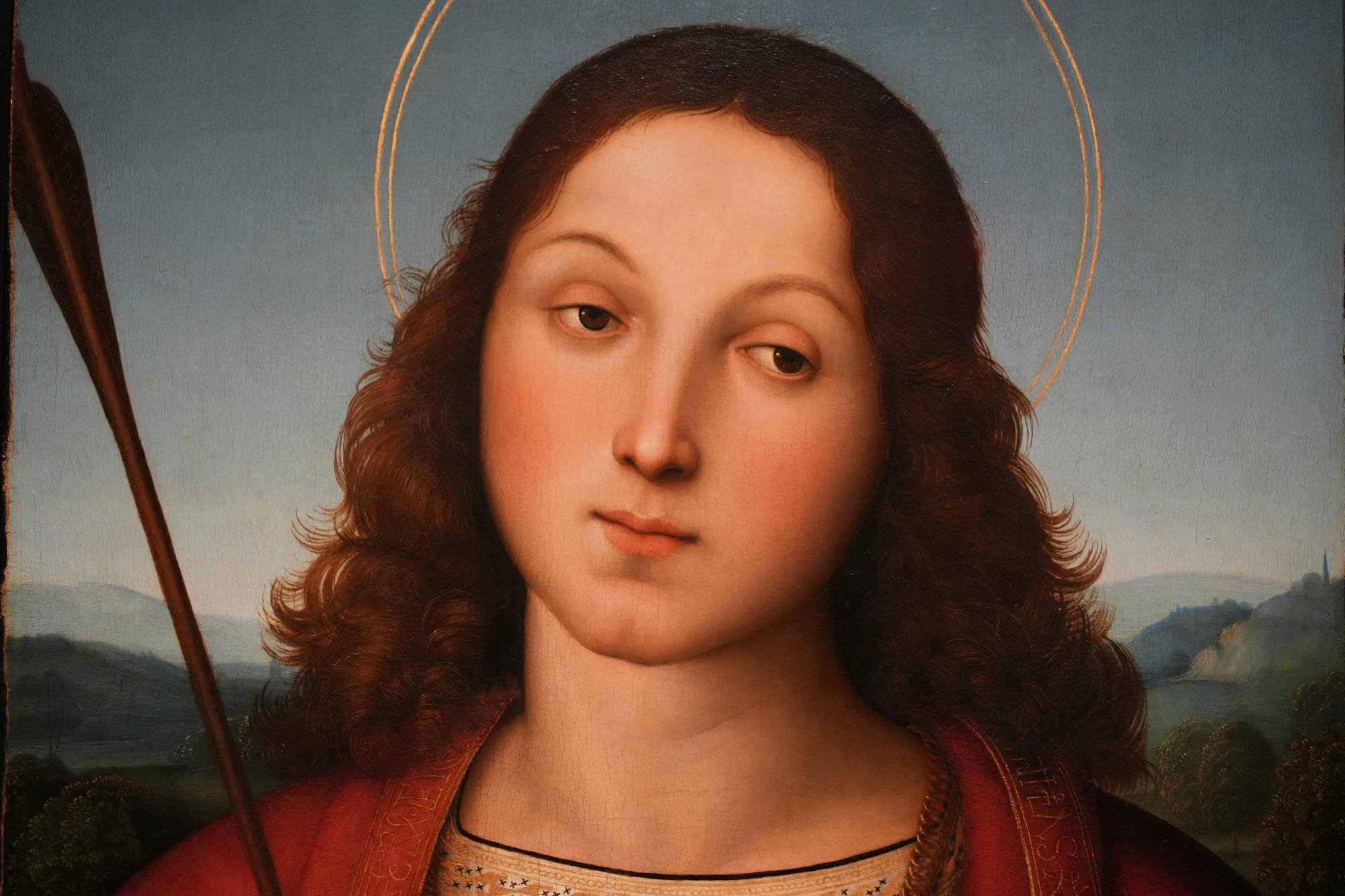
“Nature created him as a gift to the world,” wrote Giorgio Vasari of Raphael in the 16th-century compendium The Lives of the Artists. Roughly 500 years later, the sentiment still holds true. Born in 1483 in Urbino, Italy, a small center of 15th and 16th-century art and culture, Raphael embodies the ideal of the Renaissance man: In his 37 years, he established himself as a painter rivaling Leonardo da Vinci and Michelangelo, ran a thriving studio, and expanded into architecture and design. Yet it’s the humanism of his art, reflecting his own empathic personality, that continues to resonate across time and space.
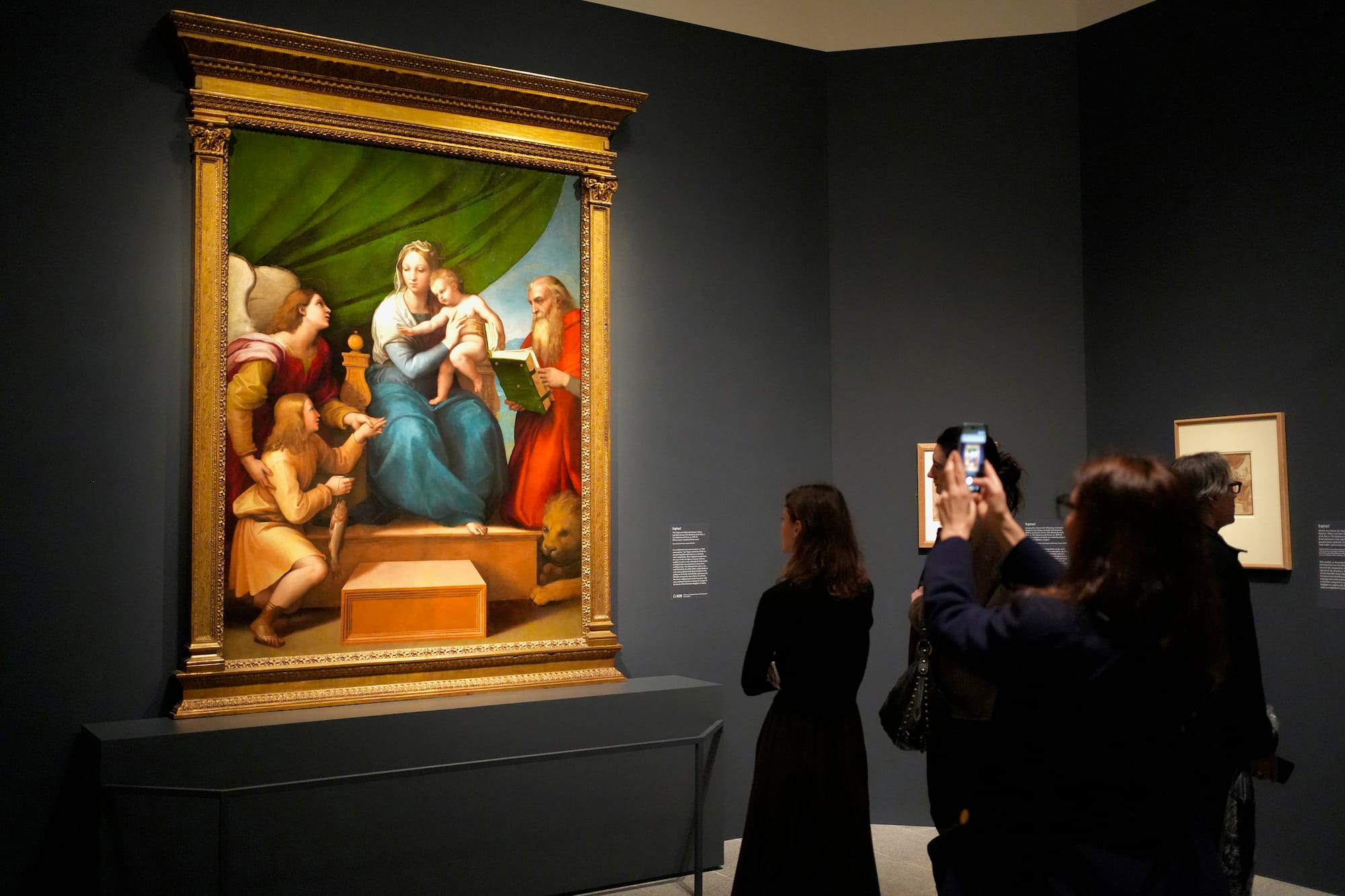
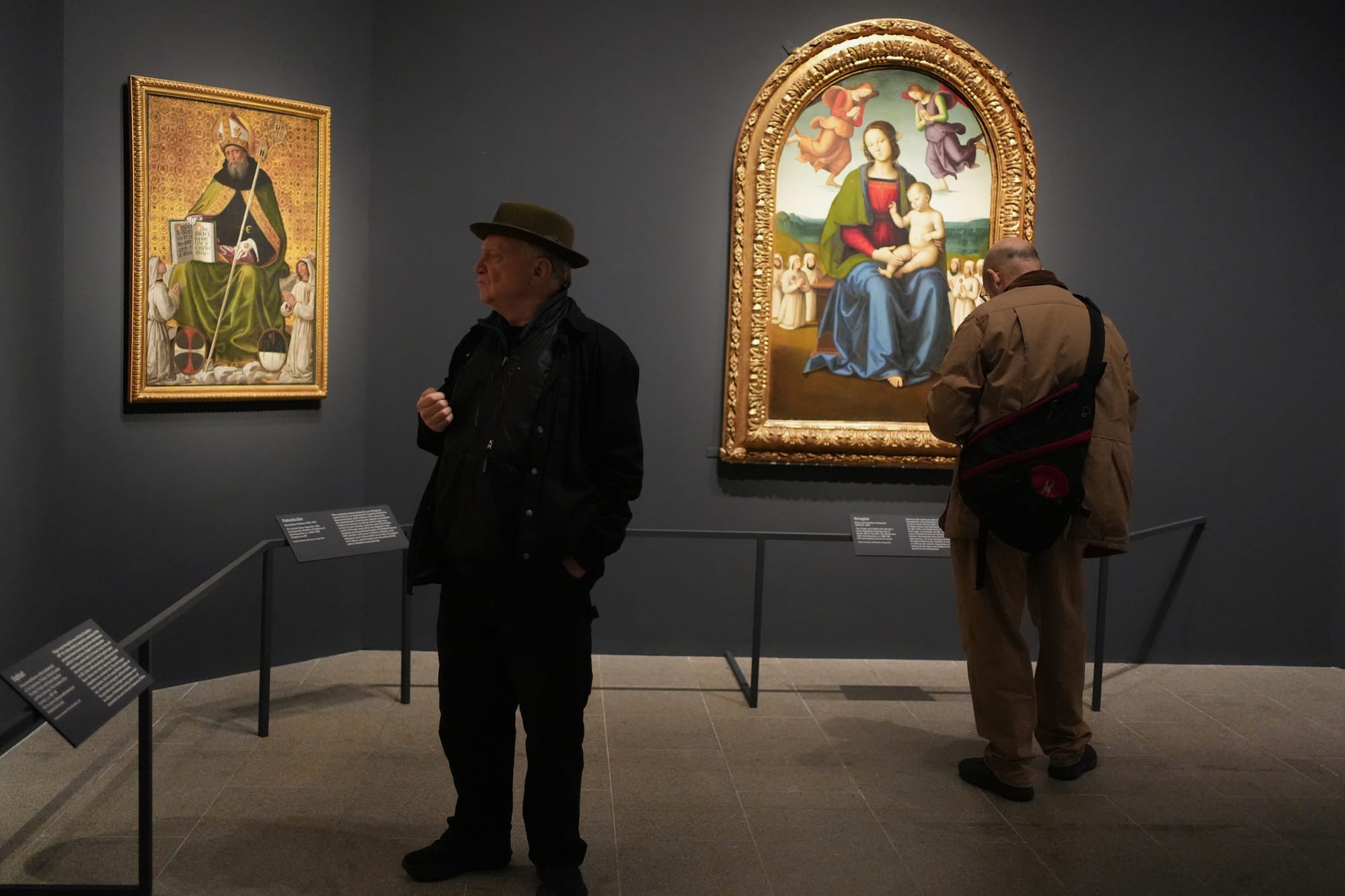
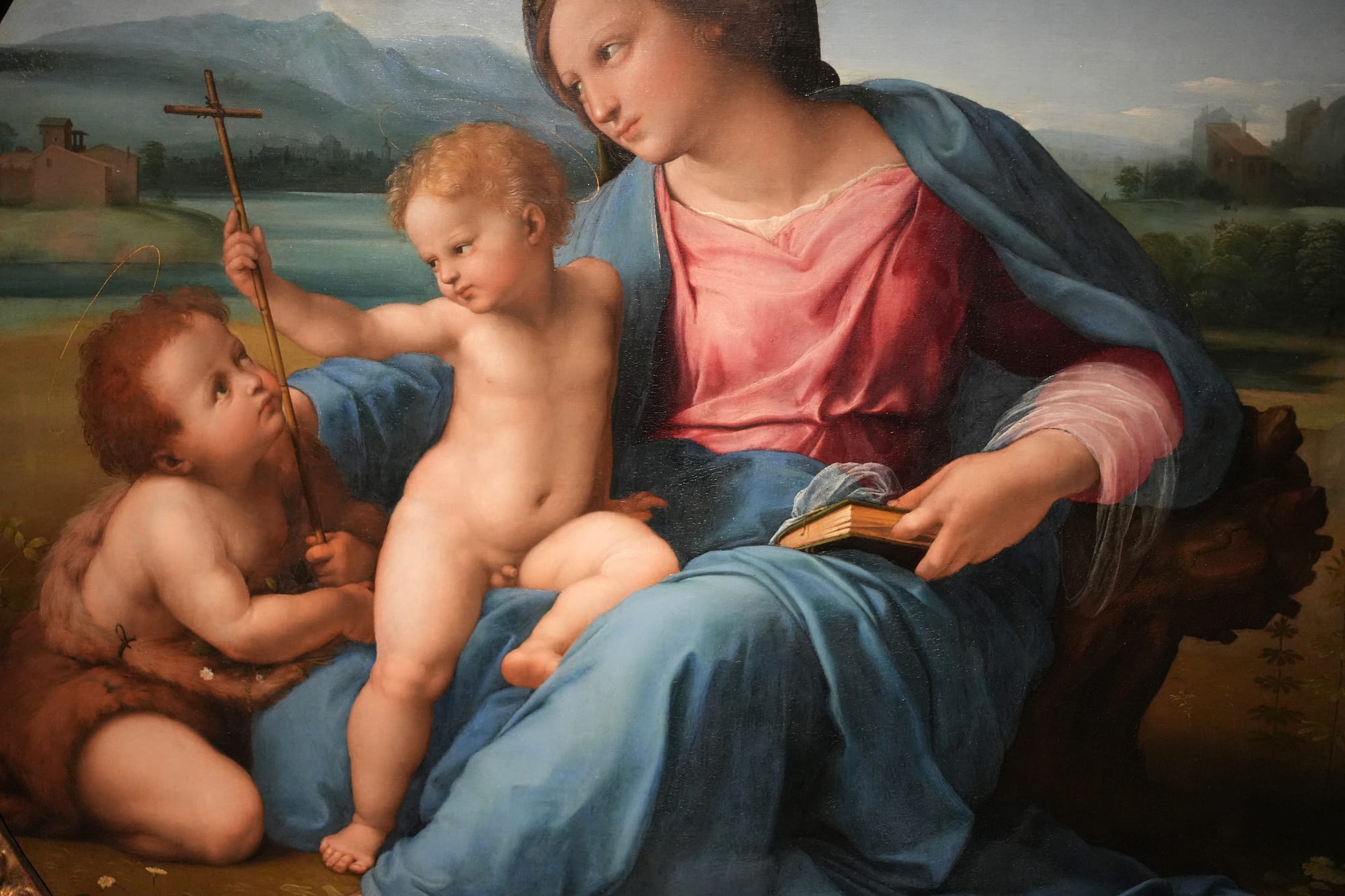
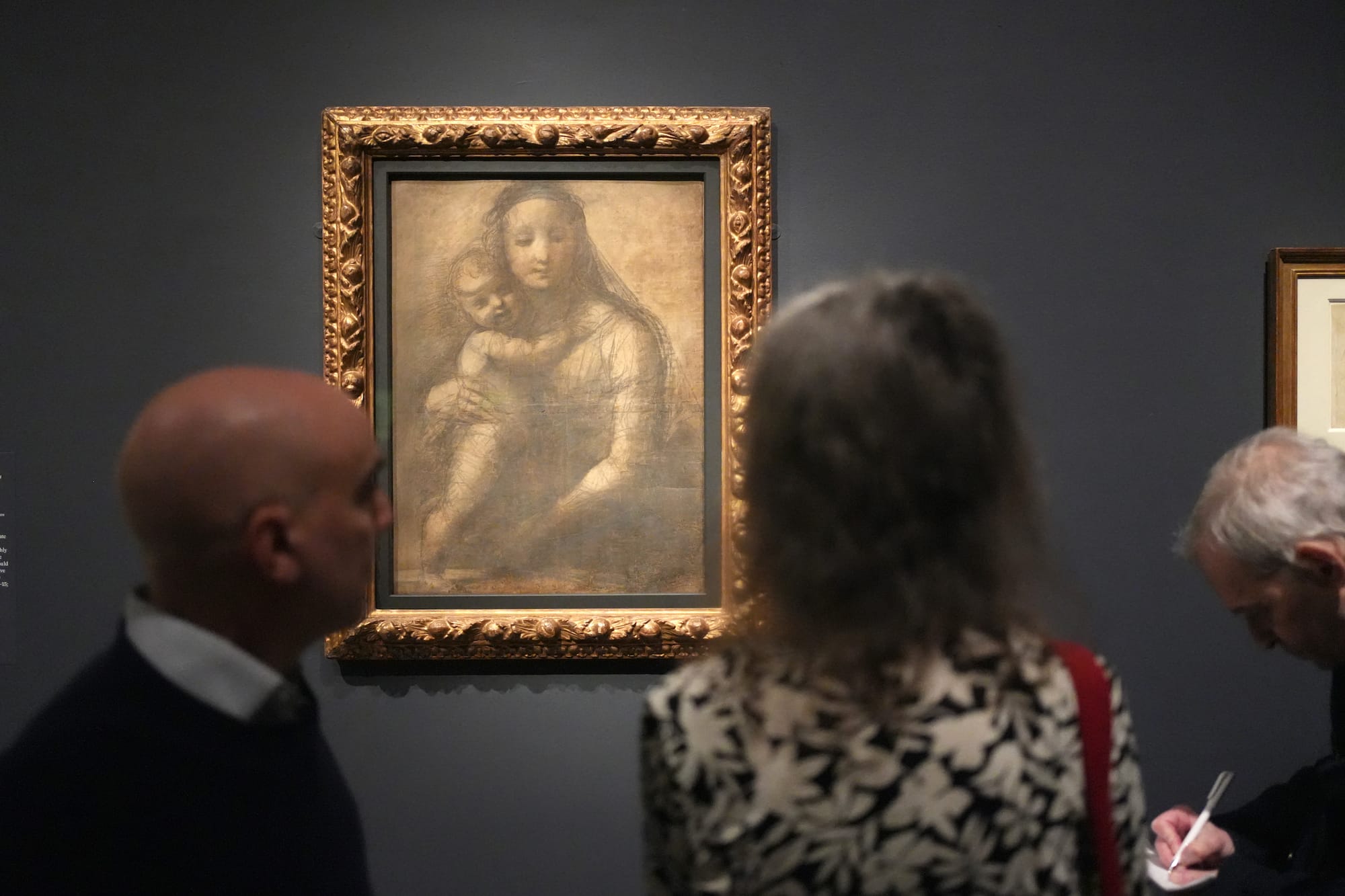
Sublime Poetry, opening this weekend at the Metropolitan Museum, is the first comprehensive Raphael survey in the United States, encompassing his childhood apprenticeships through his late-life fame and accomplishments. If that seems surprising, consider the logistics involved in securing more than 170 works by the Renaissance master from over 60 global collections, ranging from celebrated masterpieces such as “The Virgin and Child with the Infant Saint John the Baptist in a Landscape (The Alba Madonna)” (1509–11) to the fragile drawings that were the cornerstone of his practice, like the Ashmolean Museum’s beguiling “Portrait of a Young Boy (Presumed to be a Self-Portrait)” (c. 1500) and the Louvre’s breathtaking “Saint Catherine of Alexandria in Three-Quarter Length” (c. 1507).
Luckily for audiences, curator Carmen C. Bambach has plenty of experience navigating such logistics — her 2018 exhibition at The Met, Michelangelo: Divine Draftsman & Designer, was also a once-in-a-lifetime affair. In contrast to Michelangelo, though, Raphael’s life was not meticulously documented and, as a result, his name looms a little smaller today in the popular imagination. It’s a shame because Raphael’s influence is indelible in art history. He innovated his predecessor’s styles as quickly as he absorbed them, he brought warmth and luminosity to didactic devotional images, and he imbued his drawings with the intimate immediacy of a diary entry.
Bambach took out some time to speak with Hyperallergic by email about curating and staging this historic exhibition, the life of Raphael, and with which of his artworks she’d most like to live.
Hyperallergic: The exhibition is called Raphael: Sublime Poetry. Can you explain what you mean by “poetry” in the context of his art?
Carmen C. Bambach: Raphael’s is the story of an artist who was the son of a poet-painter, Giovanni Santi, and an intimate friend and portrait painter of many poets and literary figures (Baldassare Castiglione, Pietro Bembo, Antonio Tebaldeo, etc.), as well as someone who attempted to compose sonnets himself. He lived and worked in a culture often accustomed to thinking of painting and poetry as intertwined sister arts. The elegiac beauty, elegance, and dramatic force of his imagery reminded educated viewers of the ancient dictum, much invoked in the Renaissance, that “painting is a mute poetry, and poetry is a blind painting.”
H: What was the process of putting together such a monumental show, and what work was the hardest to obtain for it?
CCB: Almost eight years of work on the exhibition, research on the artist, new, original research, traveling to museums to select and negotiate loans, and formulating the argument of the exhibition. Asking for Raphael loans is like asking for the firstborn heir of the royal family, so all works by Raphael asked on loan were a struggle.
H: In researching and assembling this show, did you make any surprising discoveries about Raphael or specific artworks?
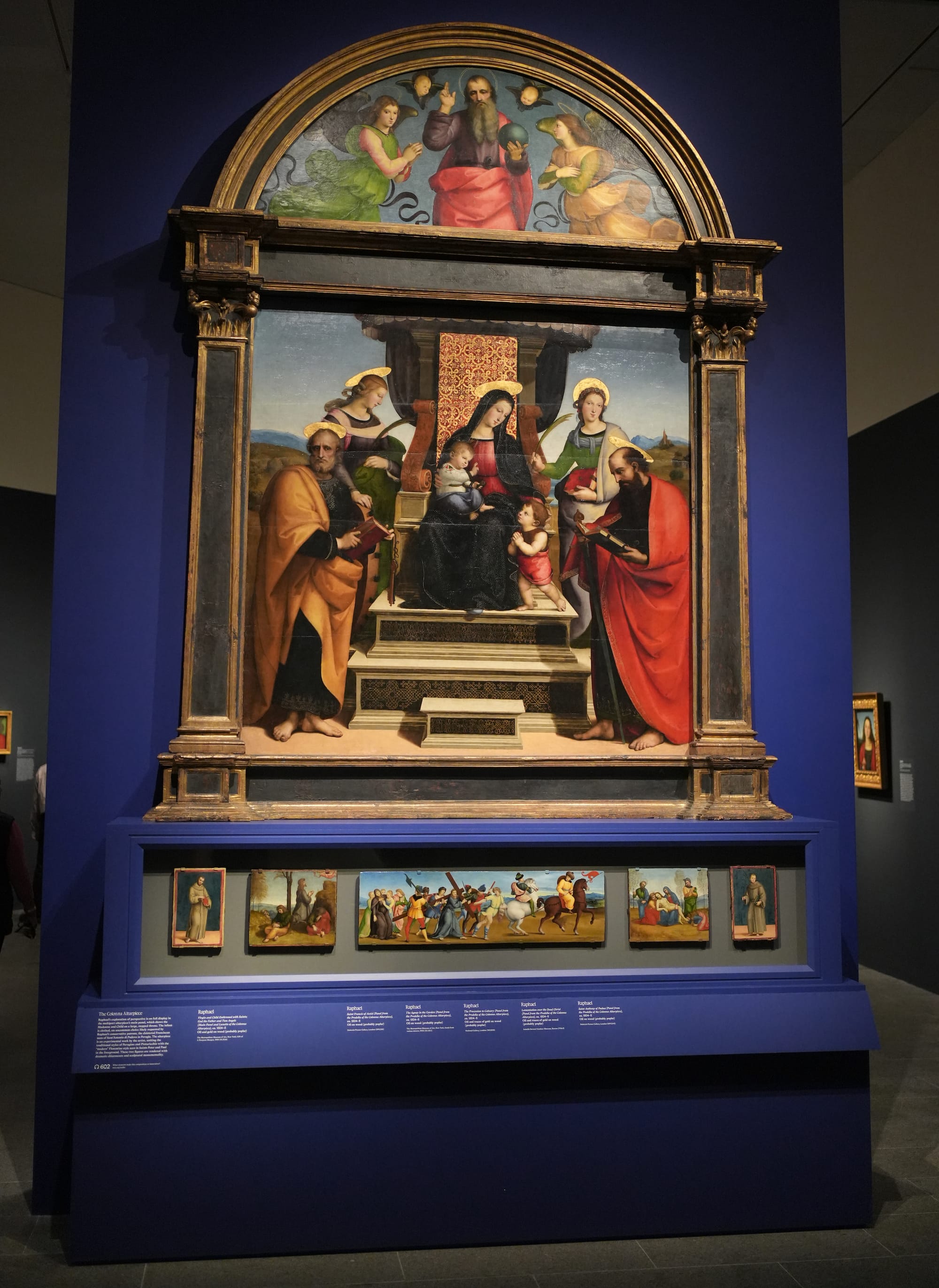
CCB: The function and site of Raphael’s fresco fragment from the Accademia di San Luca, which I discovered came from the ornamental heraldic design on the upper portion of a fireplace painted for Pope Julius II in the Vatican Palace. Also the reconstruction of a portable altarpiece with hinged wings for which the flanking paintings were of Saint Mary Magdalene (private collection) and of Saint Catherine (Galleria Nazionalde delle Marche, Urbino), along with many other discoveries and new attributions.
H: What makes Raphael and his art distinctive in the Italian Renaissance canon?
CCB: Raphael was idolized almost continuously from about 1510 to the 1850s as a painter of supreme perfection, elegance, and grace, and harmonic compositions, and as a dramatic narrative painter, he was thought to have no rivals. He was also the role model for the education of artists during three centuries. He was admired for his command of color, anatomy, and geometry/perspective, and his versatility. During his short life, he was also celebrated for his enormous creative facility. Therefore, during three centuries, his fame often towered above Leonardo da Vinci and Michelangelo, although historical convention today might rank him subordinate to both.
H: If you were to choose one “don’t miss” artwork in this exhibition for visitors who aren’t too familiar with Raphael, which one would it be?
CCB: The “Alba Madonna” (c. 1510, National Gallery of Art, Washington, DC) in relationship to the preparatory sheet of drawings for the “Alba Madonna” (Palais des Beaux-Arts, Lille); also the “Portrait of Baldassare Castiglione” (c. 1514–15, Musée du Louvre, Paris).
H: Considering that Vasari saw Raphael as the technical pinnacle of Renaissance art, he was so skilled at absorbing influences, and he even added architecture to his skill set, what do you think he might have accomplished had he lived longer?
CCB: I am not certain that he could have lived longer, as he probably became ill from an enormous quantity of overwork. Health suffers when burning the candle from both ends. Had he lived longer, he would have continued to innovate and produce astounding masterpieces, but as I say, his health would probably not have permitted longevity.
H: What was Raphael like as a person, as far as scholars know?
CCB: His biographers have plenty to say about him. He was extremely sociable, open, a great communicator, a great teacher, extremely generous with those around him and his team of assistants.
H: Can you recommend any books or articles for people who want to learn more about Raphael?
CCB: Read my book, Raphael: Sublime Poetry [the exhibition catalog], and read my article, “Raphael’s fireplace fresco for Pope Julius II rediscovered,” in The Burlington Magazine (vol. 168, March 2026). Both publications include all the latest, original research.
H: If you could live with one artwork by Raphael, what would it be?
CCB: Raphael’s “Alba Madonna” from the National Gallery of Art.