Toyota’s Princeton Plant, Going Strong Since 1996
TMMI, short for Toyota Motor Manufacturing Indiana, has been churning out some of the most popular models carrying the Japanese nameplate since 1996. The first vehicle to roll out of the facility was the 1998 Toyota Tundra, with the 2001 Sequoia and 2003 Sienna following suit shortly after. As recently as 2023, the factory saw its production expand to the Toyota Grand Highlander and the TX luxury SUV, its midsize Lexus equivalent.
The conglomerate has poured in nearly $8 billion since its inception, advancing and retooling the place to accommodate the production of some of its later models. At the moment, this massive manufacturing facility located in Princeton, Indiana, is the only place outside of Japan that builds the Lexus TX.
Our deep dive comes courtesy of Car Confection’s latest YouTube upload, where it starts off by showing how massive the actual campus is. In total, TMMI spans nearly 4.5 million sq ft, comprising everything from on-site markets, cafes, fitness centers, and even ATMs—It’s basically a small town, as the presenters put it.
Moving forward, we are introduced to the stamping shop, a 300,00 sq ft area dedicated to fabricating the required sheet metals for all the various Toyota and Lexus models. Complete with ultrasound detectors to check for metal quality and weld integrity, the place is a proper churner—producing over 86,000 parts each day!
Efficiency Is the Name of the Game
Then comes the weld shop where the underpinnings are pieced together with help from 2,000 highly sophisticated robots that specialise in arc and resistance welding. The many skilled workers in the department—500, to be specific—check for imperfections and readiness, running their hands along the panels and employing their dexterity and craftsmanship to ensure quality isn’t compromised. It’s worth pointing out that Lexus models have additional checkpoints along the way.
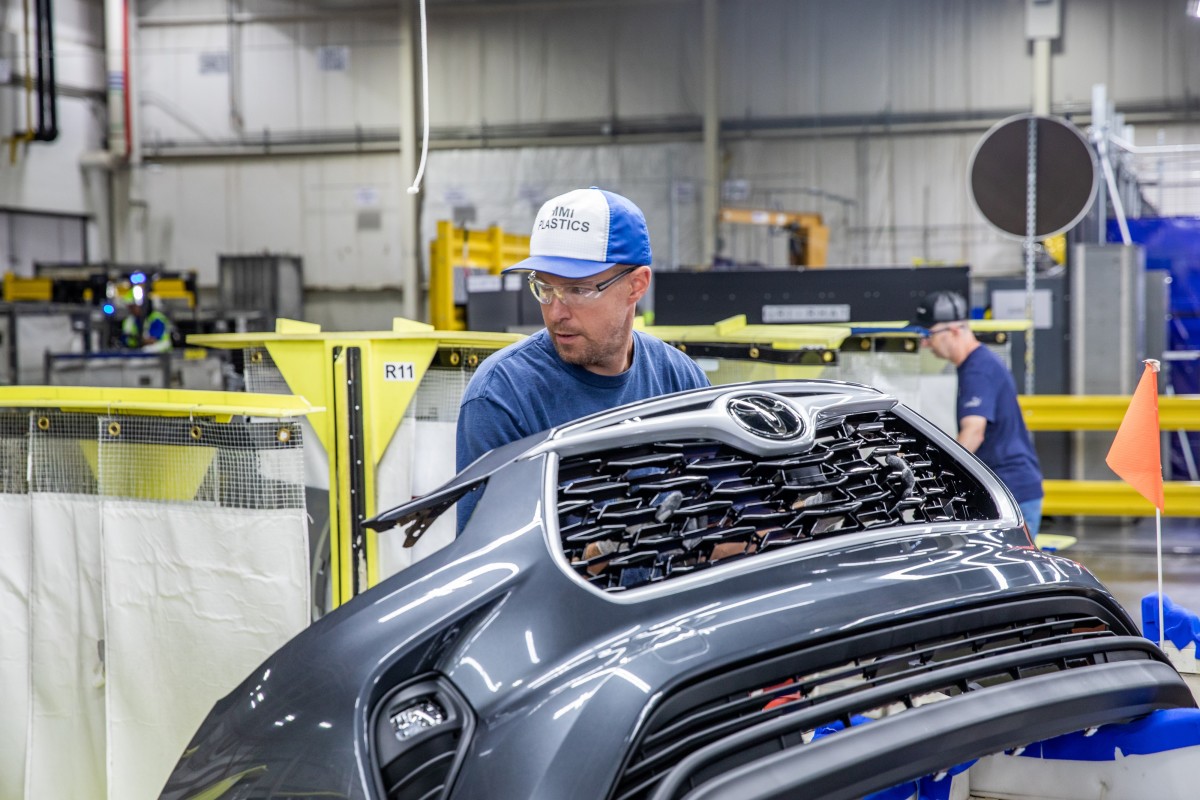
After welding, painting, and inspection, the vehicle shells are sent to assembly, where everything from dashboards, seats, wiring, and trim is installed by technicians with help from Toyota’s hand-guided parts delivery systems. If the worker feels something isn’t right, the individual can pull a quality cord to stop the production line and address the concern. It’s so streamlined that a new vehicle rolls off the assembly line every single minute!
Final inspection is carried out by driving them up to 80 mph and tested for leaks via a water bath, simulating what is felt during an actual downpour. 92 percent of those pass without defects, and the vehicles are then prepared for shipping. Overall, it’s an incredibly efficient and well-thought-out facility with almost no room for production and quality-related mishaps.