Whenever my wife and I go to watch a movie together, lately we tend to pick a new theater close to where we live that’s called 109 Cinemas Premium Shinjuku. There are reclining seats, you get free popcorn in a chill lounge when you arrive, and the supposedly best-in-Japan sound system was tuned by the late music legend Ryuichi Sakamoto. What’s not to like?
But when we went to see 28 Years Later: The Bone Temple this past weekend, we realized it was only showing in the auditorium dedicated to ScreenX, a fairly new format that has been picking up some steam of late. I’d heard of it before but I hadn’t ever seen it for myself, so I was happy to check it out in the spirit of technological open-mindedness.
Three screens in one
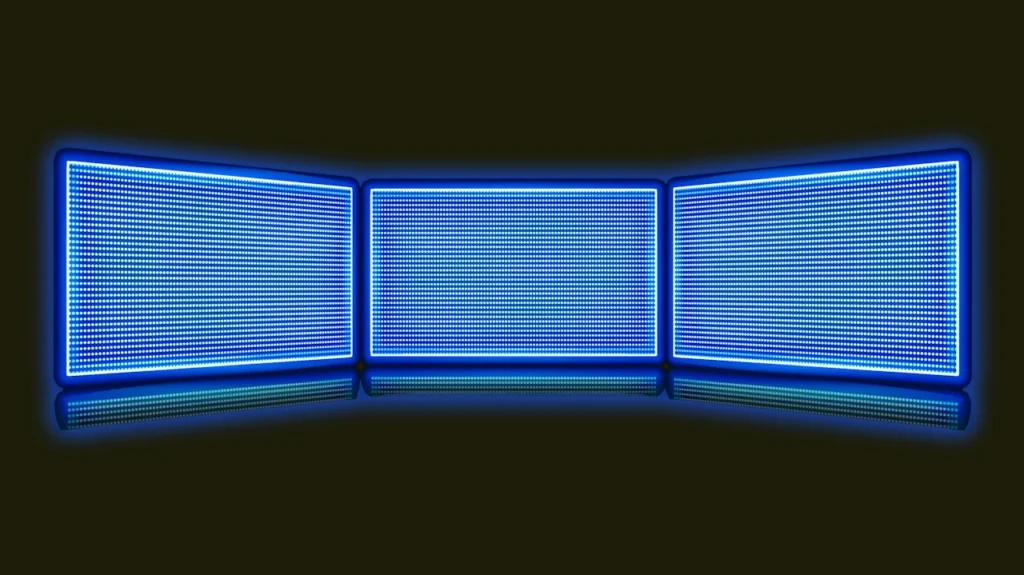
The “X” in “ScreenX” appears to stand for “expanded” or “extended,” because ultimately, what you get is three screens in one. You’re mostly just watching a regular 2D movie screen in front of you, but the footage spills onto the sides of the theater for a 270-degree view.
ScreenX was developed by South Korean theater chain CJ CGV, a subsidiary of one of the country’s largest conglomerates. CJ was also behind the 4DX format that competes with other 4D systems like D-Box and MX4D, with various theater chains adopting one or the other.
While ScreenX has been niche in most of the Western world to date, leading American chain AMC struck a deal with CJ last year to add 25 ScreenX auditoriums and 40 4DX screens across the U.S and Europe. Domestic competitor Cinemark also increased its ScreenX footprint, with plans to add 18 auditoriums in the U.S. over 2025 and 2026.
That’s to say that you might well come across it soon without knowing what you’re in for, just as I did. And I really wasn’t sure what to expect when going into this showing of The Bone Temple.
The combination of Nia DaCosta as director and Sean Bobbitt as cinematographer didn’t make me think this would be a movie that was sloppy about its frame composition. And yet clearly, it couldn’t actually have been filmed at such an ultra-wide aspect ratio. Where was the footage on the sides even coming from?
A little distracting
The first thing I noticed about the ScreenX footage is that it’s actually quite easy to ignore. We had good, centrally located seats, but the screens on the left and right walls were significantly dimmer than the central screen. That’s probably for the best, because it allows you to focus on the actual movie while the extended area serves as added ambience.
On the other hand, I’d estimate that there was only about an hour of actual ScreenX footage, or roughly half of the movie. Generally, it tended to be used for outdoor scenes, while the side panels were switched off for interior scenes or tighter shots.
This back-and-forth could be a little distracting; the side panels faded in and out gradually, but the lights on the projectors themselves flicked on and off with every transition. Overall, though, I thought the ScreenX scenes were quite effective in The Bone Temple. At times when characters were running away from infected humans, for example, you got a better sense of how they were being stalked through the forest, with the shaky camera movements placed into context by the wider perspective.
CJ says that it works with directors to help create ScreenX footage in post-production, making use of unused second-unit shots, alternate angles, and CGI extensions. It’s hard to tell exactly what you’re looking at when you concentrate on the extended footage, not least because it tends to be quite blurry—as you’d expect from any lens pushed to that extreme. But I didn’t see anything particularly jarring or low-quality. Even though I was looking at each screen from a different angle, the transitions were seamless.
A picky viewer
I am quite picky about the theaters I watch movies in—for example, last year I made a point of going to Tokyo’s only true 1.43:1 IMAX theater to see Sinners and One Battle After Another. I would not describe ScreenX as a transformative moviegoing experience on that level. But I think it could have its place.
For movies like The Bone Temple, which is unlikely to be filmed with formats like IMAX in mind but could still benefit from a more immersive presentation due to its intense action, I could see ScreenX being a solid option. Unlike 3D or 4D, there isn’t really much compromise or distraction—you can just watch the main screen as usual and absorb the extra footage without actually paying attention.
At the same time, it’s hard to imagine a movie in which ScreenX would ever be the definitive way to watch it. No director is truly framing their movie with ScreenX in mind; what’s in the regular composition is always going to be the actual movie. No one will be watching the ScreenX footage once it leaves theaters.
As such, I’d describe ScreenX as a gimmick, but not a particularly destructive one. I don’t feel like it had a negative impact on my appreciation of The Bone Temple—which I thought was fantastic, by the way—and I think it’s fine for theaters to make use of fun formats like this that can’t be replicated at home.
Just know that you’re not missing out on all that much if you decide to wait for this movie to come to streaming.