If you’re a manager today, your job may well be changing. That is, if it hasn’t already.
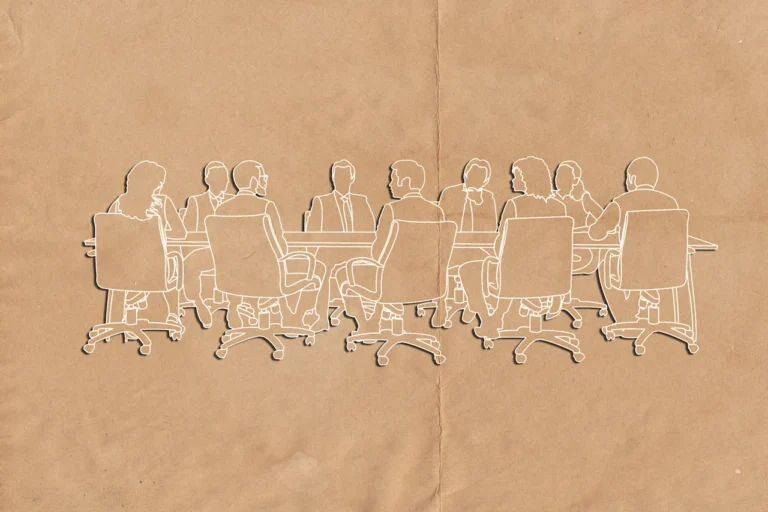
As companies continue to compress their org charts and axe layers of middle management, a new role is emerging: the “supermanager.”
Leaders are finding themselves responsible for significantly more direct reports and broader responsibilities. And in many industries, the trend shows no sign of slowing.
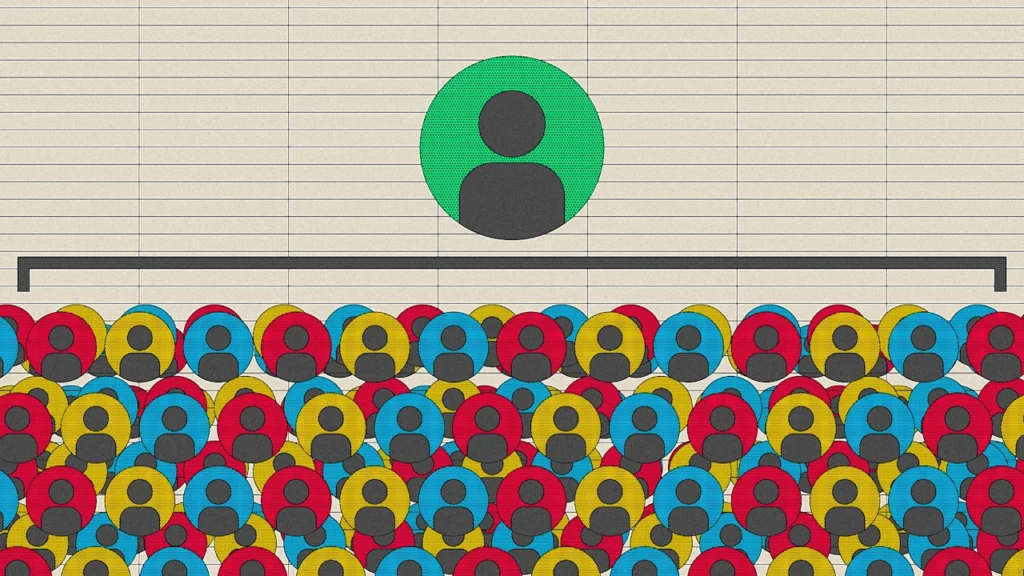
A Gallup survey published in January, citing data from the Bureau of Labor Statistics, found that the average number of reports managers have increased from 10.9 in 2024 to 12.1 in 2025. The share of managers overseeing 25 or more employees has also grown in the past year, with 13% now supervising teams that large.
This long-term increase in managerial span of control has been described as part of the “Great Flattening.” It is being driven by several forces, including leadership churn, layoffs targeting middle management layers, and the AI boom, and organizations increasingly see fewer reasons to maintain multiple management layers.
Some workplace experts argue the shift is overdue, pointing to years of bloated management structures. Others warn the trend is backfiring, leaving employees lost in the noise and saddled with unrealistic demands.
Either way, the supermanager is becoming commonplace across countless industries.
When bigger teams lead to burnout and turnover
“The role is changing,” Jennifer Dulski, the CEO and founder of the AI-assisted team performance platform Rising Team, tells Fast Company. “Every manager can now become a supermanager.”
Michele Herlein, a former senior HR leader turned leadership expert who holds a doctorate in business administration, tells Fast Company that slimming down an organization can have immediate benefits, like reducing costs, and speeding up decision-making. But when organizations increase spans of control without redesigning the role itself, the consequences ripple quickly.
“When people are reactive instead of proactive—putting out fires instead of preventing them—chaos follows,” Herlein says. “When one megamanager is burnt out, the entire department feels it.”
Leena Rinne, vice president of leadership, business, and coaching at Skillsoft, tells Fast Company that companies are effectively creating a new leadership role without acknowledging it.
“If you’re going to have a flat organization and a lot of direct reports, you better be thinking about what the skills are that that leader needs and equipping them with those skills,” Rinne says.
She believes the supermanager era can work—but “most organizations are skipping that step,” she says.
Rinne experienced the shift firsthand, managing 80 direct reports in one previous role. It was very different from managing eight: She needed absolute clarity on her vision and strategy rather than filling her time with individual one-on-one meetings.
The problem, she argues, is that many organizations are flattening their structures, but not evolving how they support managers.
“Organizations think, ‘oh, if we just put more pressure on them, they’ll figure out how to do it more effectively’,” she says. “Then they don’t give them the training, the tools, the skills, the clarity, the vision—all of these things that should come from higher levels of leadership.”
The model isn’t necessarily broken—but the support often is
Dulski, who previously held leadership roles at Yahoo, Google, and Facebook, agrees that the supermanager era can work if companies rethink what management is for. Before the flattening, she argues, many managers oversaw too few people.
“My personal view is that five to seven has been the right zone,” she says. “And with the right tools, we can probably get to 10 or 12 fairly easily.”
But the benefits aren’t automatic. To make it work, supermanagers should spend less time on administrative tasks and more time on what Dulski calls “the two C’s”: clarity and compassion.
That means prioritizing fewer, clearer goals and using systems to replace constant supervision and micromanagement, which some have relied on to climb the traditional career ladder.
“Great managers are like great sports coaches—they show clearly what winning looks like, have everybody clear on what their role is, and then they step back,” she says. “Managers are not doing a good job when you put very little support into helping them understand their role and training them to be good at it.”
AI can help with this, but technology alone won’t solve everything, Dulski warns.
“It’s counterintuitive to a lot of people,” Dulski says, “but the success of future managers and leaders lives at the intersection of deep human connection and AI—one without the other will no longer be enough.”
When a supermanager hasn’t been given the time and resources to develop those skills, burnout follows. Gallup data has already shown that the workforce is disengaged, so piling additional responsibilities on top of people and expecting them to simply deal with it is only going to compound the problem.
As Rinne says: “You can’t flatten your way to growth.”
How to survive and succeed as a supermanager
The “Great Flattening” is likely to continue, fueled by hybrid working, cost pressures, faster decision cycles, and the reduced need for oversight enabled by AI tools.
It looks like supermanagers are becoming the norm as a result, so those suddenly thrust into this role should try to make it work, but only if their organization is implementing the model thoughtfully and intentionally, rather than out of panic.
The supermanager era will be defined about leading differently, with clear goals, transparent communication, and leadership development to make it a sustainable one, experts say.
“I think most organizations don’t invest in their leaders enough, period,” Rinne says.
Herlein agrees, adding that a lot of supermanagers are stuck on a hamster wheel, not advancing, because they’re running on fumes.
“It’s not that the model is broken,” Herlein says. “They just can’t do it without the broader organizational support and resources—they can’t do it alone.”
Thriving as a supermanager means distinguishing between the two paths ahead: embrace this new way of leading, or recognize when the environment isn’t sustainable, and jump ship.