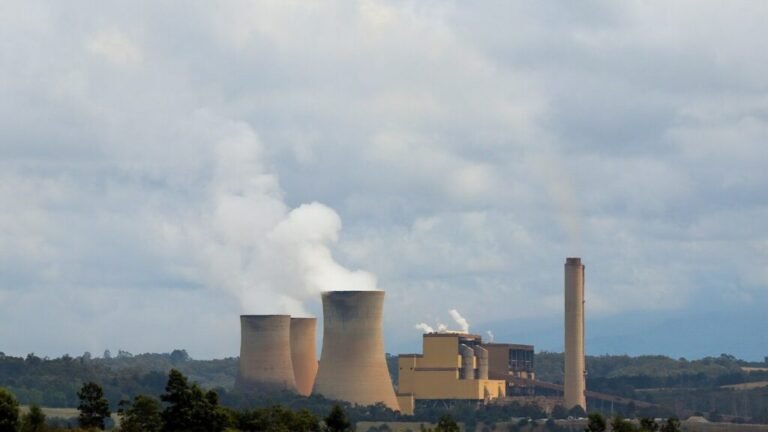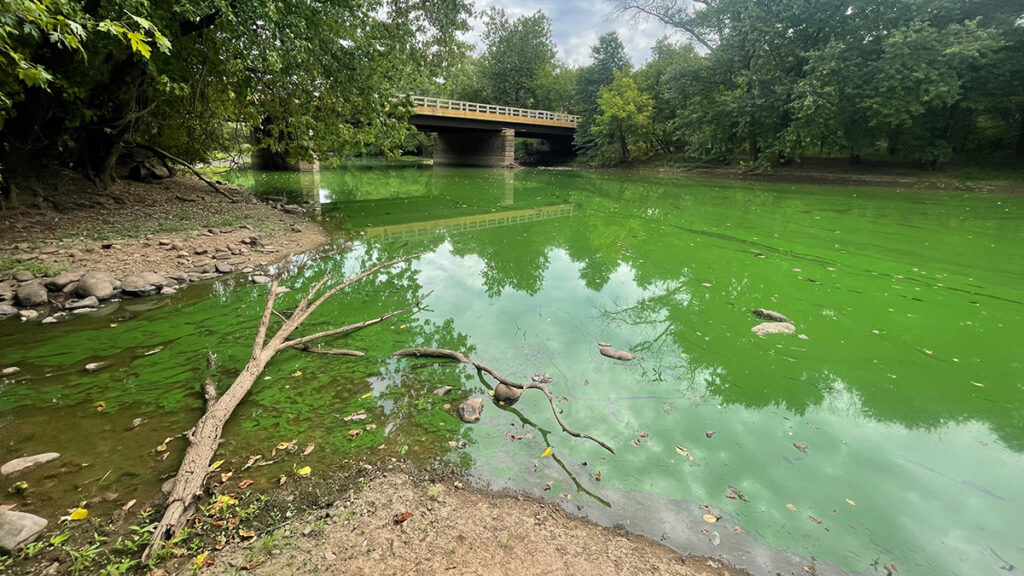
Just as meteorologists routinely predict temperature changes, storm trajectories, and other weather patterns, ecologists also forecast how ecosystems and environmental conditions can change in the near future. These ecological forecasts are rooted in scientific understanding of how natural systems behave and react, providing predictions of the future of ecosystems along with information about associated uncertainties.
Ecological forecasts offer tangible, practical insights. For example, they can estimate grass availability and quality for livestock and predict red tides along a coastline. They can support decisionmaking across society, guiding strategies for managing farms, forests, and fisheries, as well as for monitoring invasive or endangered species, assessing water quality, and implementing nature-based climate solutions. These forecasts can also influence everyday choices, such as when to take allergy medication during pollen season, whether to avoid the beach because of harmful algal blooms, and whether to reconsider a move to an area at risk of wildfires.
Ecological forecasts are increasingly vital today as we face rapid environmental changes and catastrophic biodiversity losses.
Demand for ecological forecasts is growing as more decisionmakers and natural resource managers recognize the importance of ecosystem services such as carbon storage, pollination, natural hazard mitigation, cultural benefits, and the provisioning of water, food, and other natural resources. Critically, these forecasts—produced by a community of researchers and practitioners across academia, government agencies, and industry—are increasingly vital today as we face rapid environmental changes and catastrophic biodiversity losses.
Iteratively developing forecasting models improves their predictive capabilities and scientific understanding of the systems they’re modeling. Weather forecasting models, for example, have seen tremendous improvements in accuracy and reliability over the past few decades, largely because meteorologists use them to generate and test hypotheses about atmospheric dynamics multiple times a day across millions of locations.
By comparison, ecological forecasting capabilities remain underdeveloped, partly because it is a much younger field that has received less sustained focus. Ecological forecasts also encompass a greater variety of processes and timescales. For example, some researchers model coupled physical, biogeochemical, and ecological processes across large regions to forecast forest productivity decades into the future, while others must incorporate highly localized weather conditions to predict stream dissolved oxygen levels just a day ahead.
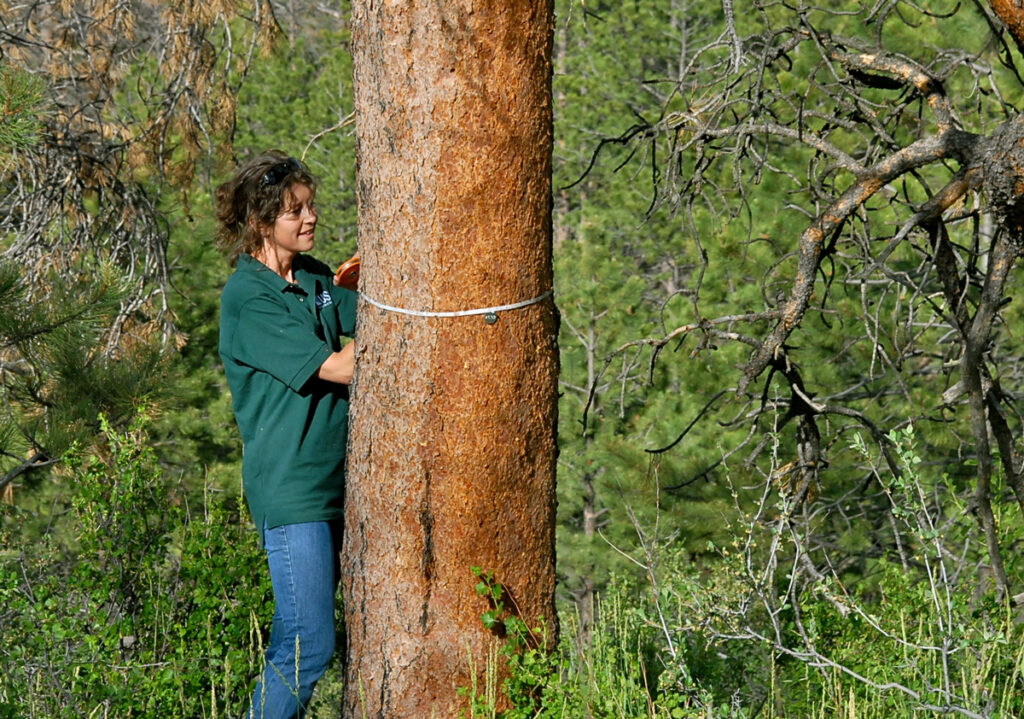
These complexities have contributed to the lack of a unified or standardized system for ecological forecasting. As a result, various organizations, such as federal and state agencies, industry groups, and academic institutions, have independently developed their own boutique forecasting systems.
Some diversity in approaches is essential for innovation, especially in an evolving and multidisciplinary field. But the absence of a unified system, shared infrastructure, and scalable practices often creates unnecessary duplication and inefficiencies that can hamper the scientific community’s ability to generate critical ecological predictions reliably. It may also limit our ability to deepen understanding of the environment. In brief, the current state of ecological forecasting often falls short of meeting societal needs.
Plenty of Data, but Barriers to Forecasting Remain
During a series of meetings held from 2020 to 2022 and organized by the Ecological Forecasting Initiative (EFI), representatives from U.S. federal agencies concluded that the primary bottlenecks to providing actionable ecological forecasts do not stem from technical or scientific shortcomings of current ecological models or from data availability. Instead, the challenges lie in generating routine forecasts efficiently and in effectively communicating them to end users.
A primary barrier to efficient ecological forecast generation is the limited interoperability among forecasting systems [Geller et al., 2022]. Different systems use different data and metadata formats, modeling approaches, and workflow structures. Such diversity is not unique to forecasting, but the requirements of operationalizing a model, such as real-time data access, fault-tolerant workflows, and translating output to decision-relevant metrics, amplify the difficulties posed by noninteroperable systems.
The lack of standardization among forecasting systems slows—and in many cases prevents—the development of robust, scalable forecasts.
The lack of standardization slows—and in many cases prevents—the development of robust, scalable forecasts. It also limits their reuse across platforms, reducing their overall effectiveness. Adopting shared tools and standards across the ecological forecasting community would signal that the field of ecological forecasting is maturing, helping to build trust and encourage adoption by decisionmakers.
A second major barrier to efficiency is redundancy among different ecological forecasting efforts. Many agencies and institutions tackle similar forecasting problems using different tools and workflows, often without coordination. This duplication of effort wastes valuable time, labor, and computational power, and the absence of shared infrastructure and protocols leads teams to re-create processes and datasets instead of building on existing efforts. For example, organizations and research groups often maintain their own in-house workflows for downloading gridded weather forecasts, converting these data to more user-friendly formats, and ingesting them into their forecasting models and tools.
Shifting away from boutique approaches to reusable, community-developed workflows could substantially improve interoperability and reduce redundancy in ecological forecasting. Using shared tools, developed and improved by many contributors, can also lower the time, effort, and cost needed to launch new forecasts. Maintaining workflows based on these tools is often more affordable, easier to manage, and less prone to errors than sustaining separate, individually built systems [Fer et al., 2021]. This collaborative approach also fosters innovation as improved tools and techniques are adopted by a community of users, rather than only for specialized individual projects that may not justify the investment to develop the tools.
Without effective collaboration, the ecological forecasting community may miss valuable opportunities to combine the diverse expertise and resources.
Inefficiencies and the lack of interoperability in ecological forecasting often arise because many researchers work in isolation, limited by technological and institutional siloing. These silos restrict the exchange of knowledge, data, and tools. Without effective collaboration, the ecological forecasting community may miss valuable opportunities to combine the diverse expertise and resources found in academia, government, and industry.
This disconnection leads to fragmented knowledge bases and isolated advancements, making it difficult to develop cohesive and integrated approaches to ecological forecasting. By working together to improve the technical foundations, or cyberinfrastructure, of ecological forecasting, we could substantially enhance our ability to anticipate changes in ecosystems and support improved decisionmaking.
Learning from Success Stories
Examples of how shared cyberinfrastructure can enhance predictions about ecosystems come from both within and outside the ecological forecasting community. For instance, decades of sustained funding and incremental improvements for weather forecasting infrastructure, led by agencies such as NOAA’s National Weather Service, have enabled scalable, robust systems that transform vast amounts of data into reliable and actionable forecasts. These forecasts support decisionmaking across government, industry, and the public, informing choices related to safety, planning, resource management, and more.
A notable example of shared cyberinfrastructure advancing ecological science is the National Ecological Observatory Network’s (NEON) Ecological Forecasting Challenge [Thomas et al., 2023; Thomas and Boettiger, 2025]. This initiative welcomed forecasting experts and students to use large-scale environmental data from NEON and forecasting models to predict ecological changes at 81 sites across the United States.
Since the challenge launched in 2021, more than 82 million forecasts have been processed by the shared cyberinfrastructure, enabling synthesis of forecast skill across dozens of models and ecosystems. For example, air temperature emerged as a crucial predictor in lake water temperature and dissolved oxygen forecasts [Olsson et al., 2025], and the ability to forecast spring leaf out accurately in deciduous forests varied with how fast green-up occurred (leaf out predictions are harder to make where green-up is faster) [Wheeler et al., 2024].

Numerous other examples demonstrate the value of cyberinfrastructure for ecological forecasting, as well as related services and decisionmaking [e.g., White et al., 2019; Zwart et al., 2023]. However, many of these initiatives have been one-off projects that lack sustainability or broad applicability. To reduce the community’s reliance on specialized cyberinfrastructure and methods and to ensure interoperability across systems, it is crucial that the ecological forecasting community develop and adopt standards and protocols for data management, model inputs and outputs, and workflows [Dietze et al., 2023; Geller et al., 2022]. Establishing these conventions will enhance data consistency and efficient data analysis, facilitate dissemination of forecasted data, and support creation of shared, reusable tools.
Overcoming Obstacles to Build Forecasting Infrastructure
During a 2024 EFI workshop focused on synthesizing best practices for cyberinfrastructure, participants agreed on key design principles that should be adopted, such as common metadata standards, the use of open-source technologies, and modular and scalable architecture. However, they also recognized that establishing infrastructure that adheres to these best practices faces obstacles and institutional challenges, including technical complexity, organizational silos and resource constraints, and a lack of centralized leadership.
The technical skills required to develop ecological forecasts can present a steep learning curve for ecologists.
The technical skills required to develop ecological forecasts, such as in software development, cloud architecture, and data management, can present a steep learning curve for ecologists. To bridge this skills gap, the ecological forecasting community could adopt mentoring programs in which ecologists collaborate with cyberinfrastructure and open-source technology experts to build skills needed for automated forecast systems. Integrating software development and cloud technologies into higher education curricula would introduce these concepts early in ecological training. And embedding dedicated software engineers within forecasting teams—rather than expecting domain scientists to develop technical expertise alongside their core responsibilities—would distribute the technical workload needed for creating forecast systems.
Institutional culture and siloed structures often incentivize short-term, competitive research focused on novel science, rather than development of stable, iterative, and reusable forecasting approaches. In addition, differing missions and policies among agencies and between agencies, industry, and academic institutions can unintentionally hinder collaboration.
Overcoming these barriers could involve building broad, transdisciplinary communities of practice that bring together ecologists, modelers, information technology professionals, and decisionmakers. Such communities can foster collaboration, align incentives, and promote the adoption of best practices for ecological forecasting. Grassroots efforts like the EFI and more formal structures such as the Interagency Council for Advancing Meteorological Services offer complementary models for this kind of engagement.
By connecting individuals with complementary expertise, these communities can facilitate knowledge exchange, establish shared standards, advocate for cyberinfrastructure investment, and codevelop robust forecasting tools that address real-world ecological challenges. In addition, the success of shared cyberinfrastructure ultimately relies on leaders within agencies, industry, and academia championing these efforts—leaders whom grassroots communities can help identify and support. Such leaders can emerge at any level of an organization, from graduate students to professors and from technicians to directors.
A strong community and clear leadership are especially important now, as the systems supporting ecological forecasting are rapidly transitioning to cloud computing, which offers both opportunities and challenges. Cloud platforms offer unprecedented scalability, enabling high-resolution models, real-time data assimilation, and automated forecast pipelines. Cyberinfrastructure design principles, such as modularity, align well with cloud-based architecture because modular designs allow components to scale independently based on demand, isolate failures to prevent system-wide crashes, and promote reusability across different cloud-based projects.
The progress seen in weather forecasting demonstrates what becomes possible when scientific communities invest in shared infrastructure, open standards, and sustained collaboration.
However, as organizations deepen their reliance on commercial cloud services, they may face higher costs and increased dependence on vendors. To mitigate these risks, institutions could collaborate on shared strategies that balance the benefits of cloud-native tools with the stability and autonomy of maintaining selected on-premises resources, particularly for predictable, long-running workloads that are more cost-efficient to host locally.
The progress seen in weather forecasting demonstrates what becomes possible when scientific communities invest in shared infrastructure, open standards, and sustained collaboration. For example, the average 3-day hurricane track error decreased from about 220 miles (354 kilometers) in 2000 to roughly 70 miles (113 kilometers) today, a testament to the power of improved models, data systems, and coordinated expertise [Ritchie, 2024].
Ecological forecasting could similarly see transformative gains, but success hinges on establishing a unified, community-driven framework of best practices to overcome barriers and develop a robust shared cyberinfrastructure. Ultimately, this collective effort will enhance the reliability and impact of ecological forecasts, empowering decisionmakers to better manage natural resources, anticipate environmental change, and safeguard public well-being.
Acknowledgments
We thank David Watkins for a helpful review of an earlier version of the manuscript. Any use of trade, firm, or product names is for descriptive purposes only and does not imply endorsement by the U.S. government.
References
Dietze, M. C., et al. (2023), A community convention for ecological forecasting: Output files and metadata version 1.0, Ecosphere, 14(11), e4686, https://doi.org/10.1002/ecs2.4686.
Fer, I., et al. (2021), Beyond ecosystem modeling: A roadmap to community cyberinfrastructure for ecological data‐model integration, Global Change Biol., 27(1), 13–26, https://doi.org/10.1111/gcb.15409.
Geller, G. N., et al. (2022), NASA Biological Diversity and Ecological Forecasting: Current state of knowledge and considerations for the next decade, p. 201, NASA, Washington, D.C., cce-signin.gsfc.nasa.gov/files/announcements/announcement_271.pdf.
Olsson, F., et al. (2025), What can we learn from 100,000 freshwater forecasts? A synthesis from the NEON Ecological Forecasting Challenge, Ecol. Appl., 35(1), e70004, https://doi.org/10.1002/eap.70004.
Ritchie, H. (2024), Weather forecasts have become much more accurate; we now need to make them available to everyone, Our World in Data, archive.ourworldindata.org/20251125-173858/weather-forecasts.html.
Thomas, R. Q., and C. Boettiger (2025), Cyberinfrastructure to support ecological forecasting challenges, ESS Open Arch., https://doi.org/10.22541/essoar.175917344.44115142/v1.
Thomas, R. Q., et al. (2023), The NEON Ecological Forecasting Challenge, Front. Ecol. Environ., 21(3), 112–113, https://doi.org/10.1002/fee.2616.
Wheeler, K. I., et al. (2024), Predicting spring phenology in deciduous broadleaf forests: NEON phenology forecasting community challenge, Agric. For. Meteorol., 345, 109810, https://doi.org/10.1016/j.agrformet.2023.109810.
White, E. P., et al. (2019), Developing an automated iterative near‐term forecasting system for an ecological study, Methods Ecol. Evol., 10(3), 332–344, https://doi.org/10.1111/2041-210X.13104.
Zwart, J. A., et al. (2023), Near‐term forecasts of stream temperature using deep learning and data assimilation in support of management decisions, J. Am. Water Resour. Assoc., 59(2), 317–337, https://doi.org/10.1111/1752-1688.13093.
Author Information
Jacob A. Zwart (jzwart@usgs.gov), U.S. Geological Survey, San Francisco, Calif.; Cameron Thompson, Northeastern Regional Association of Coastal Ocean Observing Systems, Portsmouth, N.H.; Hassan Moustahfid, U.S. Integrated Ocean Observing System, NOAA, Silver Spring, Md.; Jessica Burnett, NASA, Washington, D.C.; and Michael Dietze, Boston University, Boston, Mass.
Citation: Zwart, J. A., C. Thompson, H. Moustahfid, J. Burnett, and M. Dietze (2026), How to accelerate advances in ecological forecasting, Eos, 107, https://doi.org/10.1029/2026EO260066. Published on 24 February 2026.
Text not subject to copyright.
Except where otherwise noted, images are subject to copyright. Any reuse without express permission from the copyright owner is prohibited.