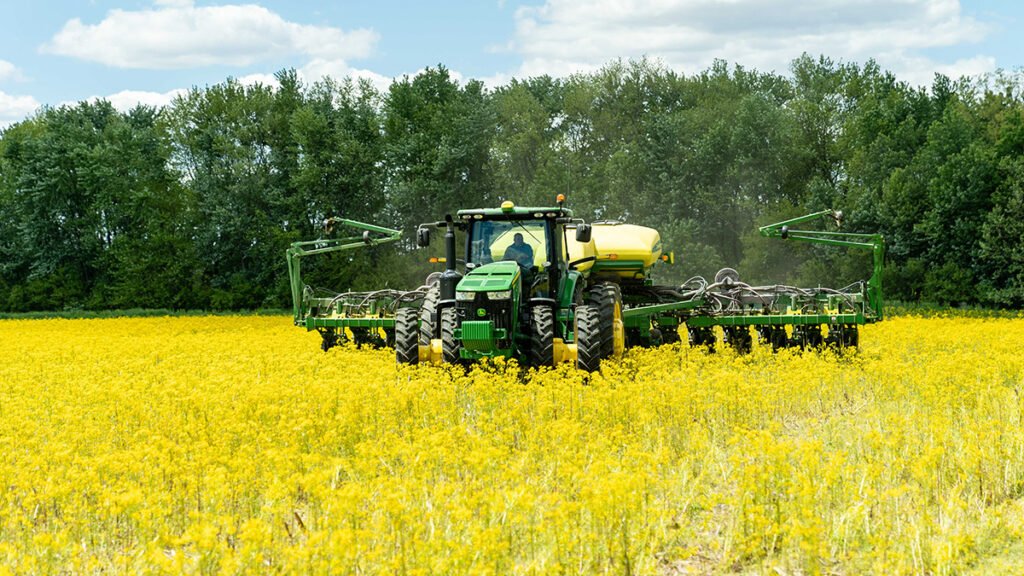
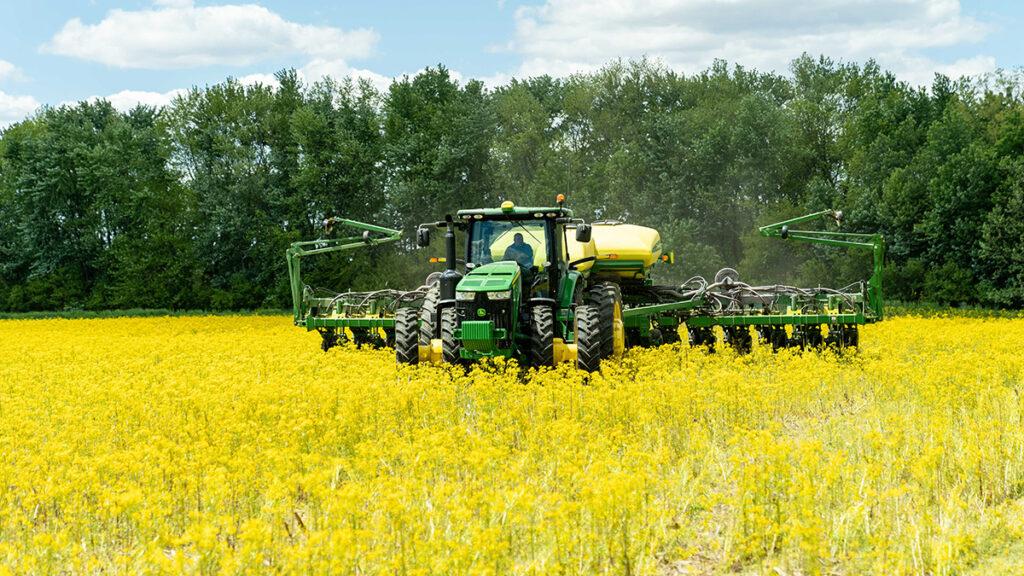
Since the first agricultural revolution, circa 10,000 BCE, humanity has adapted its farming practices to meet climatic variation. The genesis of early farming is even thought to have resulted from a shift in seasonal conditions that favored regular planting and harvesting intervals after the last ice age.
In the modern era, the necessity to adapt has led to expansive land use, fertilization, irrigation, and other agricultural routines—powered primarily by combusted carbon and freshwater extractions—to suit local environmental conditions and meet demands of growing populations. These practices have been a boon to food supplies, but they have also contributed to many of today’s climatic and environmental challenges.
Climate-smart practices have primarily been studied in small, controlled experiments, not at the extent needed to verify their effectiveness on a large scale.
Recognition of global crises with respect to climate change and biodiversity has motivated landmark international agreements such as the Paris Agreement and the Global Biodiversity Framework. The Paris Agreement legally binds participating nations to implement land use methods that mitigate emissions and actively remove carbon from the atmosphere.
One such set of modified land management practices, known collectively as climate-smart agriculture [U.S. Department of Agriculture, 2025], is lauded as a pragmatic, low-barrier pathway to manage climate change through nature-based atmospheric carbon removal and avoided emissions (related to both land use and livestock). However, these practices have primarily been studied in small, controlled experiments, not at the extent needed to verify their effectiveness—and help motivate their adoption—on a large scale.
Recently, soil carbon experts explored the utility of applying causal approaches to quantify soil carbon accrual and avoided emissions from large-scale land management interventions and to address concerns and uncertainties that are slowing their uptake [Bradford et al., 2025a]. Such approaches have long been applied in other contexts to measure and verify treatment efficacy. In particular, methods in medical science for studying vaccine efficacy broadly offer important insights for assessing climate-smart applications.
Accounting for Carbon
Climate-smart agriculture includes a variety of management practices such as cover cropping (planting noncash crops on otherwise fallow land), reducing or eliminating soil tilling, and diversifying crops. These applications can offer various cobenefits, including increased yields; greater soil water holding capacity; improved soil microbiomes; reduced erosion and runoff; enhanced control of pests, disease, and weeds; and greater soil nutrient availability that reduces the need for chemical fertilizers [U.S. Department of Agriculture, 2025].
Such benefits are linked to the idea that the applications either avoid losses or improve gains in soil organic matter. But can we measure how much they really help?
To account for carbon lost, gained, or stored in agricultural land, soil organic matter is typically measured by elemental analysis of soil samples in a laboratory. Amounts of carbon stored are determined by tracking changes in soil carbon stocks over time. Comparing results following the application of climate-smart agriculture approaches with those following business-as-usual practices provides a measure of the approaches’ effectiveness for carbon management.
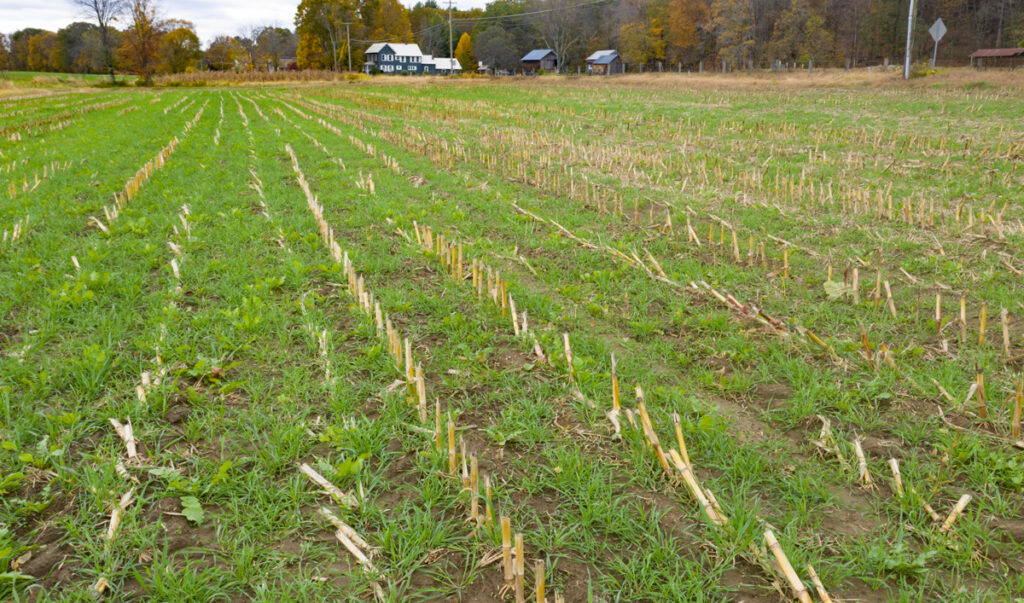
Assuming this carbon accounting reveals increased soil carbon stocks, agricultural projects implementing these approaches can be considered natural climate solutions, which are valued in the voluntary carbon market for their carbon offset and removal power. For example, one project developer selling carbon credits since 2022 recently reported that their efforts have so far stored nearly 1 million tons of soil carbon in U.S. farmlands. Further, across farms in four U.S. states, the combined use of three climate-smart agriculture techniques—no tillage, cover cropping, and crop rotation of corn and soybeans—is claimed to have resulted in a shift to carbon gains from soil carbon loss using conventional practices [U.S. Department of Agriculture, 2025].
Limited Evidence, Low Adoption
Despite claims about the successes of climate-smart agricultural practices, adoption remains low. Although no-till and reduced-till methods have been implemented on more than half of all U.S. soybean, corn, and sorghum fields, cover cropping is used across less than 5% of the country’s agricultural lands.
If robust data showing that climate-smart practices lead to widespread yield increases, cost reductions, and climate benefits were available, they might be more widely adopted by growers.
A multitude of social, cultural, and economic factors—along with questions about the viability for meaningful climate change mitigation—contribute to the limited adoption of some climate-smart practices [Prokopy et al., 2019; Eagle et al., 2022]. However, if robust data showing that they lead to widespread yield increases, cost reductions, and climate benefits were available, they might be more widely adopted by growers.
Presently, most evidence supporting the benefits of climate-smart agriculture for carbon management relies on a limited set of small-plot experimental trials and projected outcomes derived from applying process-based biogeochemical models. Public and private investment in studies aimed at quantifying the practices’ efficacy through measurement, monitoring, reporting, and verification (MMRV) at scales of real-world commercial agriculture has been inhibited by the assumption that soils vary too much to measure treatment effects feasibly [Poeplau et al., 2022].
This assumption is driven by the fact that regional and national soil carbon inventories reveal substantial variation in soil carbon contents at scales within individual fields (meters to tens of meters) and between fields (kilometers to tens of kilometers)—variation that is thought to preclude detections of how agricultural practices affect carbon stocks [Bradford et al., 2023]. Yet this variability can be overcome by scaling up field-level data to multifield scales focused on understanding the average effect of interventions.
What could this scaling look like, and what cues from other fields can we use to make progress?
Adapting Methods from Medical Research
Causal approaches are used regularly in health sciences, including in vaccine trials. In later-stage trials, vaccine efficacy is quantified under conditions approximating real-world delivery by measuring the differences in the health responses of people who receive the vaccine and those who do not.
Public health scientists use large-scale clinical intervention-style experiments to account for factors that can modify real-world vaccine efficacy. Earth scientists can take direction from such trials.
Importantly, such real-world trials occur only after there is enough experimental evidence—typically from controlled laboratory experiments and small-scale clinical trials—of underlying mechanisms indicating the likelihood of broad, meaningful positive effects and minimal negative effects of the vaccine. Public health scientists use these large-scale clinical intervention-style experiments (or observational studies) to account for factors such as varied exposure risks and preexisting conditions that can modify real-world vaccine efficacy compared with efficacy under controlled conditions.
Earth scientists can take direction from such trials. Adapting this experiment structure for soil science research would allow project developers, scientists, land managers, and policymakers to assess the ability of climate-smart agricultural practices to store carbon and reduce emissions across real fields and farms. It would also better inform meaningful climate action policy initiatives.
A base of highly controlled small-scale experiments—typically conducted in plots operated by researchers—already exists that suggests the carbon benefits of improved agricultural practices under highly controlled conditions. What is missing are the large-scale intervention studies sampling soil carbon in fields that receive a climate-smart treatment (e.g., no till or reduced till, crop rotation, cover cropping) versus those that are conventionally managed [Bradford et al., 2025b].
Such studies must be undertaken with appropriate design principles to confirm whether treatment interventions cause measured carbon gains and to focus on the external validity of the experiments. In the case of climate-smart agriculture, “external validity” refers to the extent to which a study’s results are applicable to other fields receiving similar management interventions. Achieving external validity necessitates sustained observation of realistic intervention behaviors on working commercial farms and on well-defined and preserved control fields, repetition of experiments at a variety of sites, and quantification of average outcomes from interventions across fields rather than for individual fields.
Empirical causal studies at the regional scales of commercial agricultural practices should be the gold standard of evidence for evaluating the effectiveness of climate-smart approaches.
New research suggests that empirical measure-and-remeasure projects are scientifically feasible at regional agricultural scales using current best practices for soil sampling and carbon analysis [Potash et al., 2025; Bradford et al., 2023]. Potash et al. [2025], for example, simulated a randomized-controlled trial for intervention projects across hundreds to thousands of fields, incorporating known variations in soil carbon stocks and measurement errors. The results showed that such projects can reliably estimate the effects of the treatments applied.
Using causal empirical approaches can complement, rather than compete with, the development of other approaches for MMRV of carbon storage and emissions. Approaches using satellite and airborne remote sensing may, for example, enable more efficient scaling of climate mitigation projects, albeit only if they are first validated against causal empirical data.
Empirical causal studies at the regional scales of commercial agricultural practices should thus be the gold standard of evidence for evaluating the effectiveness of climate-smart approaches. Data from these experiments will provide a rigorous basis for independent validation of established and emerging digital- and model-based approaches for soil carbon MMRV. They will also build confidence that adopting climate-smart practices really does result in mitigation of carbon emissions and climate change under real-world conditions.
Acknowledgments
The perspectives presented here were informed by discussions at and outcomes from a workshop convened in October 2024 by researchers at Yale University and the Environmental Defense Fund. Funding support was provided by the Yale Center for Natural Carbon Capture and gifts to the Environmental Defense Fund from King Philanthropies and Arcadia, a charitable fund of Lisbet Rausing and Peter Baldwin.
References
Bradford, M. A., et al. (2023), Testing the feasibility of quantifying change in agricultural soil carbon stocks through empirical sampling, Geoderma, 440, 116719, https://doi.org/10.1016/j.geoderma.2023.116719.
Bradford, M. A., et al. (2025a), Agricultural soil carbon: A call for improved evidence of climate mitigation, Yale Applied Science Synthesis Program and Environmental Defense Fund white paper, Yale Appl. Sci. Synth. Program, New Haven, Conn., https://doi.org/10.31219/osf.io/uk3n2_v1.
Bradford, M. A., et al. (2025b), Upstream data need to prove soil carbon as a climate solution, Nat. Clim. Change, 15, 1,013–1,016, https://doi.org/10.1038/s41558-025-02429-4.
Eagle, A. J., N. Z. Uludere Aragon, and D. R. Gordon (2022), The realizable magnitude of carbon sequestration in global cropland soils: Socioeconomic factors, Environ. Defense Fund, New York, www.edf.org/sites/default/files/2022-12/realizable-magnitude-carbon-sequestration-cropland-soils-socioeconomic-factors.pdf.
Poeplau, C., R. Prietz, and A. Don (2022), Plot-scale variability of organic carbon in temperate agricultural soils—Implications for soil monitoring, J. Plant Nutr. Soil Sci., 185, 403–416, https://doi.org/10.1002/jpln.202100393.
Potash, E., et al. (2025), Measure-and-remeasure as an economically feasible approach to crediting soil organic carbon at scale, Environ. Res. Lett., 20(2), 024025, https://doi.org/10.1088/1748-9326/ada16c.
Prokopy, L. S., et al. (2019), Adoption of agricultural conservation practices in the United States: Evidence from 35 years of quantitative literature, J. Soil Water Conserv., 74(5), 520–534, https://doi.org/10.2489/jswc.74.5.520.
U.S. Department of Agriculture (2025), Documentation of literature, data, and modeling analysis to support the treatment of CSA practices that reduce agricultural soil carbon dioxide emissions and increase carbon storage, Off. of the Chief Econ., Off. of Energy and Environ. Policy, Washington, D.C., www.usda.gov/sites/default/files/documents/USDA_Durability_WhitePaper_01_14.pdf.
Author Information
Savannah Gupton (savannah.gupton@yale.edu), Applied Science Synthesis Program, The Forest School at the Yale School of the Environment, Yale Center for Natural Carbon Capture, Yale University, New Haven, Conn.; Mark Bradford, Alex Polussa, and Sara E. Kuebbing, The Forest School at the Yale School of the Environment, Yale Center for Natural Carbon Capture, Yale University, New Haven, Conn.; and Emily E. Oldfield, Environmental Defense Fund, New Haven, Conn.; also at Yale School of the Environment, Yale University, New Haven, Conn.
Citation: Gupton, S., M. Bradford, A. Polussa, S. E. Kuebbing, and E. E. Oldfield (2025), How can we tell if climate-smart agriculture stores carbon?, Eos, 106, https://doi.org/10.1029/2025EO250446. Published on 1 December 2025.
This article does not represent the opinion of AGU, Eos, or any of its affiliates. It is solely the opinion of the author(s).
Text © 2025. The authors. CC BY-NC-ND 3.0
Except where otherwise noted, images are subject to copyright. Any reuse without express permission from the copyright owner is prohibited.