With the new 2026 Honda Prelude just rolling into U.S. dealer showrooms, it could take some time to see how potential buyers react to the sporty new coupe. In particular, the automaker will be waiting to see how owners feel about the new S+ Shift system.
Related: Are You Willing to Pay $63,000 For a Honda Prelude? Some Dealers Think So
Kristen Brown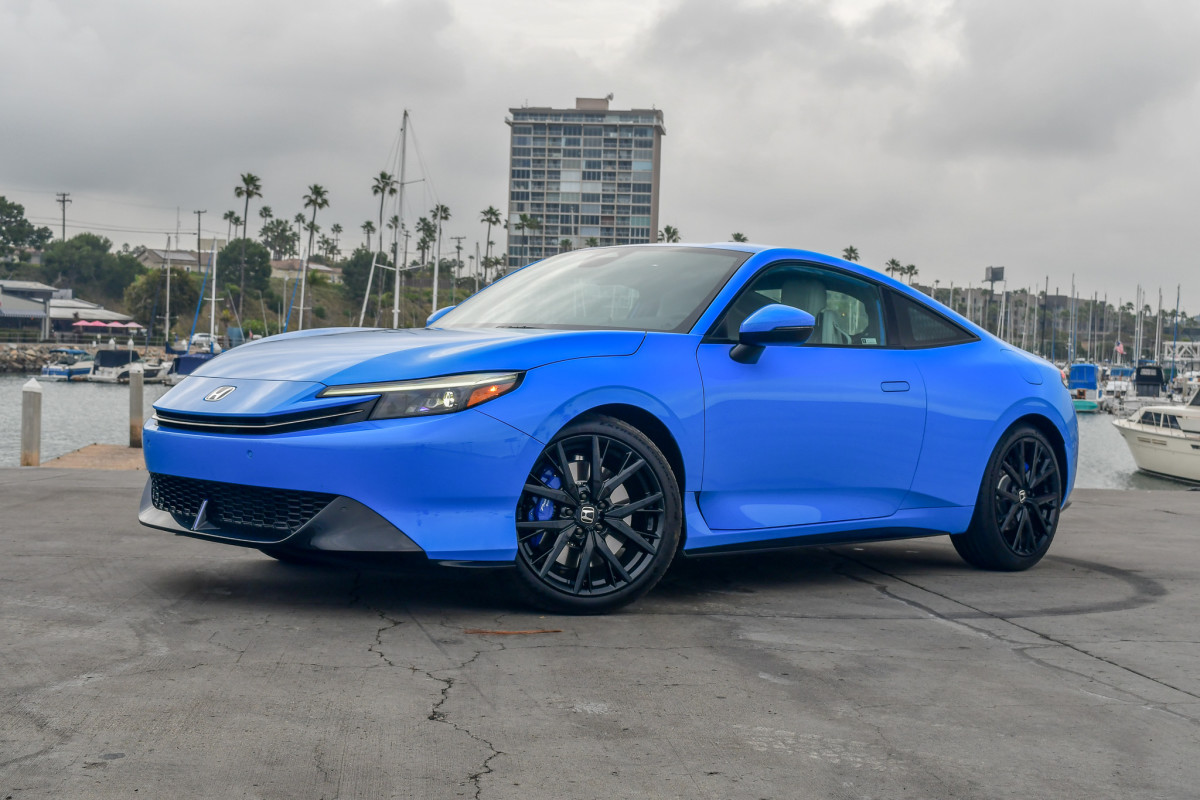
The sixth-generation Prelude is the first to get a hybrid drivetrain, a two-motor, direct-drive design derived from the latest Civic, rather than a conventional transmission. The lack of a manual gearbox, in particular, has generated a fair amount of controversy among reviewers and Prelude loyalists alike.
The S+ Shift system is meant to provide an engaging alternative, capable, Honda said, of simulating “a performance transmission experience, including downshift blips, rev matching and gear holding. Expect to see S+ roll out across Honda’s hybrid line-up.”
What is S+ Shift
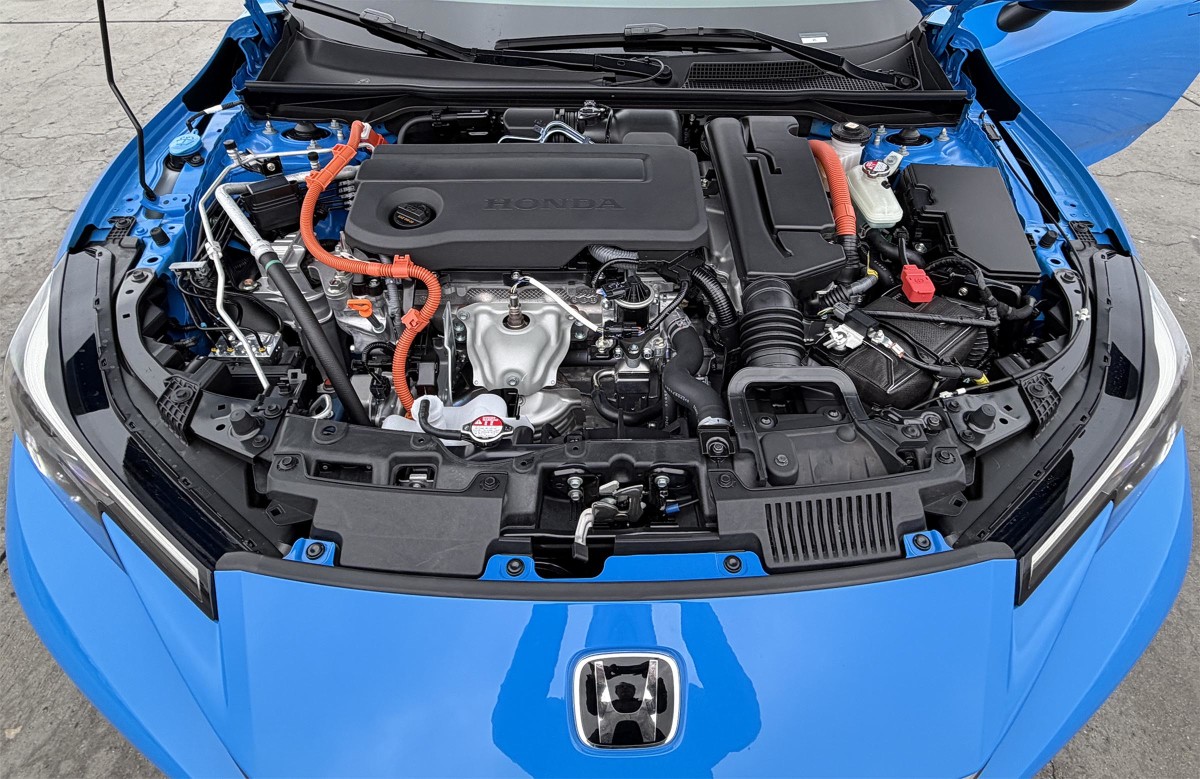
Prelude’s drivetrain pairs a 2.0-liter Atkinson cycle direct injection gasoline engine with twin electric motors. Like most hybrids, the package delivers great mileage numbers: 46 mpg city, 41 highway and 44 combined. But what matters more for the sporty nature of the coupe is the combined output of 200 horsepower and a peak 232 pound-feet of torque. For traditional performance fans, the downside is that Prelude doesn’t have a conventional transmission. The system’s traction motor functions more like an EV, directly sending power to the front wheels.
Related: Honda Brings the Prelude’s New Performance Hybrid Tech to the Civic
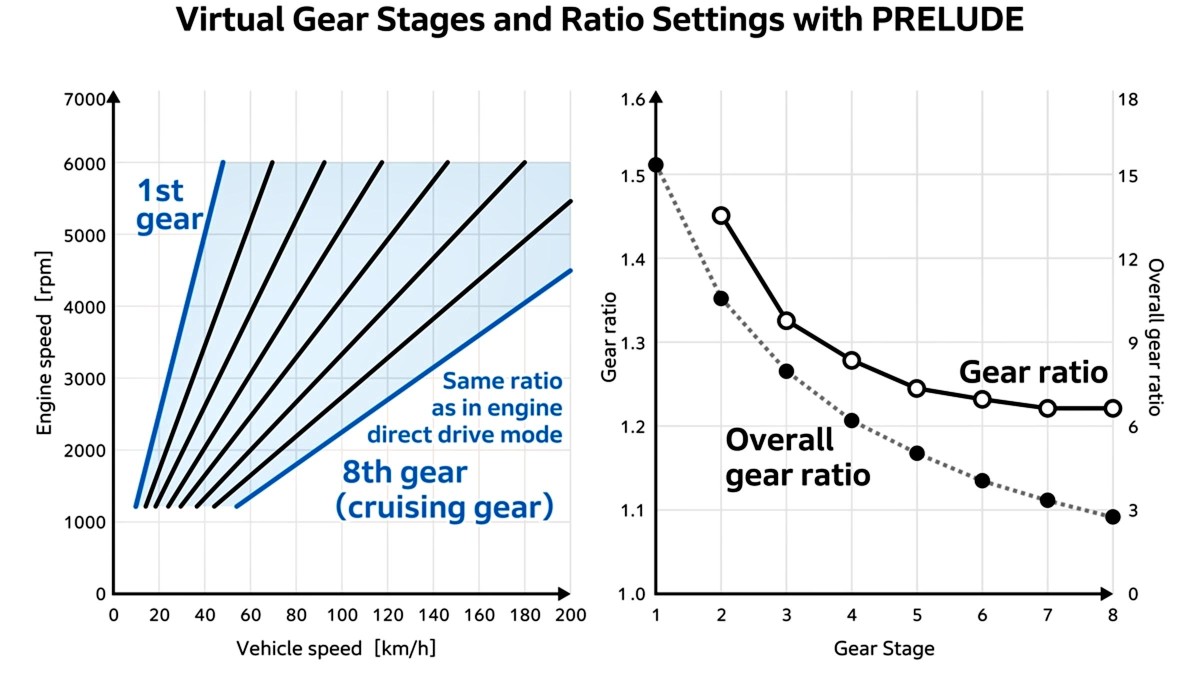
The coupe does have a series of selectable driver modes, including Comfort, GT and Sport, each recalibrating vehicle functions like steering, suspension dampers and an enhanced exhaust note. S+ goes a step further, capable of creating the feel of eight virtual step gears. Depending upon the mode a driver selects, it also impacts those other functions. In Sport, for example, activating S+ gives you what Honda describes as “the exhilaration of a high-revving naturally aspirated engine, complete with completely with deliberately increased gear shock, vibrations, engine sounds and active downshifting during acceleration.”
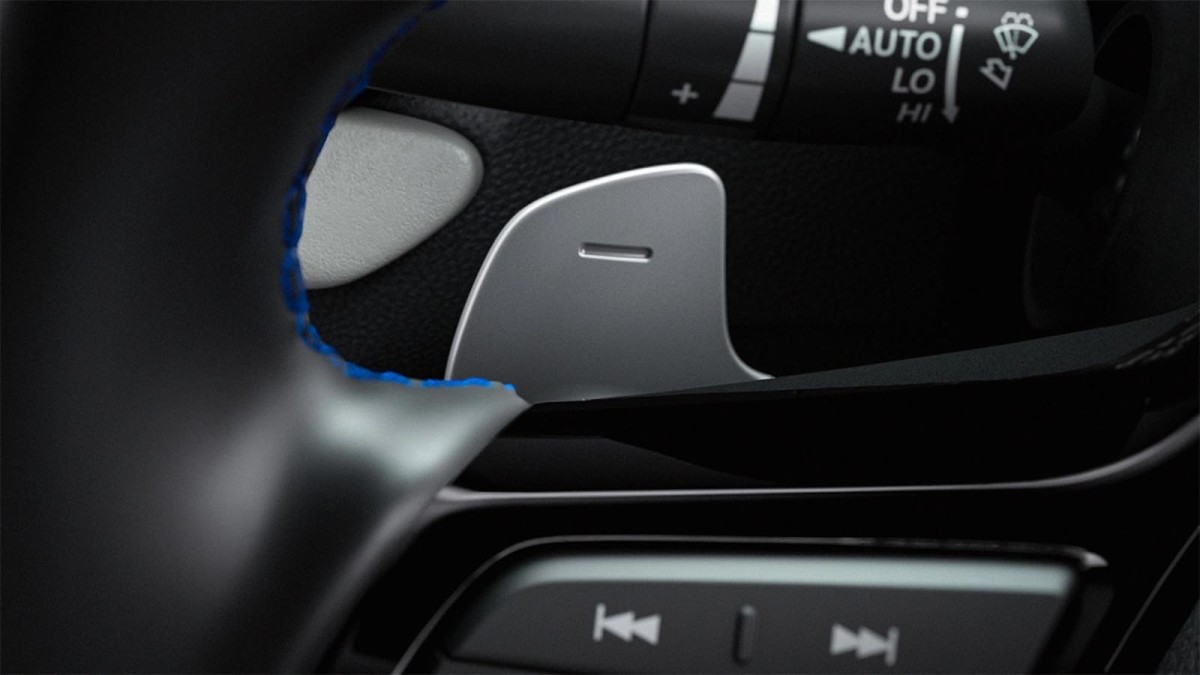
And while there may be no stick, Prelude – which comes in just one trim – does have steering wheel-mounted paddle shifters to “shift gears virtually without taking hands off the steering wheel.” In the process, a driver gets a sense of what’s happening as the digital gauge cluster’s Power Meter turns into a tachometer with upshift/downshift guidance marks.
A Growing Hybrid Line-Up
Honda was the second automaker to introduce a hybrid-electric vehicle a quarter-century ago – though its quirky, first-generation Insight model actually beat the original Toyota Prius to the U.S. market by a few months. Since then, Honda has expanded its HEV line-up, albeit at a slower pace than its bigger rival. But, with demand for the high-mileage technology starting to grow at a rapid pace, Honda’s been adding hybrid options to more and more product lines. There’s one thing different, however, newer models are putting as much emphasis on performance as fuel efficiency. Prelude’s 200-hp twin-motor drive is shared with the Civic Hatchback Hybrid and the CR-V Hybrid bumps output up to 204 hp while introducing a Sport mode.
It’s not alone. Other manufacturers, including Toyota, Hyundai and Kia, are taking a similar approach with some of their new hybrids. “The systems now hitting the market are on the right path,” said Sam Fiorani, lead analyst with AutoForecast Solutions. “We’re going to see engineers looking for ways to make the experience more visceral.” That’s especially true for hybrid buyers who also want performance. “I can’t imagine a fan of the Prelude wanting bland, smooth acceleration and no noise. Part of what they want is the sound of the engine and the feel of it going through the gears.”
Expect to See More of the S+ Shift
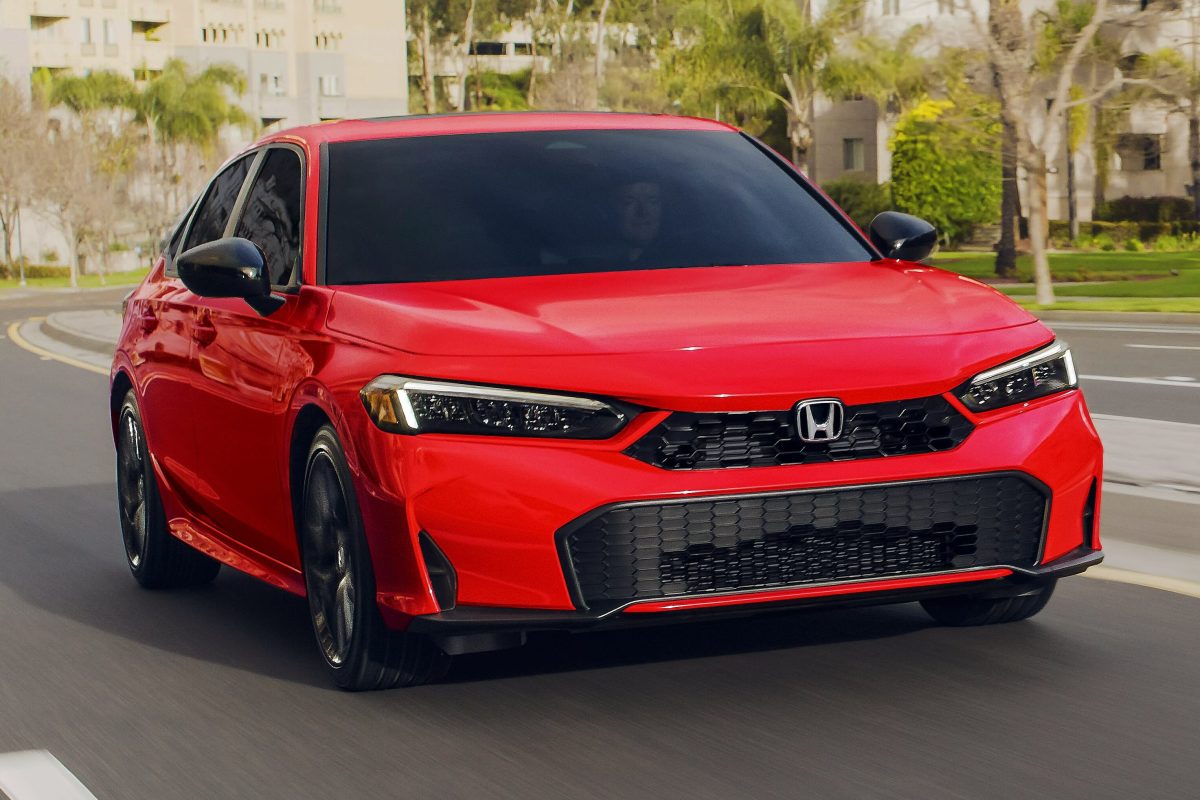
Considering the relatively low volume Honda expects out of Prelude you might wonder why it would go to the effort of developing a system like S+ Shift just for that little coupe. It didn’t. “We’re going to expand that system to other hybrid models,” starting later this year with the Civic Hybrid, said Lance Woelfer, vice president of automobile sales for American Honda. We could eventually see it become a virtually standard feature on the brand’s hybrid line-up, at least on HEVs that put a premium on performance.
Honda
Don’t be surprised, meanwhile, if S+ Shift, or a technology meant to create a similar visceral experience, starts to show up in the automaker’s pure battery-electric vehicles, like the Honda 0-Series line-up that will start rolling out later this year. The first long-range EVs developed in-house, they’re designed to deliver improved range, higher efficiency – and better performance. The first of these will debut in the form of a reborn Acura RSX and it will initially launch in dual-motor all-wheel-drive form which could yield as much as 500 hp combined. While specifics have yet to be revealed, its widely expected that we’ll see the RSX offer similar functions meant to enhance the performance feel.
Honda’s Not Alone
The third-largest of the Japanese automakers is by no means the only automaker emphasizing the performance potential of electric motors – nor the only one looking for ways to enhance the visceral feedback its electrified products. “If manufacturers want to encourage performance buyers to get an EV or hybrid they will have to offer the sound and feel of a performance car.”
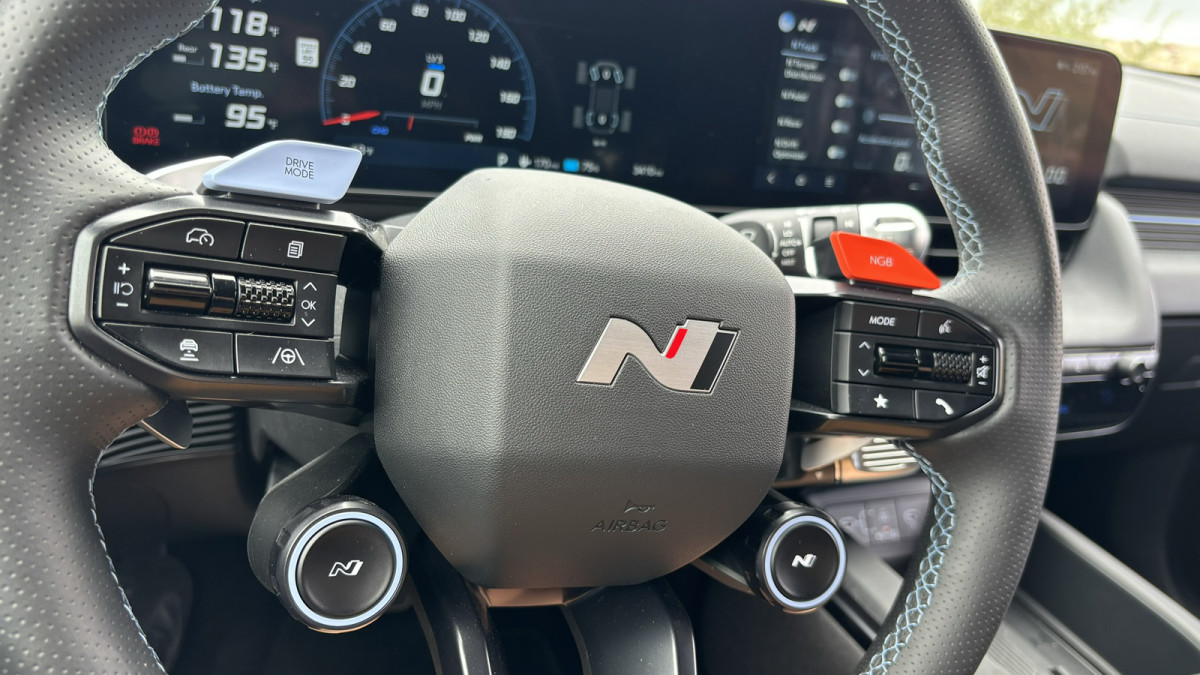
One of the best examples is the Hyundai Ioniq 5 N which added features like the N Pedal that not only increases throttle response but introduces performance sounds through the EV’s eight internal and two external speakers. It’s e-Shift function works much like S+ Shift, simulating step gears and even introducing a more aggressive shift slap. Its N Launch Control is designed to maximize takeoff acceleration. And Ioniq 5 N also gets a “drift optimizer,” which is meant to simulate the way a driver can let the back end hang out with a rear-wheel-drive gas model.
Related: Porsche Admits the Hyundai Ioniq 5 N Is Influencing Its Next EV Sports Cars
Another example is the Dodge Charger Daytona. The all-electric Scat Pack package punches out up to 630 hp – 670 in PowerShot mode – and 627 lb-ft and can hit 60 in just 3.3 seconds, with a quarter-mile run in 11.5 seconds. It also adds the ability to manually “shift,” engage Launch Control and generally simulate the sort of performance behavior of the gas-powered Charger – all the while enhanced by its “Fratzonic Chambered Exhaust” system which provides a Hellcat-like exhaust note, both in and outside the vehicle.
Mazda
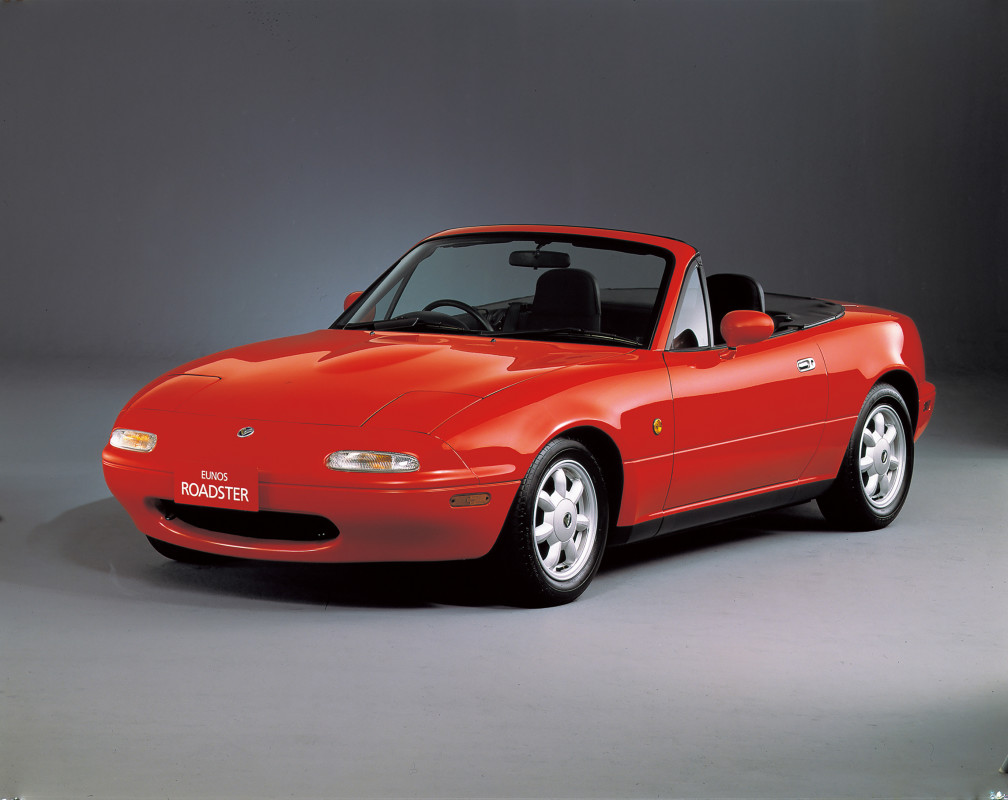
Enhancing the sound and fury of performance isn’t limited to just electrified vehicles, analyst Fiorani noted. When it was developing the original Miata many moons ago Mazda engineers went to great lengths to deliver what they felt was just the right note out of its powertrain. A number of manufacturers, including Toyota, Ford and even BMW and Ferrari, use tricks to enhance the sound of their vehicles. In some products, they mechanically pipe engine audio into the cabin. But it’s not uncommon these days for them to use simulated sounds subtly pumped out of the vehicle’s sound system, as well.