Up until now, vision and LiDAR sensors on modern vehicles have focused on making driving safer and more convenient, enabling a range of driver-assistance features. But Honda has uncovered an entirely new use for such sensors: creating safer and better-maintained roadways. In a project funded by the Ohio Department of Transportation (ODOT), Honda has shown how these sensors can accurately detect damaged roads and other infrastructure deficiencies. According to the study, the tech could save millions for ODOT and ultimately create safer roads, but the project’s widespread success lies in drivers’ willingness to share their data.
Is Proactive Roadway Maintenance the Future?
Honda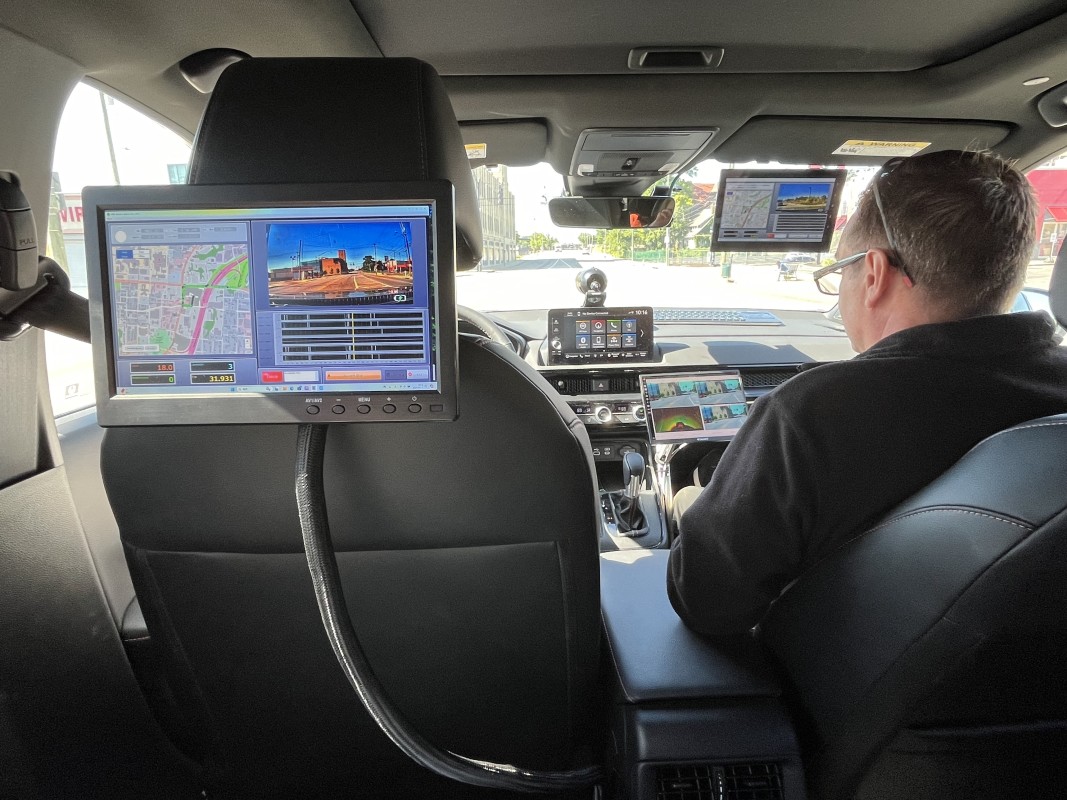
The two-year project led by Honda was run in collaboration with i-Probe Inc., Parsons Corporation and the University of Cincinnati. Over the duration of the project, Honda test vehicles with vision and LiDAR sensors covered approximately 3,000 miles in central and southeastern Ohio. These tests were conducted in urban and rural areas, during variable weather conditions, and at different times of day.
Ultimately, the Proactive Roadway Maintenance System detected the following road conditions:
- Worn or obstructed traffic signs
- Damaged guardrails and cable road barriers
- Potholes, including size and location
- Shoulder drop condition, including the percentage and depth of drop-off
- Poor roadway striping
- Rough road quality
Using Edge AI models, this data was transmitted to a Honda cloud platform and eventually provided to ODOT operators. It’s a much easier way of identifying roadway issues and maintenance requirements without conducting laborious manual inspections.
Data accuracy was found to be impressively high, with 89% accuracy for potholes and 93% accuracy for damaged guardrails. Damaged or obstructed signs were identified at 99% accuracy.
According to the project team, over $4.5 million could be saved annually by implementing a proactive roadway maintenance system like this one.
Related: These states have the best and worst roads in America
What It Means For The Average Driver
H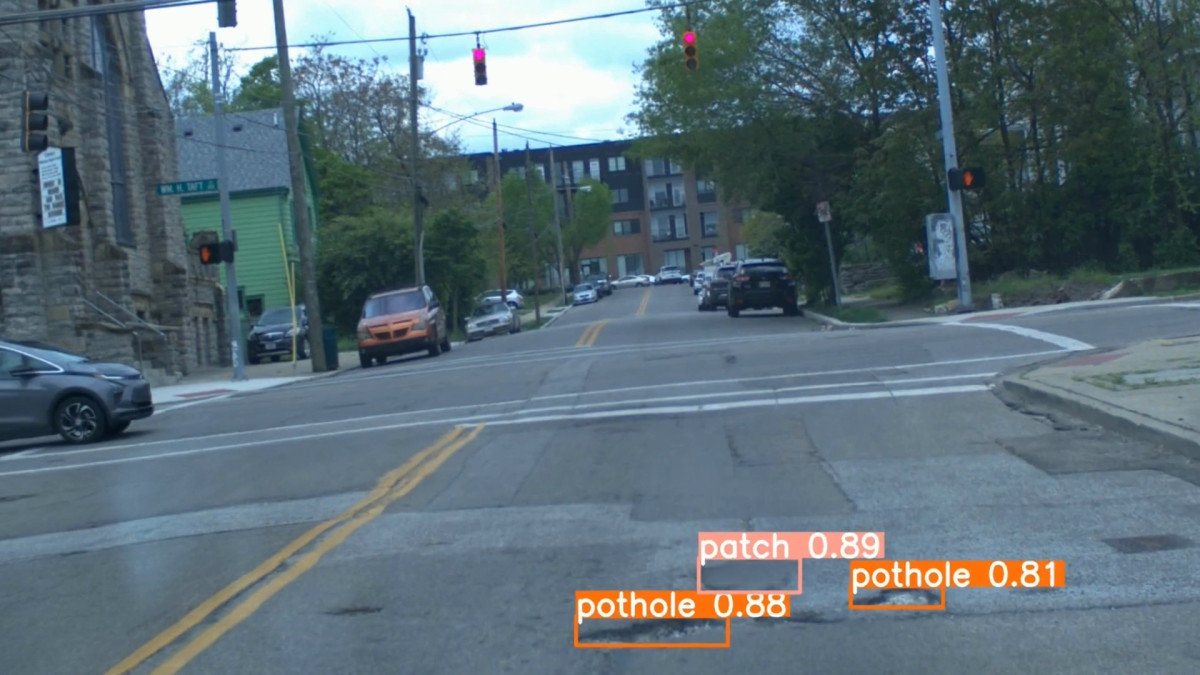
Better roads and associated infrastructure ultimately make our roads safer, and transportation authorities can implement fixes more quickly. Of course, the Proactive Roadway Maintenance System will see the most significant results if scaled beyond this relatively small Ohio-based project. The next phase of testing will explore ways to grow the project. If other automakers got involved, there would be more data to draw from, further improving the accuracy of the results.
“This pilot of the Honda Proactive Roadway Maintenance System empowers drivers to play an active role in creating safer roadways and communities while helping agencies like ODOT improve maintenance operations,” said Sue Bai, chief engineer, Sustainability and Business Development at American Honda Motor Co., Inc.
In this age of software-heavy vehicles, drivers have legitimate privacy concerns over the data being shared with automakers—as an example, Toyota was recently sued by a Florida resident after he discovered his car was tracking him, claiming this led to higher insurance rates. However, Honda says the data in this case is anonymized.
Furthermore, poor road conditions cost the average American over $1,400 annually in vehicle operating costs and lost time, according to the American Society of Civic Engineers (ASCE). This cost is likely higher in states with particularly poor roads, such as New Mexico and Mississippi, based a report by Consumer Affairs.
Honda has proven that the technology can improve the state of our roads, but only if transportation authorities in every state have the funds and means to implement the necessary repairs.