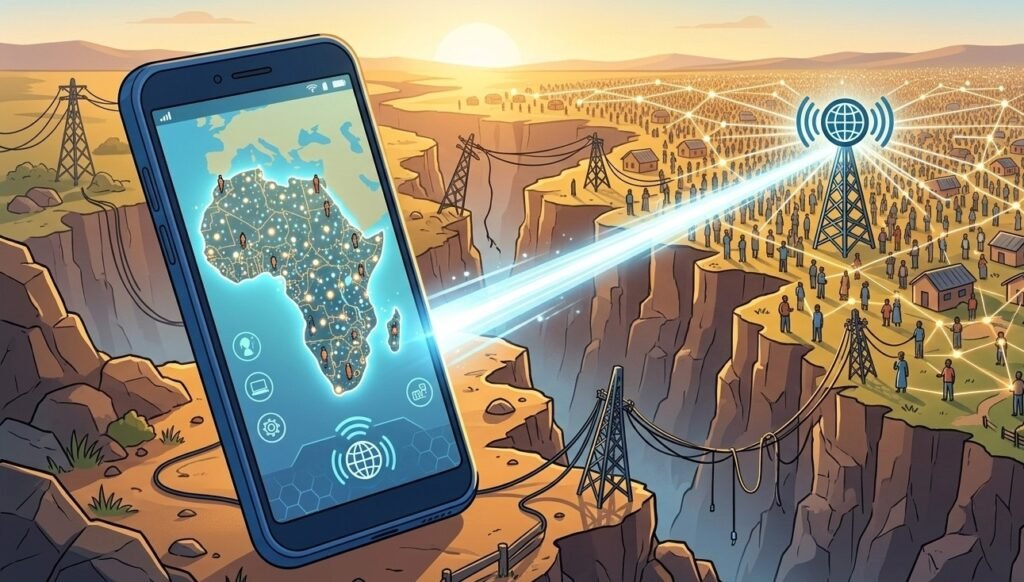

We live in an era where high-end smartphones can cost as much as a used car. However, a new industry movement is heading in the opposite direction. A coalition of telecommunications giants, hardware manufacturers, and industry advocacy groups are currently pushing in an initiative for a “holy grail” price point: the $40 smartphone, first in Africa. The goal is straightforward but ambitious—to bring mobile internet access to tens of millions of people who remain offline simply because the hardware is out of reach.
GSMA’s Ambition: The initiative for the $40 smartphone
During the recent Mobile World Congress (MWC 2026) in Barcelona, the GSMA announced a pilot program targeting six African nations, including Nigeria, Rwanda, and Ethiopia. The initiative aims to deploy ultra-low cost 4G devices to help narrow the “usage gap.” The latter is a term describing people who live within range of a mobile network but cannot afford the device needed to use it.
The math behind the machine
Creating a functional smartphone for $40 is a massive engineering and economic challenge. For a long time, the industry has thought that the $30 to $40 range was the point for mass adoption in developing markets. But getting to this price tag will be hard.
The rising cost of parts is one of the biggest problems. Counterpoint Research analysts say that memory chips are getting more expensive and harder to find in small amounts. Currently, DRAM suppliers prefer to manufacture chips for AI servers. In the smartphone segment, they prioritize the more profitable premium models. When you are aiming for a $40 retail price, every cent spent on a processor or a screen counts.
To put the challenge in perspective, the average smartphone price in the Middle East and Africa hovered around $188 at the end of 2025. Dropping that figure to $40 would require a complete rethink of the supply chain.
Taxes and financing: Challenges to overcome
The cost of the plastic and silicon isn’t the only thing that affects the price on the box. Smartphones are still taxed as luxury items in many regions. Import duties and excise taxes can raise the final cost by as much as 30%. The GSMA is currently in discussions with governments to treat entry-level smartphones as essential tools for digital inclusion rather than luxury goods. South Africa recently set a precedent by removing a 9% luxury tax on handsets priced below $150. The coalition hopes other nations follow this move as well.
Financing also plays a key role. Since $40 is still a significant upfront cost for many, the project depends on partnerships with development banks and donors to help operators subsidize the devices or offer manageable payment plans.
A second chance for ultra-low-cost tech
This isn’t the first time the tech world has tried to conquer the entry-level market. Over a decade ago, Google launched the “Android One” program with similar goals. However, it struggled to gain widespread traction. This time, the approach is more collaborative, involving a wide net of 15 different manufacturers and several major network operators like Orange and Vodafone.
If the coalition succeeds, they expect to bring an additional 20 million people online by late 2026. Still, critics argue that the $40 goal might be overambitious given current inflation and supply chain pressures.
The post GSMA Targets $40 Smartphones to Bring 20 Million People Online—But Hurdles Are There appeared first on Android Headlines.