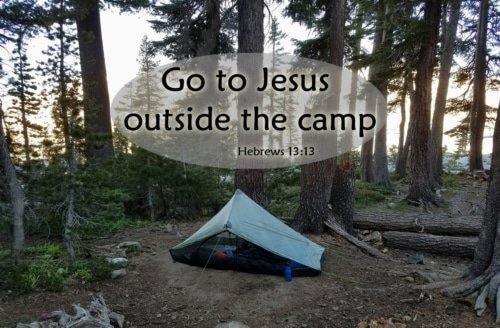
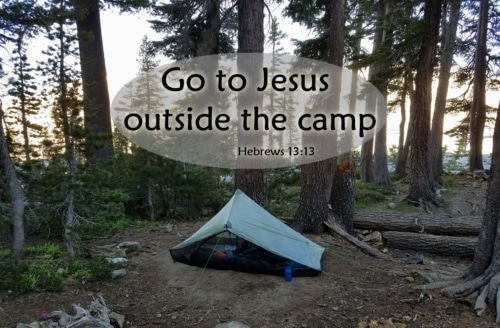
And so Jesus also suffered outside the city gate to make the people holy through his own blood. Let us, then, go to him outside the camp, bearing the disgrace he bore. For here we do not have an enduring city, but we are looking for the city that is to come.
Hebrews 13:12-14 NIV
Jerusalem was at the heart of Jewish culture and practice: the location of the temple and the ritual sacrifices. It had been the center of religious and political life in Israel for centuries since David had made it his capital.
Jerusalem also represented the old covenant established at Mt Sinai (Gal. 4:24-26). This covenant would become obsolete by Jesus’ mediation of a new covenant. But the keepers of that old covenant rejected Jesus and had Him put to death. The very thing that served to establish the new covenant (Heb. 9:11-28).
Outside Our Old Camp
Jesus was crucified outside the city gate of Jerusalem. And this passage encourages us to go to Him outside the camp.
For the Jewish believers to whom this letter was written, the camp was life under the old covenant established at Sinai, represented by Jerusalem. For others, the camp we are called to leave behind will be different. It might be a secular camp. It might be another religion. Or it might be some form of cultural Christianity.
But whatever your background was, Hebrews calls us to leave it behind and embrace the crucified and resurrected Jesus, the life He gives us now, and the hope we have for that eternal city that is to come.
Related Posts
The post Go to Him Outside the Camp – Hebrews 13:12-14 appeared first on A Clay Jar.