Not Just an Ioniq 5 N in a Suit
The Genesis GV60 Magma is set to arrive in the US by summer 2026. This is the first time we’re seeing the Magma badge on a production model, and it’s Genesis’ way of building its own performance line, much like BMW M or AMG. Compared to the garden-variety GV60, the Magma is bolder, quicker, and impossible to miss in its bright orange paint.
It’s tempting to call the GV60 Magma just a Hyundai Ioniq 5 N in a fancier suit. After all, both use the same platform, dual-motor layout, and battery pack.
Genesis wants to show that the Magma is more than just a rebadge. Where Hyundai goes all-in on track-ready aggression, the luxury marque aims for a mix of speed and composure. The wider stance, sharper aero, and rear wing all point to performance, but inside, the cabin feels more refined and less busy. Genesis is out to prove that a performance EV doesn’t have to feel edgy or frantic every second you drive it.
Genesis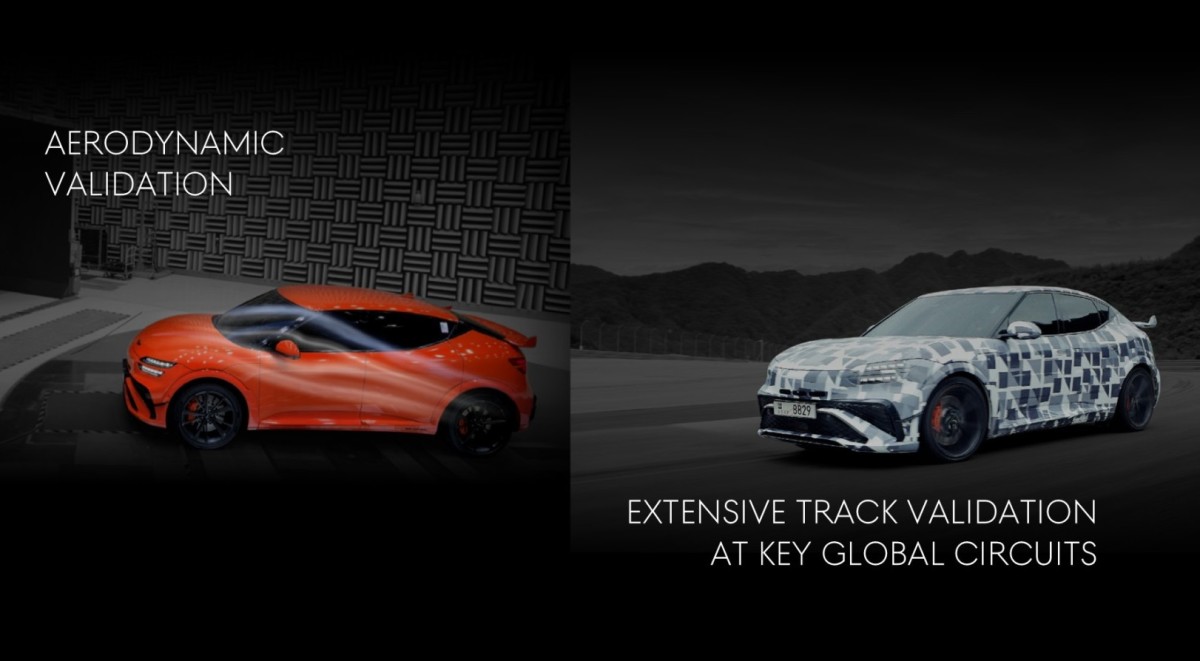
The Real Work Happens in Silence
One thing that stands out is how the GV60 Magma handles noise and vibration. EVs are quiet by default, which means any unwanted sounds are easier to notice. Once you get past 124 mph, wind and tire noise become much more obvious.
Genesis addressed this directly by testing the Magma in tough conditions, including high-speed runs on the Nürburgring and the Autobahn, reaching 164 mph. The main goal was to keep the cabin quiet and composed, even when the car is moving fast.
To cut down on wind noise, engineers reinforced the seals and improved how air moves around the doors. They used laminated glass, thicker insulation on the driver’s side, and extra soundproofing in the rear doors. Even the door panels have more sound-absorbing material than before.
Road noise gets the same treatment. There are sound-absorbing pads inside the tires, and the floor is reinforced to keep vibrations out of the cabin. Active Noise Control-Road uses microphones and sensors to cancel out low-frequency sounds through the speakers as you drive.
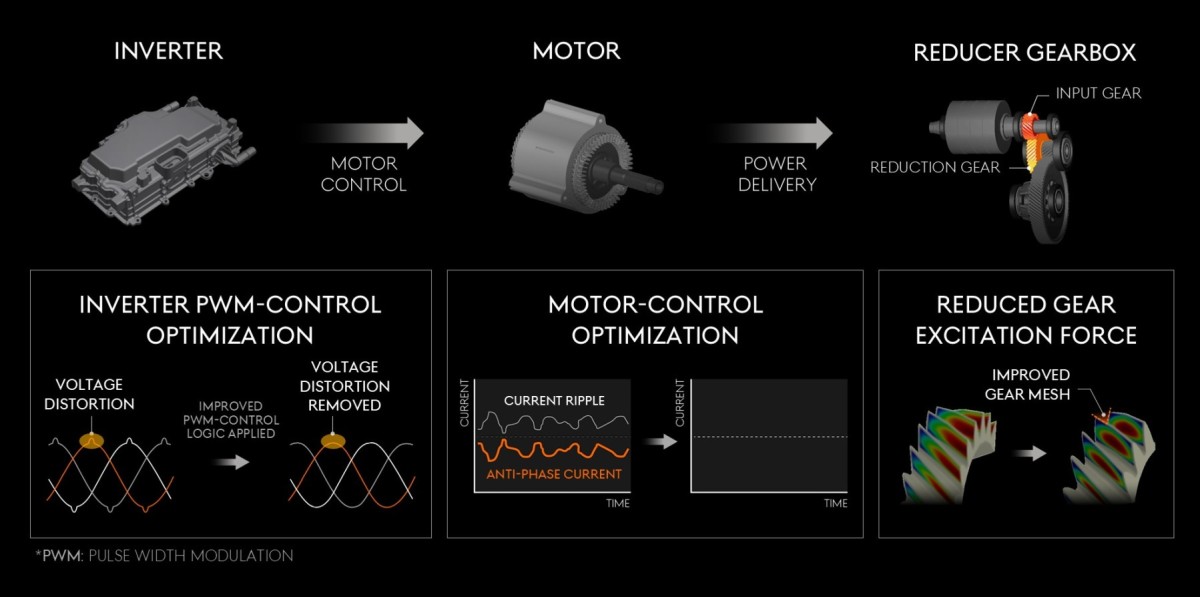
The electric motors also got attention, with engineers reducing high-pitched motor noise by smoothing voltage delivery, tweaking motor controls, and improving the gears. The end result is a performance EV that doesn’t sound strained at all.
Genesis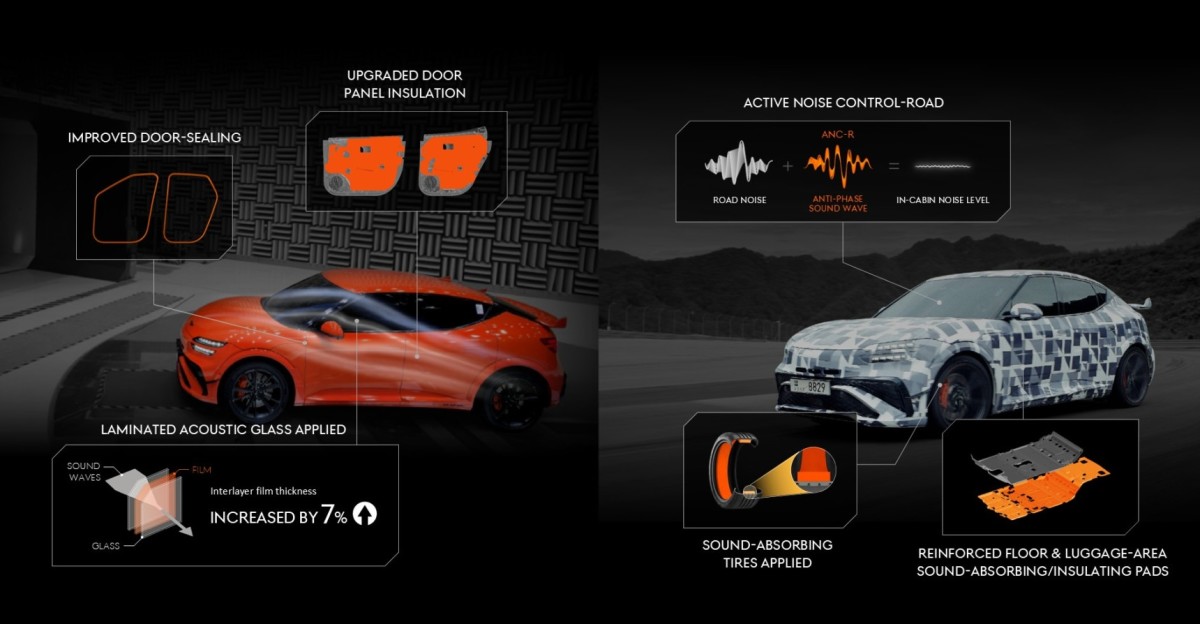
Performance Still Comes First
But don’t mistake all this refinement for softness. The GV60 Magma still puts up big numbers: 601 horsepower and 546 lb-ft of torque from its dual-motor AWD setup, with Boost mode pushing it past 640 hp. It does 0-62 mph in about 3.4 seconds and tops out at 164 mph.
Under the skin, you get upgraded dampers, more structural bracing, torque vectoring, and an electronic limited-slip diff. Big brakes and strong regen handle stopping, and features like Drift Mode and simulated gear shifts bring some of the fun from the Hyundai version.
Inside, you get Magma-specific bucket seats and sporty trim, but Genesis hasn’t forgotten about comfort. There’s a Magma mode selector that lets you pick drive settings like GT and Sprint for more focused performance.
Pricing in Korea starts at about $72,000. Expect US pricing to be different when the GV60 Magma lands here in summer 2026.
Genesis