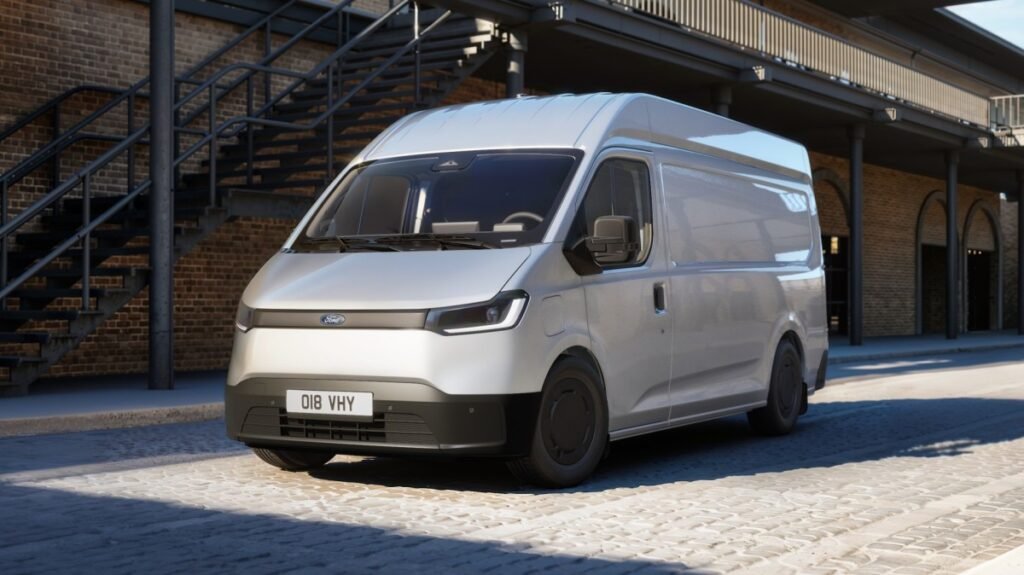
If you can’t beat them, join them. That seems to be Ford’s reasoning behind adding a new all-electric van to its Transit family of commercial vehicles in Europe, the mid-sized Transit City.
We’re saying that because the all-electric van is not exactly a Ford. While the US automaker already has a similarly sized van in Europe that also comes in an all-electric version—the E-Transit Custom—the Transit City is essentially a rebadged JMC Touring, a Chinese electric van built by Ford’s joint venture partner Jiangling Motors Corporation (JMC).
Made in China and Sold in Europe with an American Badge
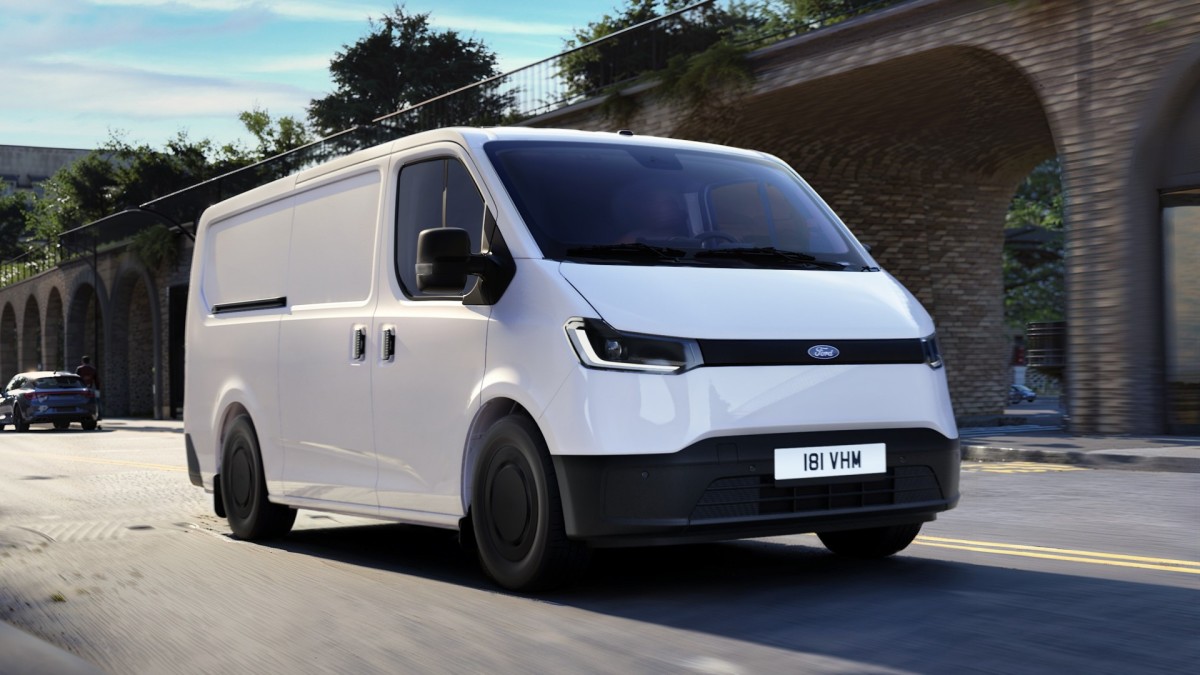
The Ford Transit City is also built in China, at JMC’s plant in Nanchang. This has allowed Ford to offer an electric van at a much lower price than its existing E-Transit Custom, which starts at around €47,000 ($54,200) in Germany, including VAT.
In comparison, the Ford Transit City promises to be a much more affordable proposition. While the automaker hasn’t disclosed pricing yet, Autocar claims the Transit City will be positioned close to the starting price of Ford’s smallest electric van in Europe, the E-Transit Courier, which is priced from €34,800 ($40,100) in Germany.
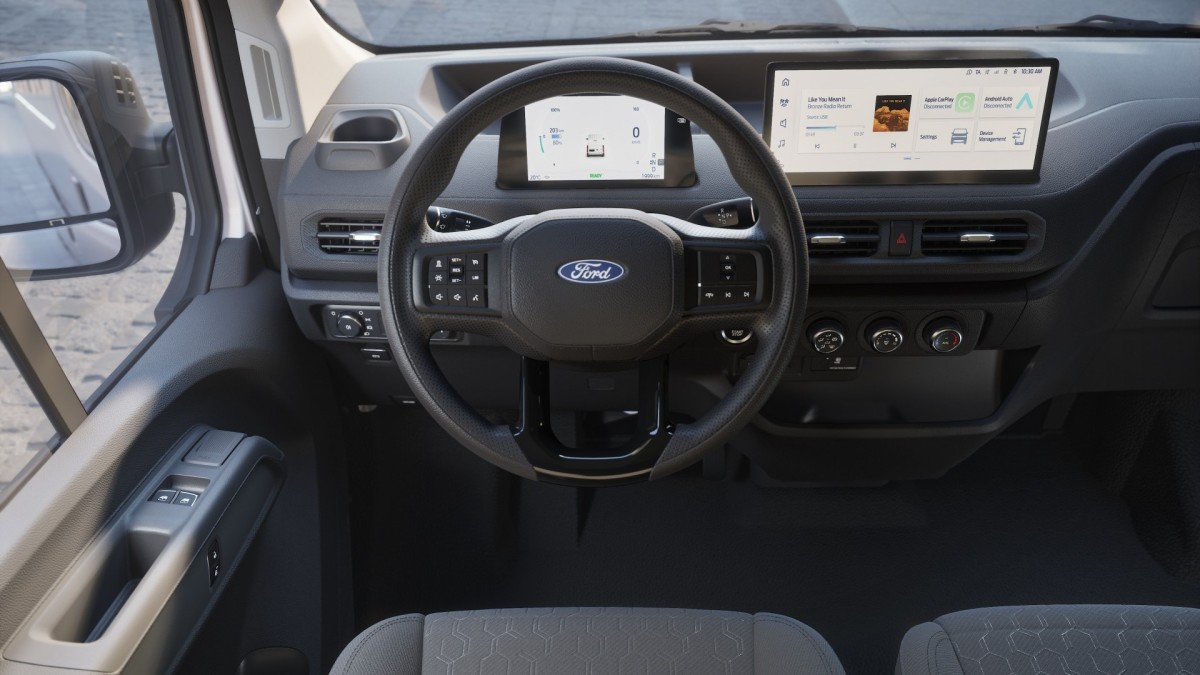
In order to keep the price down, the Transit City is stripped to its essentials and offers no optional extras. Still, the standard equipment is decent and includes a 12.3-inch touchscreen, manual air conditioning, heated driver’s seat, a backup camera and wireless Apple CarPlay and Android Auto.
Ford has borrowed not only the dedicated EV platform from JMC, but also the design, as the Transit City looks almost identical to the JMC Touring, with the only exceptions being the different headlights, front bumper and badging. Mind you, Ford says there are fundamental differences between the two models, including the battery and drive layout—the JMC van features a less powerful motor and slightly smaller battery.
Up to 158 Miles of Range, 2,392-Lb Payload
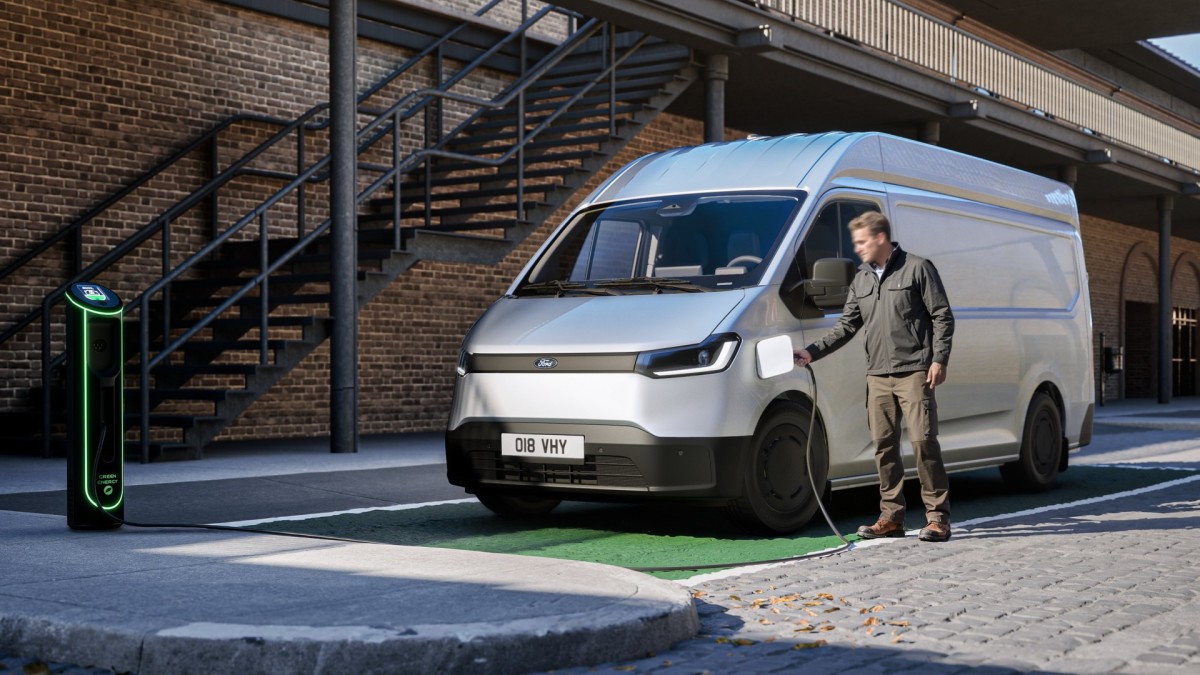
The Transit City features a front axle electric motor rated at 148 hp (110 kW), powered by a 56-kWh LFP battery, which is significantly smaller than the E-Transit Custom’s 71-kWh pack. Fitting a smaller battery results in a maximum payload of 2,811 pounds (1,275 kg) for the long-wheelbase model, while the short-wheelbase variant gets a 2,392-lb (1,085-kg) maximum. The cargo volume for the LWB model is approximately 8 cubic meters (282.5 cubic feet).
As its name suggests, the new battery electric van is designed especially for city use, as it has a driving range of up to 158 miles in the WLTP cycle in the most efficient short-wheelbase version. That makes the Transit City best suited as a last-mile delivery van for fleets. As for charging, it has a maximum charging speed of 87kW, which means it can add 31 miles of range in 10 minutes or go from 10 to 80 percent state-of-charge in 33 minutes.
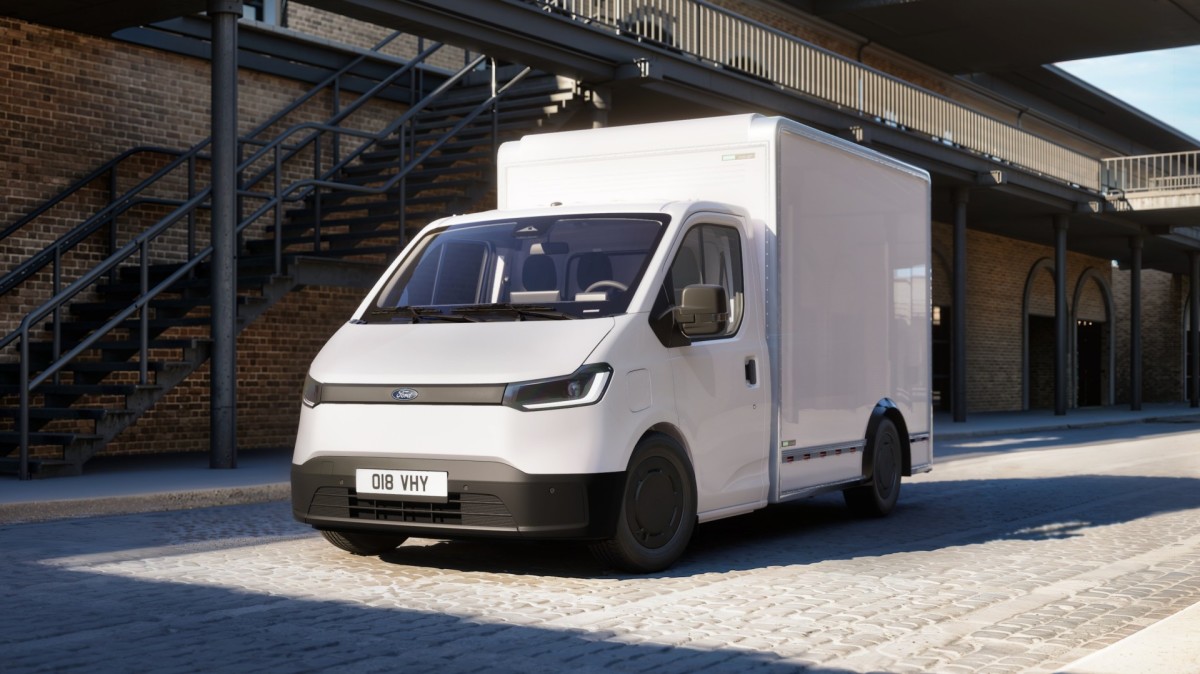
Ford will offer the new electric van in three body types: a short-wheelbase, low-roof van (L1H1), a long-wheelbase, taller van (L2HD), and a chassis cab. The latter version marks Ford’s entry into the one-tonne chassis-cab segment, which means that factory-approved conversions should follow shortly.
Box van and dropside conversions have already been announced by Ford Pro partners including VFS, but other models, including a refrigerated body and a tipper variant, will follow early next year. Ford will start taking orders for the Transit City this month, with deliveries in Europe expected later in the year.