Artificial intelligence holds the promise of greater convenience, and this year, Ford owners will begin to get a taste of what’s possible. The Blue Oval has announced several technological developments that will reach customers imminently, and they have real-world uses that can’t be ignored. These include a new Ford AI assistant that can be accessed from the Ford or Lincoln smartphone app, advances in BlueCruise semi-autonomous hands-free driving, and a new internally developed “vehicle brain” that promises to reduce architectural clutter and increase reliability.
Ford’s New AI Assistant Will Have Multiple Applications
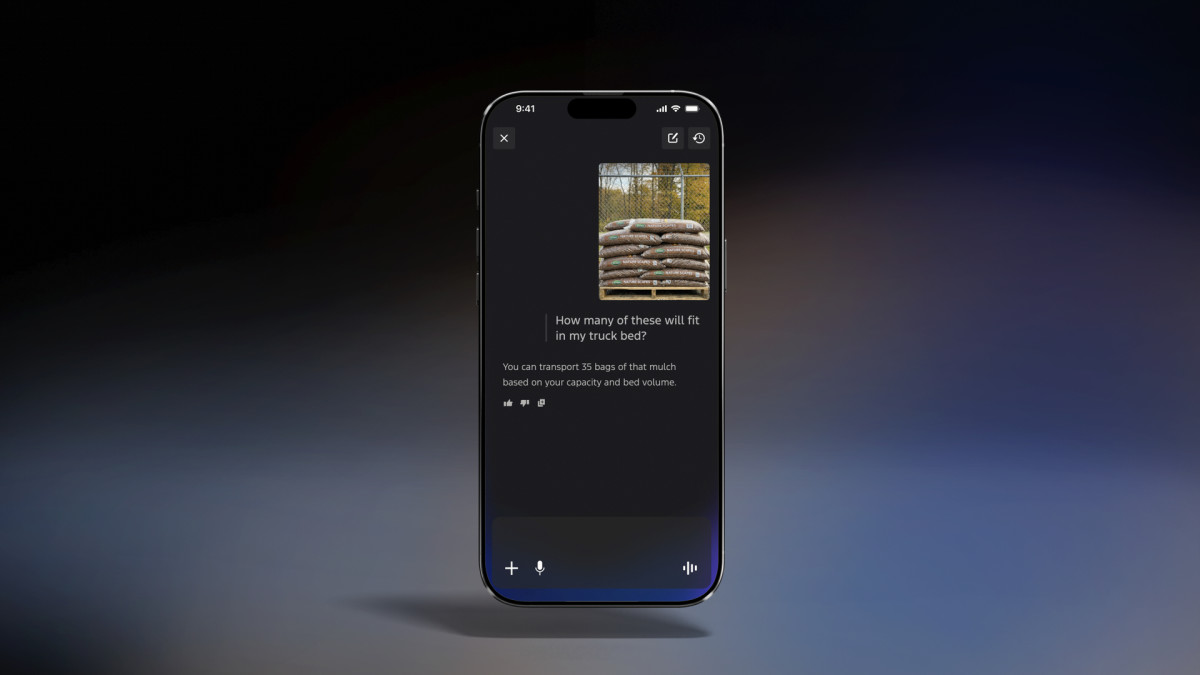
Ford describes its new AI assistant as “a seamless layer of intelligence” that is “not generic.” One example of how to use its capabilities is before loading a pickup with home improvement supplies. A customer will be able to whip out their phone, take a photo of a pallet of mulch, for example, and ask the AI how many packets would fit in their truck bed. The AI, being connected to the vehicle, knows the bed dimensions and the truck’s weight ratings and can calculate how many bags will safely and legally fit. Obviously, this will have limitations. The photo example includes the pallet that the mulch is stacked on, giving the AI a frame of reference, and there may be items that the AI does not clearly interpret, requiring additional information, but you get the idea.
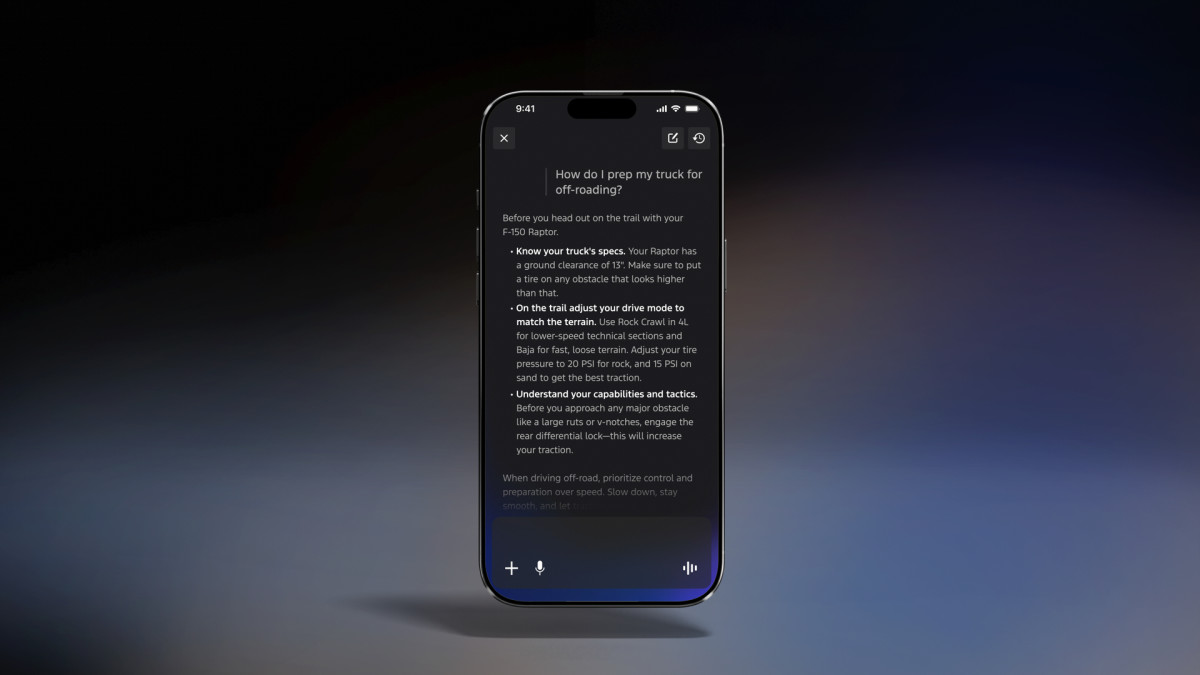
Another example Ford provides is asking the AI how to prep one’s vehicle for off-roading, with responses that provide information on ground clearance, the best drive mode to activate, and optimal tire pressures for rock or sand. The system can also use one’s vehicle location to recommend nearby trails or roads to explore. Ford says its new assistant will start reaching up to 8 million customers through the Ford and Lincoln apps in early 2026, with a native in-vehicle rollout beginning in 2027.
BlueCruise Self-Driving and Improved Efficiency
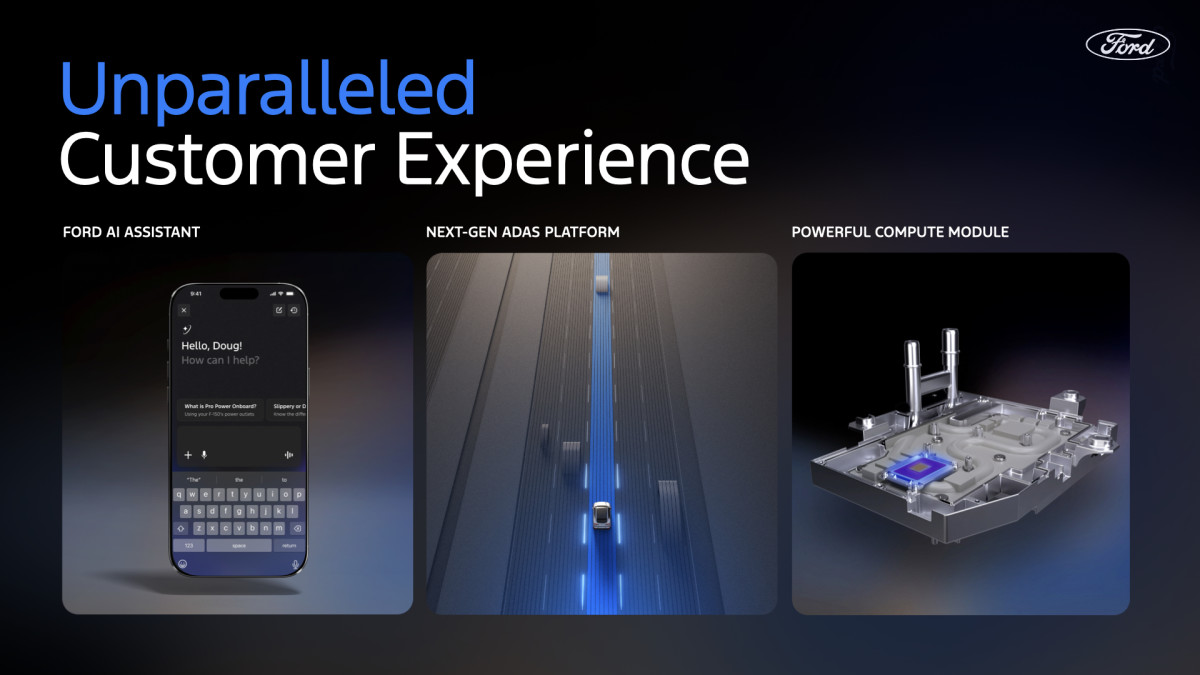
Tesla CEO Elon Musk may want other automakers to license his company’s so-called Full Self-Driving technology, but it’s not happening, and Ford is among those that would rather develop their own systems. Ford’s BlueCruise is in 1.2 million vehicles and counting, and Ford claims that its self-ownership of the tech allows it to “deliver significantly more capability at a 30% lower cost than if [Ford] bought it from outside suppliers.” This, says Ford, makes semi-autonomous driving tech easier to scale and democratize, and it plans to introduce new hardware and software related to BlueCruise in 2027 on its all-new Universal Electric Vehicle platform, with Level 3 eyes-off assistance coming in 2028. On a separate note, Ford recently announced that this project has reached the prototype stage.
Related: Ford Drivers Logged 264 Million BlueCruise Miles as Comfort With Autonomy Grows
This will be achieved with the help of a single module that controls infotainment, advanced driver assistance systems, audio, and networking within a single component. According to the automaker, this “vehicle brain” cuts module size nearly in half with dramatically increased performance, resulting in a more consistent, more reliable, and more capable vehicle year after year. It should also mean less weight and cabling, not unlike Rimac’s incredible new ECU. In other words, future Fords should be more advanced, less prone to recalls, and more capable of adopting upgrades as they become available. The Blue Oval emphasizes affordability and large-scale access for these ideas, pushing hard to become what Volkswagen once was, the people’s car, and if it can keep to these timelines, it won’t be long before millions of Fords are smarter, safer, and more advanced — even without a $70,000 or higher price tag.