- Ford is monitoring repair orders to cut customer wait times.
- Central team steps in to offer help when jobs exceed two days.
- AI is now helping dealers and techs avoid paperwork delays.
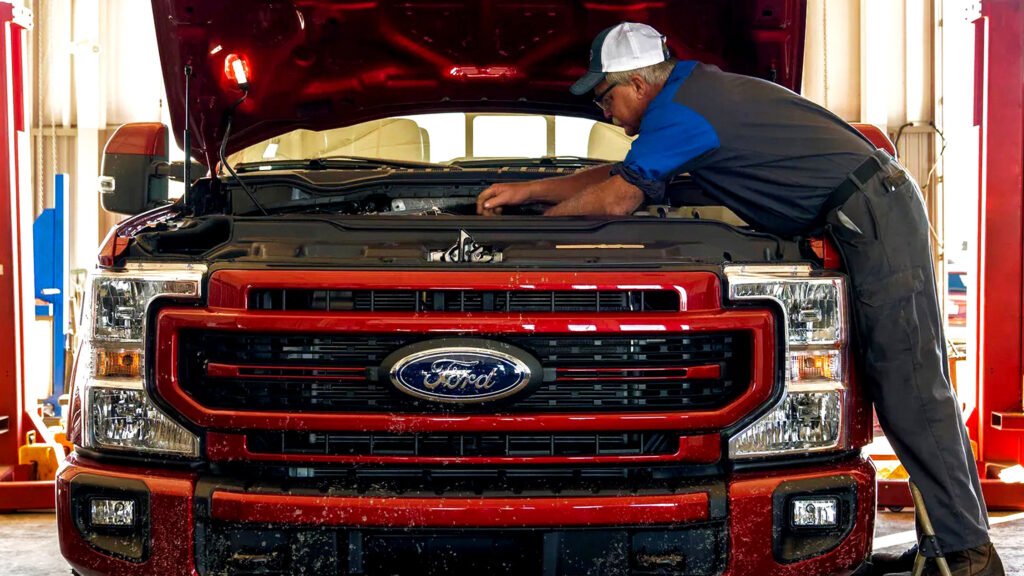
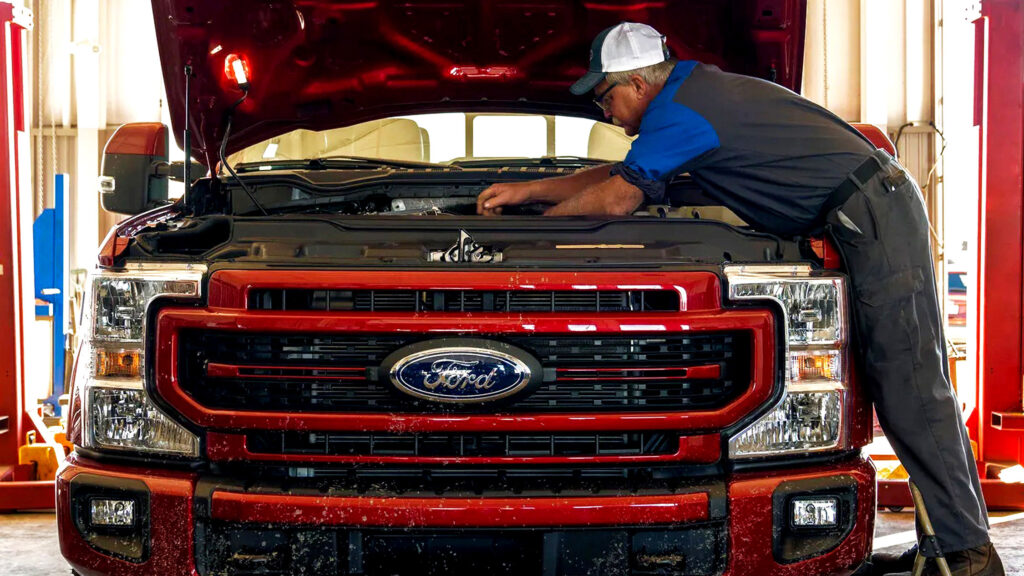
We’ve all been there. You drop your car off at a dealer service center for what you hope is going to be a quick fix, and somehow it turns into a five-day relationship with a rental sedan. Ford says it’s had enough of that and now wants most repairs done the very same day.
The company’s new initiative is called Uptime Assist, and the goal is simple: get customers back on the road faster and remove the black hole of uncertainty that makes service departments so frustrating. Same-day turnarounds are the dream, even if reality of stubborn software and backordered parts might still get in the way.
Dealerships can enroll in the program at no cost, and Ford says improving “uptime” has become a priority across its service network.
Read: Ford CEO Frustrated He Can’t Fill 5,000 Mechanic Jobs Paying $120,000
Here’s how it works. Ford has a central Michigan-based team that monitors repair orders as dealers open them. The group includes roughly 25 employees in Michigan, supported by hundreds more in global call centers. If a job drifts past two days, Ford gets alerted and checks in to see what’s slowing things down.
Need parts? Need tech help? Stuck in diagnostic limbo? Someone is now watching the clock to make sure the next time the job is swifter. Dealers are also encouraged to reach out earlier in the process for help diagnosing tricky issues, rather than waiting for a repair to stall.
Five-Days In The Bays
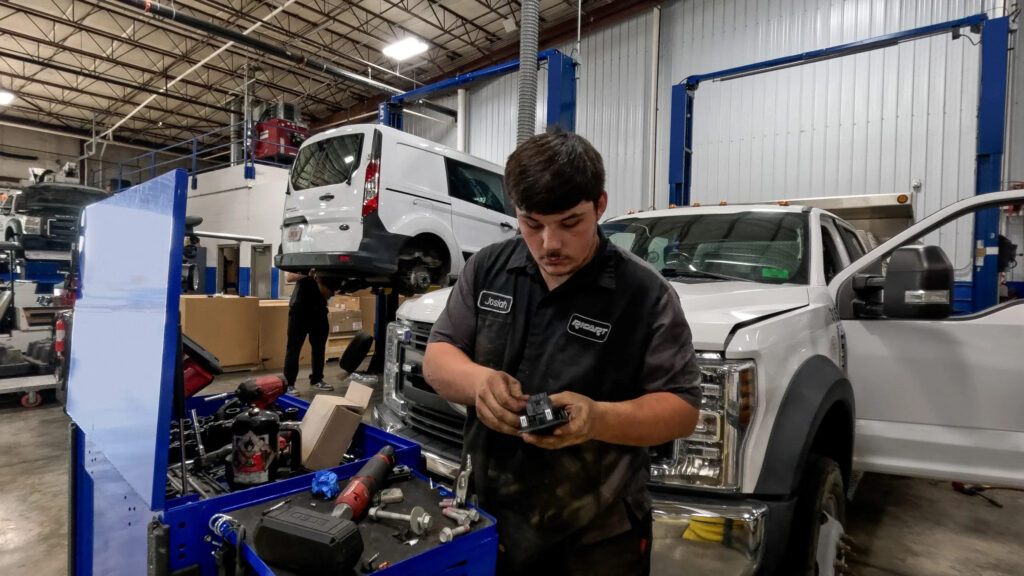
According to Autonews, Ford handles roughly 35 million repair orders globally each year. About 70 percent are completed in under two days, but the network average still hovers around five. Since Uptime Assist launched in early 2025, Ford says repair times have improved by 10 to 15 percent, or about half a day shaved off the wait.
For regular customers, that shrink is welcome, but for commercial customers who really can’t afford time without their truck, it could make a huge financial difference. Ford estimates fleet operators lose between $500 and $1,000 per day when a vehicle sits idle.
Also: Why Even The Smallest Accident Is Designed To Destroy Your Wallet
“We want customers to be back on the road the same day,” Daniel Justo, vice president of the Ford Customer Service Division, told Autonews, adding that uncertainty about timing is often the most frustrating part for owners.
Dealers say the biggest win so far involves parts. If a recall – and let’s face it, Ford is dealing with dozens every year – requires a specific component, Uptime Assist helps get it shipped before the vehicle even rolls into the bay. If the part isn’t needed, dealers can return it without penalty.
Ford says parts are available about 97 percent of the time, and when they are not, the team can help locate inventory from other dealers or arrange direct shipments from suppliers.
Specialists Only A Call Away

Ford has also set up dedicated hotlines for hardware and software headaches. Instead of waiting on a field engineer juggling multiple stores, technicians now reach specialists who can often solve issues in minutes instead of hours. In some cases, resolution time dropped from eight hours to just twenty minutes.
More: Ford Latest Recall Crisis Leaves Thousands Of SUVs Stuck Without A Fix
Ford is also feeding service manuals and prior repair data into internal systems that use AI to help advisers avoid paperwork errors that slow claims processing. Less red tape means fewer excuses for delay.
Will every repair be done before lunchtime? Probably not. But if your next Ford fix is handled before your coffee gets cold, Uptime Assist might be why.