A lawsuit against Ford, relating to allegations of widespread ‘death wobble’ incidents on the 2005-2007 F-250 and 2017-2019 F-350 Super Duty trucks, is going back to a district court after it went to the U.S. Court of Appeals for the Ninth Circuit, and it seems that plaintiffs may be on the back foot. The seven-year-old lawsuit has changed several times over the years since it began, with the current iteration including only the abovementioned vehicles purchased from dealerships in the states of Arizona, California, Colorado, Illinois, Maine, New Mexico, South Carolina, and Texas, and excluding trucks used for business.
The class action was filed by 13 customers who complained that they lost control of their trucks because of defective steering damping systems on the vehicles, but while judgment is yet to be made, it’s looking increasingly likely that the plaintiffs will be unsuccessful.
What Is ‘Death Wobble,’ and How Is Ford Implicated?
Ford Motor Company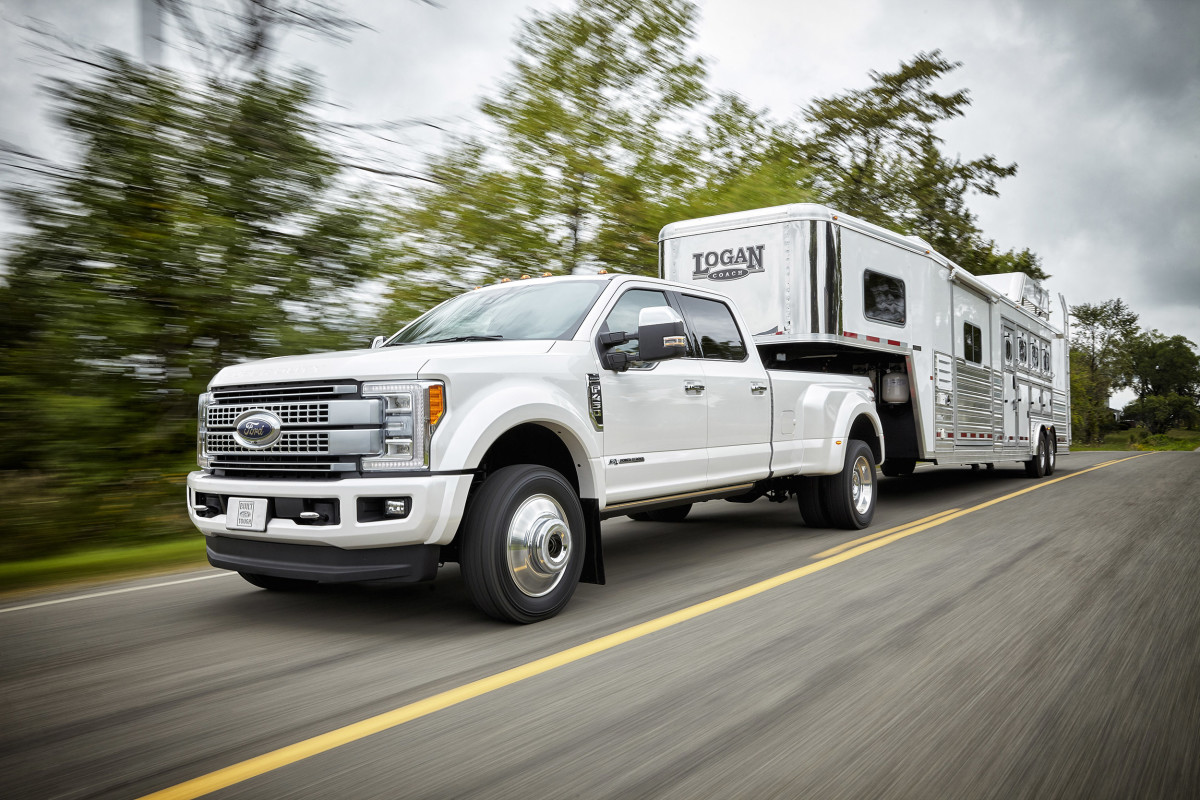
A problem commonly associated with certain model years of Jeep Wrangler, the so-called death wobble is what happens when severe shaking of the suspension and steering wheel causes instability, caused by loose or abnormally worn track bar bushings or issues with ball joints, steering dampers, control arms, shock absorbers, and/or struts. The plaintiffs in the lawsuit against Ford claim that this steering “shimmy” (a phenomenon that stops when the vehicle slows down) is one that Ford was aware of before selling the trucks. This is a claim that all lawsuits against automakers make, presuming that the sort of bad judgment made when Ford introduced the ill-fated Pinto is still rampant across the industry today. While judges often tend to agree with that argument, the appeals court did not, with the Ninth Circuit finding that the lower court judge should not have allowed simple general evidence to support claims of pre-sale knowledge of the alleged suspension defects.
Lawsuit Against Ford Could Fall Apart
Kevin Carter/Getty Images
Indeed, the lawsuit appears to be on shaky ground. Initially, it attempted to include a customer from South Carolina as a class representative for Maine. The Ninth Circuit also told the plaintiffs to provide proof of common evidence of the alleged defects, but Ford said that all evidence showed the steering problem “manifested at different rates from year to year across all the platforms encompassed” in the suit. The Ninth Circuit agreed, reversing the certification order and remanding for the court to evaluate whether the variable evidence “is fatal to certification of the putative classes.” So what now?
Related: Ford Recalls Over 1.7 Million Crossovers and SUVs Across 26 Products
The lawsuit will go back to the district court for the judge to reconsider the case (filed in the U.S. District Court for the Southern District of California), and given that the appeals court has sided with Ford on several issues, the plaintiffs may be forced to drop the suit or come to a settlement. Again, we must let the courts do their work, but as CarComplaints.com notes, truck owners who provided details of alleged issues after taking delivery of their trucks “do not adequately allege [that] Ford knew of possible problems before the trucks were first sold.” With that and the other challenges plaintiffs have faced, this may not be a battle worth fighting any longer.