Source: AGU Advances
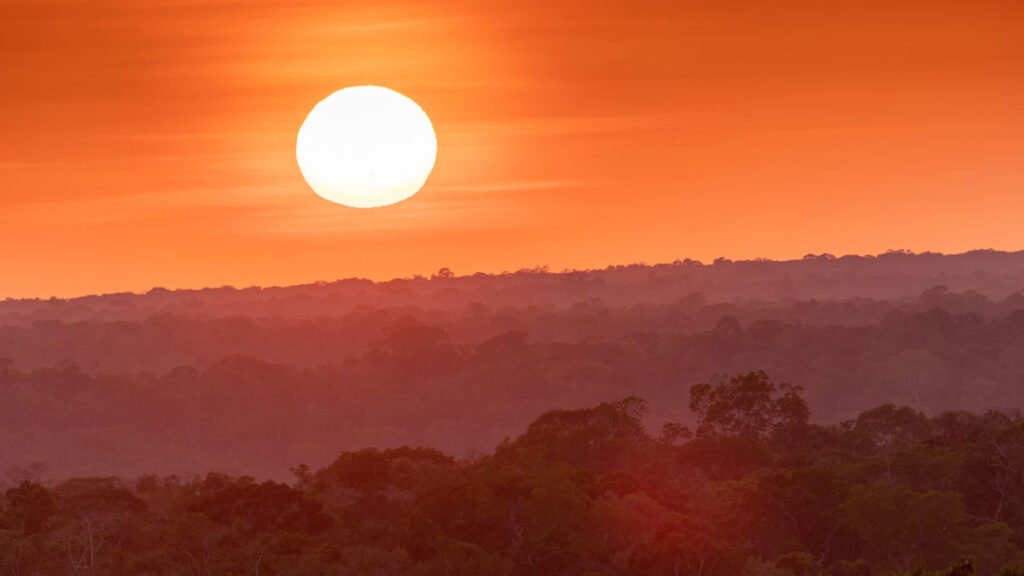
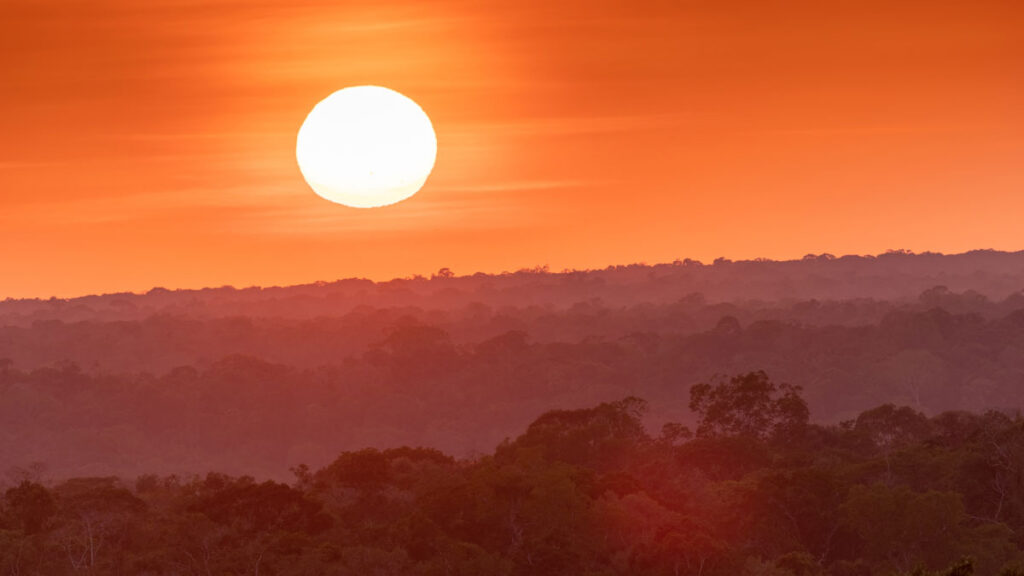
The Amazon is the world’s largest tropical rainforest, typically storing more carbon than it releases into the atmosphere each year. But in 2023, global high-temperature records accompanied droughts and heat waves across South America, disrupting that stable pattern.
Botía et al. combined carbon dioxide measurements and global atmospheric data to calculate the Amazon rainforest’s 2023 carbon balance using several data sources, including vegetation and atmospheric models, remote sensing data of fire emissions, vegetation indices, and proxies for gross primary productivity (a measure of how much carbon an ecosystem takes up for photosynthesis). The researchers compared the Amazon Basin–scale patterns to local flux measurements of carbon dioxide from the Amazon Tall Tower Observatory, located in the central Amazon in northern Brazil.
They found that the forest released between 10 billion and 170 billion kilograms of carbon into the atmosphere in 2023 (including fire-related emissions), turning the ecosystem into a small net carbon emitter. The change was most pronounced in the second half of the year, likely driven by climate warming and high sea surface temperatures in both the Atlantic and Pacific oceans. The warming atmosphere and seas, along with an extended dry season, were likely compounded by the transition from La Niña to El Niño conditions.
However, despite an increase in drought-driven fires in the southern Amazon and an extended fire season, fire-related emissions from the rainforest were within the long-term (2003–2023) average in 2023. This level of fire-related emissions indicated that the rainforest’s change from a carbon sink to a carbon source was caused by the rainforest’s vegetation absorbing less carbon during drought conditions, rather than by fire-induced carbon release.
The rainforest’s record-breaking switch from a carbon absorber to a carbon emitter accounted for up to 30% of worldwide tropical carbon emissions in 2023, the researchers say. The findings suggest that the Amazon could become an overall carbon source faster than previously predicted. However, the authors note that the research so far is not conclusive, and the possibility of the ecosystem recovering exists as well. (AGU Advances, https://doi.org/10.1029/2025AV001658, 2026)
—Madeline Reinsel, Science Writer


Citation: Reinsel, M. (2026), Drought drove the Amazon’s 2023 switch to a carbon source, Eos, 107, https://doi.org/10.1029/2026EO260059. Published on 25 February 2026.
Text © 2026. AGU. CC BY-NC-ND 3.0
Except where otherwise noted, images are subject to copyright. Any reuse without express permission from the copyright owner is prohibited.