 Can artificial intelligence really help you ace your next job interview? In this post, I’ll share my take as an interview coach (not a tech engineer!) on today’s AI interview prep tools—what they do well, where they fall short, and how to use them wisely.
The Upside of AI Interview Prep Tools:
Here’s what these tools do well:
1. They’re low-cost (or free).
Many tools offer free practice questions, feedback, or limited mock interviews.
2. They’re available 24/7.
No scheduling, and you can use it at 11 PM in your pajamas.
3. They can generate useful starting points.
Tools like ChatGPT and similar AI platforms can:
-
Suggest common interview questions
-
Help you organize your answers
-
Point out missing details
-
Remind you to include results and metrics
For many job seekers, that structure is genuinely helpful.
(Curious about AI tools you can use during the interview?)
Where AI Tools Fall Short:
Now let’s talk about the limitations, which definitely matter.
1. The answers often sound … fine.
AI-generated sample answers are usually:
-
Clear
-
Polite
-
Grammatically correct
But also:
-
Bland
-
Generic
-
A bit stiff
These answers can be useful as examples and to help you brainstorm. But if you read them out loud, they rarely sound like a real person in a real interview.
Interviewers don’t necessary hire the “technically correct” candidate. They hire someone who knows their stuff, but also comes across as authentic, thoughtful, creative and confident. That’s hard for a machine to teach.
2. AI still makes mistakes.
Modern AI tools are better than they were a few years ago, but they can still:
-
Overstate things
-
Misinterpret job descriptions
-
Offer advice that doesn’t fit your industry
-
“Hallucinate”— in other words, make things up
You should treat AI like an assistant, not an authority.
3. Most tools focus heavily on content, not delivery.
Even when platforms offer video practice, they typically analyze:
-
Filler words
-
Eye contact
-
Speech pace
That’s useful, but hiring decisions are often based on factors AI doesn’t interpret well, such as:
-
Subtle tone shifts
-
Emotional reactions
-
Whether you seem defensive
-
Whether you sound calm under pressure
-
Whether your story “lands”
Those nuances are better handled with a human interview coach.
My Experience Using AI for Interview Practice:
When I’ve tested AI tools with mock answers, I’ve seen helpful feedback like:
-
“Add measurable results.”
-
“Connect your answer to the job description.”
-
“Avoid speaking negatively about past employers.”
That’s good advice, but what’s missing are human judgment calls like these:
-
Was your answer too long, would it feel tedious to an interviewer?
-
Did you start on a negative note, or worse, end on one?
-
Did your energy drop halfway through?
-
Did your story feel believable?
Those are human judgment calls. As an interview coach, I don’t start with a generic answer. I start with your words. Then we refine, adjust tone, reposition sensitive details. We practice until it feels natural, not memorized. AI tools can’t fully replicate this process.
What an AI Says About Human Interview Coaches:
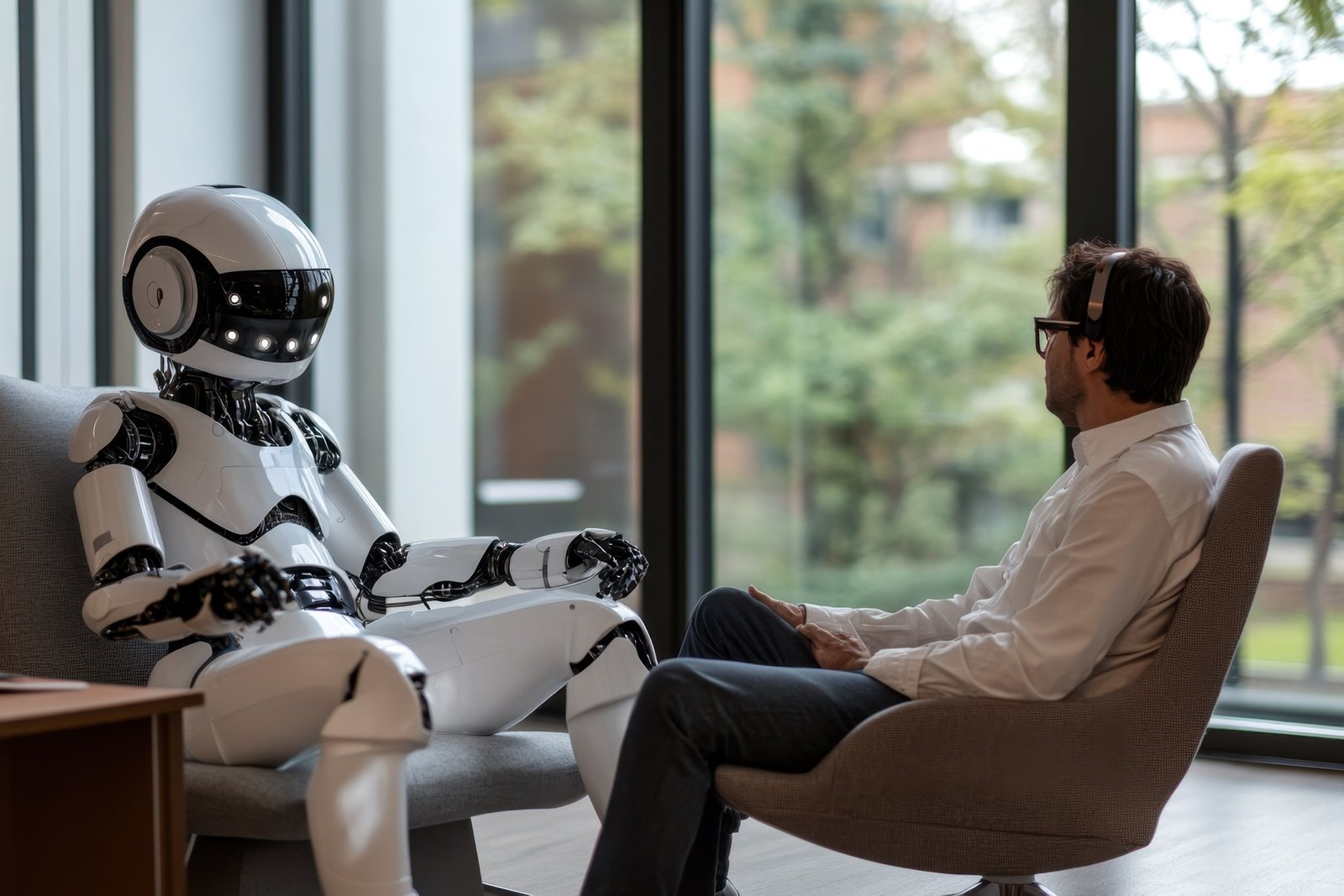
I was curious what ChatGPT would “say” about the value of a human coach. This was its answer:
Advantages of a human interview coach:
Personalization: A coach can offer highly personalized feedback based on not just what you say but how you say it, including your body language, tone and other non-verbal cues.
Experience and Insight: Experienced coaches bring insights from specific industries and can share nuanced advice based on current hiring trends.
Mock Interviews: While I can simulate mock interview questions, a human coach can create more dynamic simulations, interact in real-time, and provide in-the-moment guidance and adjustments.
Emotional Support: A human coach can also offer encouragement and emotional support, helping build your confidence through more personalized interactions. So, while I can be a very effective tool for preparing for interviews, combining this practice with occasional sessions with a human coach could provide the best of both worlds, especially for high-stakes interviews.
So there you have it, straight from the horse’s–er, the robot’s mouth. AI interview prep tools can be useful, but they don’t replace human coaching. If you’d like personalized guidance beyond what an algorithm can offer, I offer one-on-one coaching for mid-career professionals facing high-stakes interviews. Let’s talk about the interviews you’re expecting, and how I can help you land the job.