Chinese drone maker DJI has filed an appeal* with the Ninth Circuit Court of Appeals challenging a recent bombshell ruling from the Federal Communications Commission (FCC) that cuts off FCC authorization for all new drone models—or essential components—manufactured outside the US.
The Dec 22 ruling—which has upended a sector dominated by overseas vendors such as DJI (the clear market leader in ag spray drones in the US)—is “procedurally and substantively flawed,” a DJI spokesperson told AgFunderNews.
“The FCC can add products to the covered list [of communications equipment and services “deemed to pose an unacceptable risk” to national security] only when they present a national security threat, yet it has never identified any threat associated with DJI or its products. Despite repeated efforts to engage with the government, DJI has never been given the chance to provide information to address or refute any concerns. These procedural and substantive deficiencies violate the Constitution and federal law.”
The listing harms DJI and its customers claimed the spokesperson. “It carelessly restricts DJI’s business in the US and summarily denies US customers access to its latest technology, while users elsewhere continue to benefit.”
DJI also alleges that FCC has used the ruling as a “justification to severely restrict DJI’s ability to import its existing products, as well as new products outside the scope of the ruling, into the United States.”
According to DJI, FCC exceeded its statutory authority, failed to observe statutorily required procedures by failing to assess whether DJI actually presents a national security threat, and violated the Fifth Amendment, which says the government must follow fair legal procedures before punishing people or companies.
FCC shock ruling triggers market upheaval
👉 On Dec 22, the FCC sent shockwaves through the US drone market, adding all new foreign made drones and critical components to the covered list of communications equipment and services “deemed to pose an unacceptable risk” to national security.
👉 In an instant, this cut off FCC authorization for any new drone models—or essential components such as motors, flight controllers, navigation systems, and batteries—manufactured outside the US, a sweeping intervention in a sector where overseas suppliers such as DJI dominate.
👉 The restrictions do not apply to foreign-made drones that already hold FCC authorization. Impacted companies can also apply to be exempted from the covered list by submitting requests for conditional approval, while certain drones and components on the Dept of War’s Blue UAS Cleared List or those that qualify as “domestic end products” under the Buy American Standard are exempted until Jan 1, 2027, according to a public notice issued by the FCC on Jan 7.
👉 A Jan 21 update from the FCC also clarifies that drones from DJI, Autel, and other covered foreign manufacturers that were already authorized before Dec. 22, 2025 can continue to receive firmware and software updates through at least January 1, 2027.
But while today’s fleets remain legal, tomorrow’s upgrades are in doubt. Drone technology evolves rapidly, with manufacturers rolling out new platforms, sensors, and flight systems on a near-annual basis. Blocking new authorizations therefore places Chinese players such as DJI and XAG at a long-term disadvantage in the US.
The result is likely a rapid reshaping of the market, as domestic manufacturers scale up and overseas firms explore partnership models—licensing designs or software to US companies that can assemble and manufacture drones domestically.
Short-term disruption, long-term opportunity?
How smoothly this process will work remains to be seen, says Bryan Sanders at US-based Raptor Dynamic (formerly HSE-UAV), which supplies spray drones from a variety of providers. But whatever happens, the landscape is going to change significantly, he predicts.
In the medium and longer-term, we’ll likely see significant investment in domestic drone production, he says. But in the short term, “there’s going to be an innovation slowdown because all of the things that Chinese manufacturers were going to roll out in 2026 and beyond such as the latest flight controllers and LiDAR will be halted.
“This will have consequences for American farmers trying to keep up with our global competitors, because they’ll still have access to all the new stuff from DJI and others.”
Some key players navigating the new landscape include:
-
Exedy Drones: A unit of EXEDY Globalparts (owned by Japanese firm Exedy Corp), Exedy Drones is repurposing Globalparts’ automotive engineering and Michigan manufacturing base to build US-made agricultural spray drones.
-
Revolution Drones: Founded by North Carolina farmer Russell Hedrick to create domestically assembled spray drones tailored for American farming.
-
Hylio: Texas-based drone maker accelerating “Made in America” spray drone production.
-
Agri Spray Drones: Missouri dealer turned manufacturer planning US production of spray drones originally designed by Chinese partner EA Vision under license.
-
Ceres Air: Vermont-based company beginning US manufacturing of Black Betty spray drones, redesigning a proven platform from Chinese firm Vector AGR to meet American farming needs with larger payloads, proprietary software, and radar/LiDAR.
-
American Autonomy: Software developer launched to build US-centric drone operating systems that keep flight and agronomic data onshore and integrate with farm systems; its first partner is Exedy Drones.
Acreage soared in 2025, but drone sales slumped amid import shock
According to the American Spray Drone Coalition’s annual industry survey, total treated acreage covered by ag spray drones in the US surged by 58.7% year-over-year to 16.4 million acres in 2025.
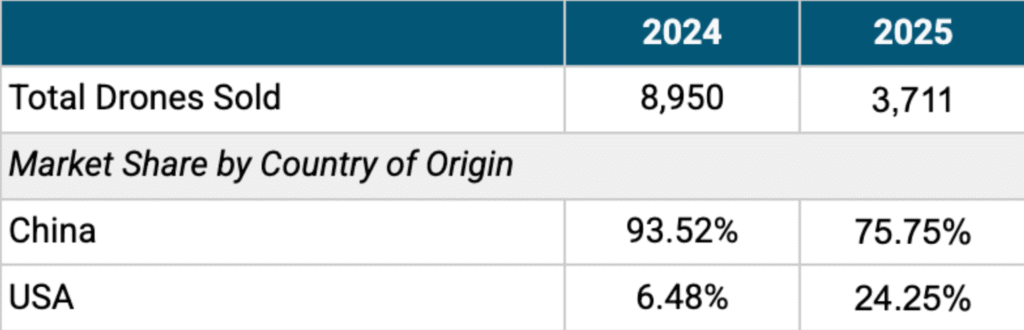
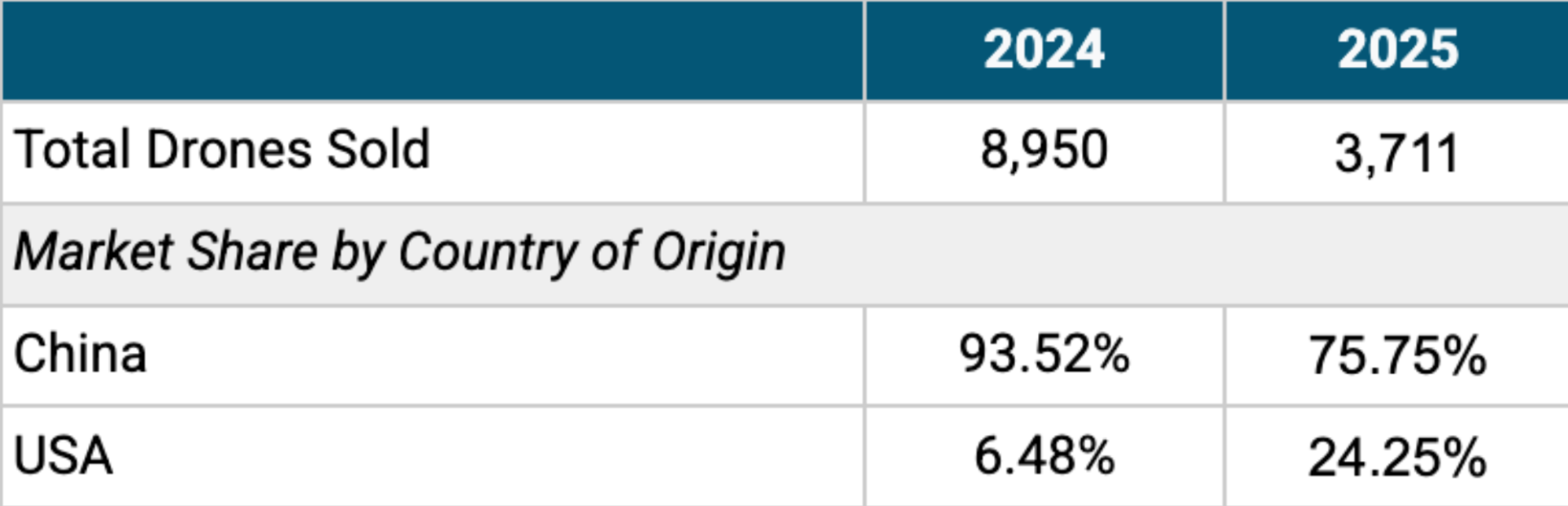
However, sales of new spray drones plummeted 59% from about 8,950 units sold in 2024 to about 3,711 in 2025 due to import restrictions on DJI shipments blocked by US Customs and Border Protection on the grounds that DJI may be using forced labor. DJI says such claims are “unsubstantiated and categorically false.”
According to Eric Ringer, founder at American Autonomy Inc, which develops software for US drone makers, the market share of US-made drones nearly quadrupled in 2025. However, this “primarily reflects the vacuum left by the sudden drop in DJI imports rather than a sustained, competitive shift. XAG and EAVision, both Chinese drone manufacturers, most benefitted from DJI’s import restrictions.”
The post DJI appeal sets stage for legal showdown over future of US ag spray drone market appeared first on AgFunderNews.