For many years, the United States dollar has held a special place in the global economy that no other currency has been able to match. It serves not only as a means of buying and selling goods but also as a powerful tool in international politics. However, as digital currencies, blockchain-based assets, and other new payment methods become more popular, people are beginning to wonder if the time when the dollar ruled the world is coming to an end.
The rise of the dollar: Bretton Woods and the petrodollar system
The dollar’s strong position has not happened by chance. It began after World War II with the Bretton Woods agreement, which tied all other currencies to the dollar, which was backed by gold. Even after the Bretton Woods system broke down in the early 1970s, the dollar remained very important because of the petrodollar system. Oil-producing nations, especially in the Middle East, agreed to sell their oil only in dollars. This created a constant need for dollars worldwide, forcing countries to keep dollars as reserves to buy oil. Over time, the dollar became deeply connected to international trade, finance, and central bank holdings.
Exorbitant privilege and geopolitical leverage
The term “exorbitant privilege” refers to the special advantage the United States has by having the world’s main reserve currency.
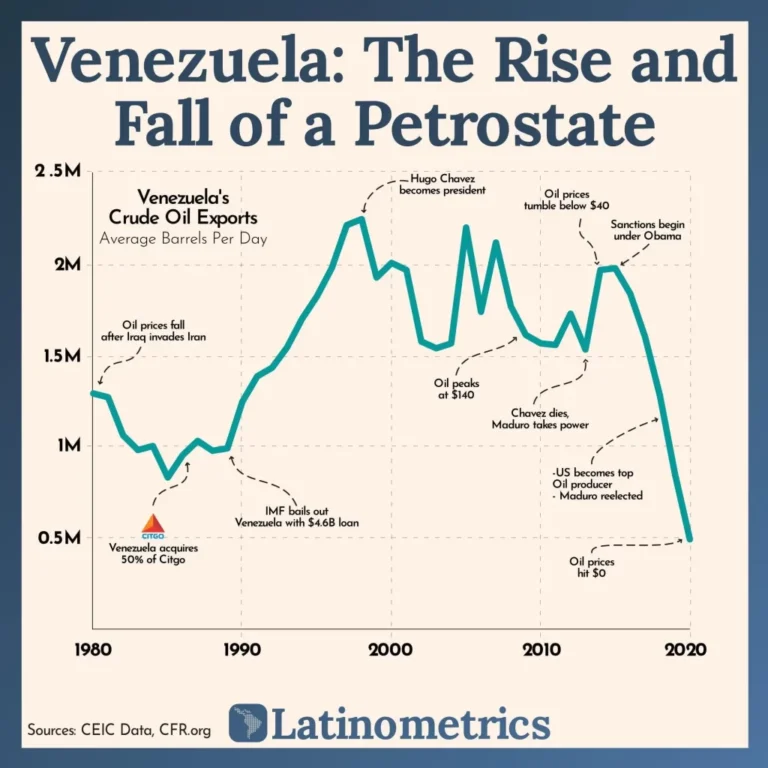
This allows the U.S. to borrow money cheaply, have large trade deficits, and spend more without facing serious financial problems. This power also gives the U.S. a strong influence in world affairs. Control over financial systems like SWIFT and dollar clearing networks enables the U.S. to impose sanctions on countries like Iran, Russia, and Venezuela. These financial tools have become powerful weapons in international politics.

Bitcoin and the search for monetary neutrality
Against this backdrop, Bitcoin has attracted attention as a currency that is not influenced by politics.
Unlike government-issued money, Bitcoin is decentralised, not controlled by any single government, and operates outside traditional financial systems. This makes it appealing to countries and groups that want to avoid U.S. financial pressure. In BRICS nations, there have been discussions about reducing reliance on the dollar, which have included ideas about digital currencies. Although Bitcoin is very volatile and not likely to replace the dollar in trade soon, its appeal comes from its resistance to sanctions and government control. It represents a broader effort to gain financial independence instead of replacing traditional money.
Stablecoins and their dual role
Stablecoins are in a more complex position in the global financial system.
Dollar-backed stablecoins like USDT and USDC support dollar dominance by increasing the dollar’s presence in digital payments, especially in countries with less developed banking systems. In this way, they help strengthen the dollar’s influence instead of weakening it. On the other hand, stablecoins that are not tied to the dollar or use algorithmic models offer new ways to experiment. They reduce the need for traditional banking systems and allow for faster and cheaper international payments. Whether stablecoins weaken or support the dollar’s position depends largely on the currency they are tied to and how they are regulated.
China’s digital yuan and the digital euro
Beyond individual digital currencies, multi-currency baskets and tokenised assets are emerging as possible options to reduce reliance on the dollar.
Proposals within BRICS to create new settlement systems based on a mix of national currencies show dissatisfaction with the current system. Tokenising assets like gold or energy could also support trade that does not depend on the dollar. These models do not aim to replace the dollar but to lower the risk of being too dependent on it. The goal is diversification rather than complete replacement. Such systems may exist alongside the dollar, giving it less control without removing its importance.
Future scenarios: decline, diffusion, or dominance
The most likely outcome is not the end of dollar dominance but a slow shift in how it is used.
The dollar will still be central to global finance in the near future because of its strong network, deep financial markets, and trust in institutions. However, its control is being challenged by new systems. Digital currencies, CBDCs, and other alternatives are creating a more diverse financial landscape. Power is spreading across different currencies, platforms, and technologies. The “exorbitant privilege” may not disappear completely, but it will face more constraints.

Conclusion
What we’re seeing is not a sudden revolution, but a slow transformation. Countries are trying out new systems, managing risks, and developing alternatives to protect themselves from political shocks. The future of global finance is likely to be mixed: the dollar will still be the main currency, but it won’t be the only one. In this sense, the time of absolute dollar control may be ending, giving way to a more competitive and technology-driven financial world.
Written by – Shweta
The post Digital Currencies and the Politics of Money appeared first on The Economic Transcript.