The slow death of the manual transmission in the premium space is not due to drivers having no interest in three pedals, nor is it because the know-how to develop them isn’t there. Simply put, a confluence of several factors has led to its decline, and according to BMW M boss Frank van Meel, “the manual doesn’t really make sense.”
Speaking with Australia’s CarSales, van Meel explained that “it limits you in torque and in fuel consumption.” At least, that’s the case with BMW’s current manual transmission, which can handle no more than 405 lb-ft of torque while still meeting the automaker’s requirements, making it unsuitable for the CS-badged versions of the M2, M3, and M4, not to mention the “regular” 738-lb-ft M5. To keep pace with rivals in the horsepower race, engines need to make more power while still being cleaner than ever. But surely a sturdier gearbox could be created? Well, yes and no.
Why Manual Transmissions Make No Sense
BMW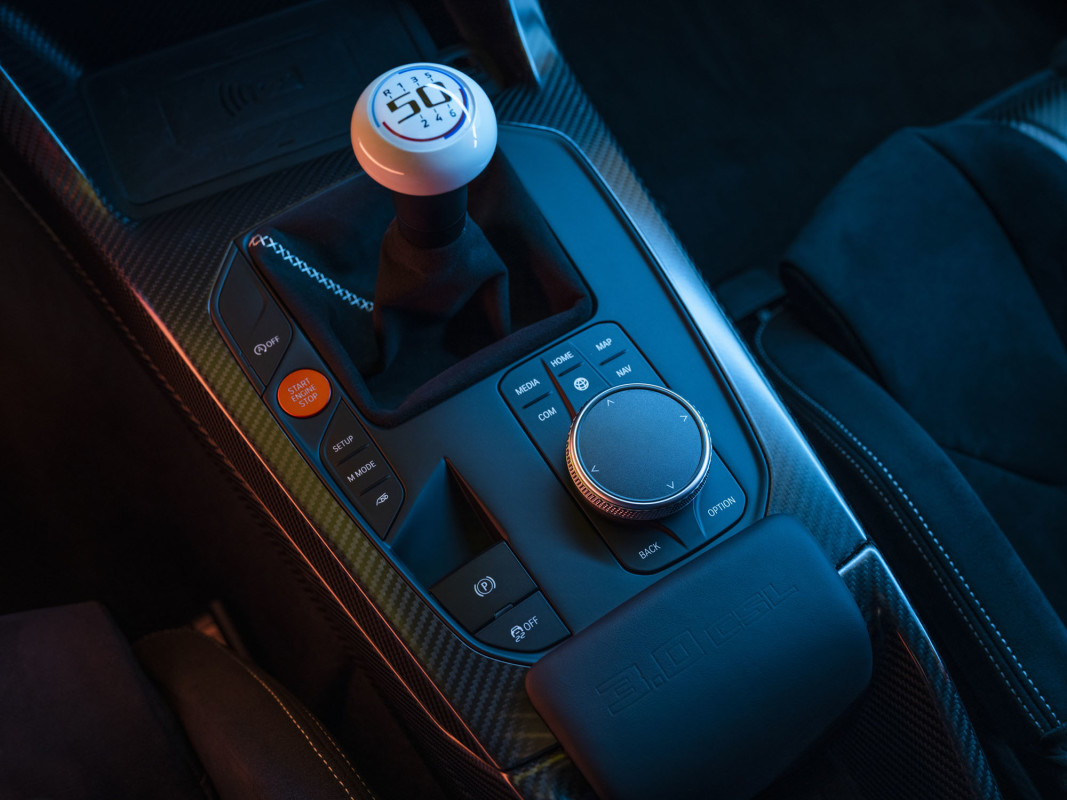
“It’s going to be quite difficult in the future to develop completely new gearboxes because the segment in the market is quite small, and the suppliers are not so keen on doing something like that,” said van Meel. BMW’s manuals have long been supplied by German manufacturers Getrag and ZF, whose customers have also included Audi, Jaguar, Land Rover, and Mercedes. These premium brands focus more on luxury than the performance-minded BMW M division, and producing a gearbox exclusively for M cars would be very costly. Even Porsche‘s manual cars are relatively low on grunt, with the 911 Carrera T and GT3 making 331lb-ft, so if BMW or any other automaker wanted something that could handle the increased output of contemporary powertrains, the costs would not be shared with a wide range of other customers. For the time being, however, and for a little while to come, manual M2, M3, and M4 variants will continue to be offered.
“We’re still happy with the manuals we have, and we plan to keep them for the next couple of years, but in future, probably it’s going to be more difficult to keep the manuals alive, especially in the next decade,” said van Meel, alluding to increased electrification.
Costs of New Manual Transmissions Are Prohibitive
Porsche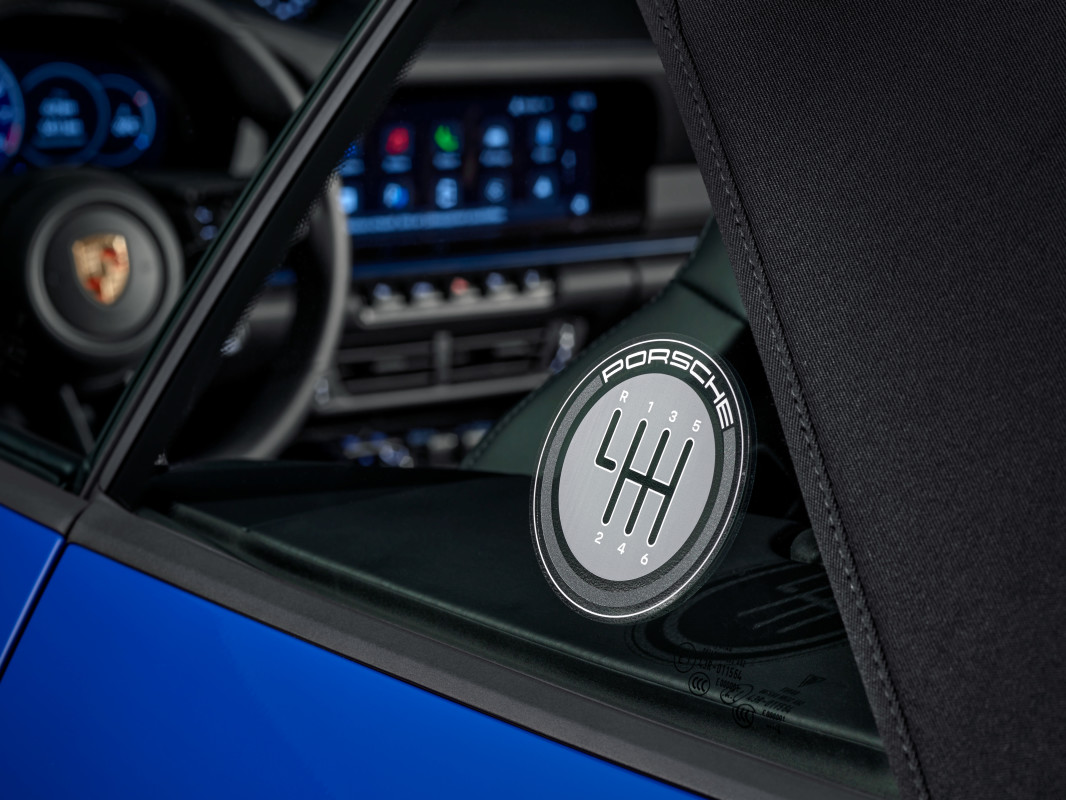
The existence of the (admittedly aging) Cadillac CT5-V Blackwing, with 659 lb-ft of torque, proves that manuals can handle big power, and the old C7 Corvette ZR1 made 715 lb-ft, but both those cars’ transmissions come from Tremec in Mexico. While shipping would be costly enough, the TR-6060 transmission in the Caddy, an evolution of the T-56, and the TR-6070 in the Chevy (a seven-speed version of the TR-6060) are known for roughness when shifting from 1st to 2nd, which would be unacceptable for a premium automaker like BMW. Simply put, the economies of scale no longer make sense in this space, though they still do in ultra-exclusive limited editions. Want a manual transmission in a European car with loads of torque? You’ll need winning lotto numbers; the Pagani Utopia makes 811 lb-ft, and the Koenigsegg CC850 develops as much as 1,022 lb-ft of E85, and both allow you to row your own gears. In a nutshell, shifting manually is fast becoming a luxury experience, at least if you want loads of torque.