The Tesla Cybercab robotaxi is unlike any vehicle the American EV manufacturer has built before, and it’s only natural that it attracts a lot of attention wherever people see it.
Unsurprisingly, this happened last week in Austin, Texas, where Tesla brought a shiny gold Cybercab prototype at SXSW 2026, providing a good opportunity for a few car influencers to take a closer look at the intriguing fully autonomous vehicle designed for ride-sharing.
“Look Ma, No Hands!”
Out of Spec Reviews and Kim Java team got to check out the Tesla Cybercab’s exterior design and even sit inside the vehicle and check out its features and materials, providing the best look yet at the two-door coupe that doesn’t have a steering wheel, pedals, or a rear window.
Starting with the exterior, it must be said that the Tesla Cybercab featured in the walkaround video is not a production-spec vehicle but a pre-series prototype built in February 2026, and it shows. The panel gaps are not quite at a consumer product level yet, the doors are not perfectly aligned with the body either, and the massive wheel covers are just glued directly to the tires. Of course, once production begins in April, all these things should be corrected.
Speaking of the tires, the Tesla Cybercab runs a staggered setup with 215/60 R18 front tires and 225/60 R21 rear tires—both Continental aContact. Another striking thing is the NACS charging port located really low on the rear bumper and not on the side of the vehicle where you can usually find it on Tesla vehicles.
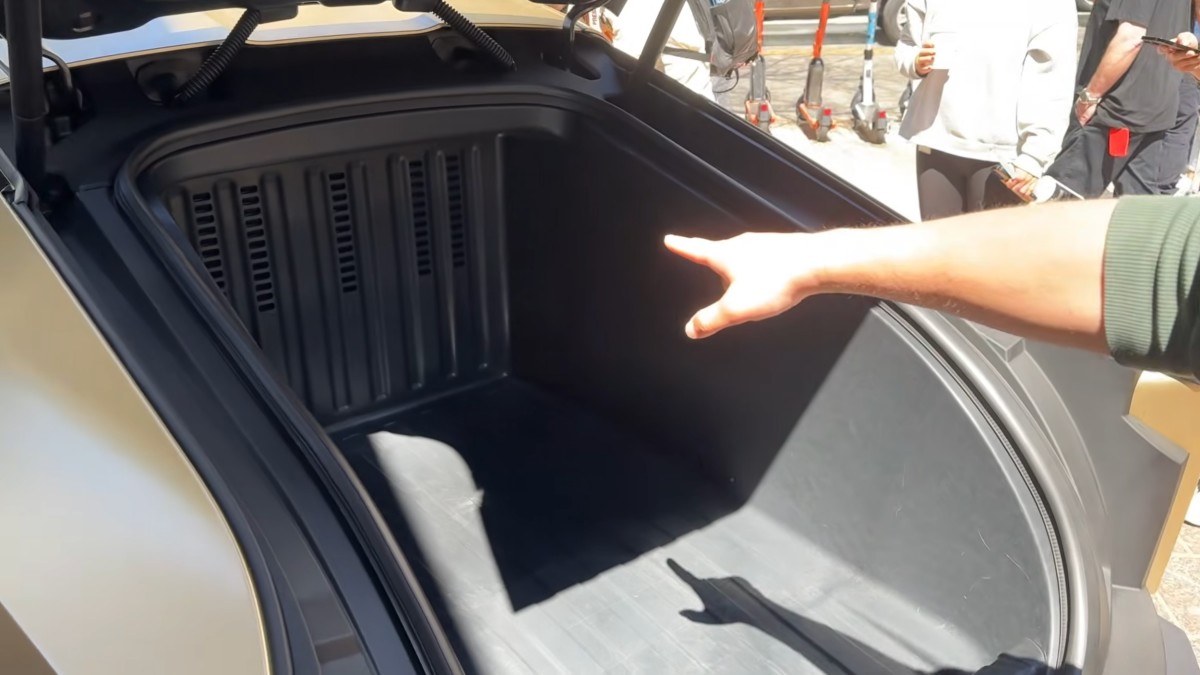
The lack of a rear window gives the Cybercab a futuristic look, but it’s for practical reasons too because the FSD computer doesn’t need a window to look through when it’s driving the vehicle—it’s got nine cameras for that. Another quirky detail is the trunk, which is narrow but quite long; given that this vehicle is designed for two passengers, it should be enough to cover their luggage needs.
A 21-Inch Center Display and Cupholders Is All You Get Inside
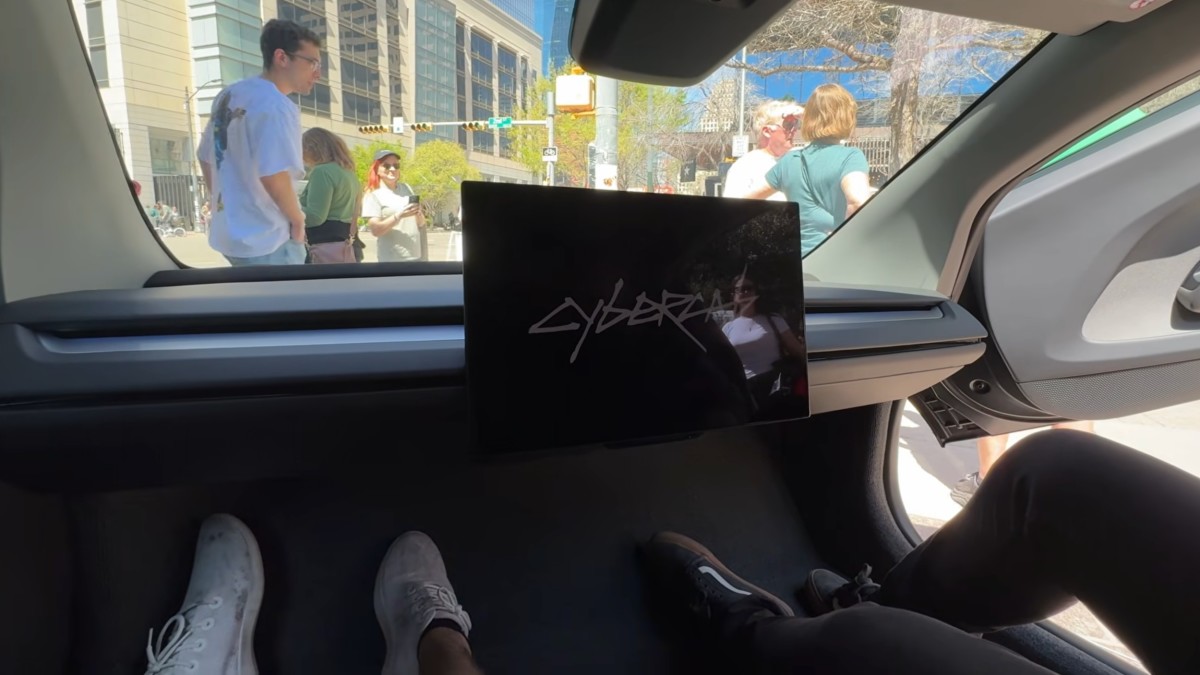
As you can imagine, the video focuses on the interior more, where you get access through two massive doors that swing up and forward to provide wide access to the two-seater cabin. The power-operated butterfly doors are designed without traditional handles for a minimalist and fully autonomous look. They make it easier to get it and out, especially in tight parking spaces.
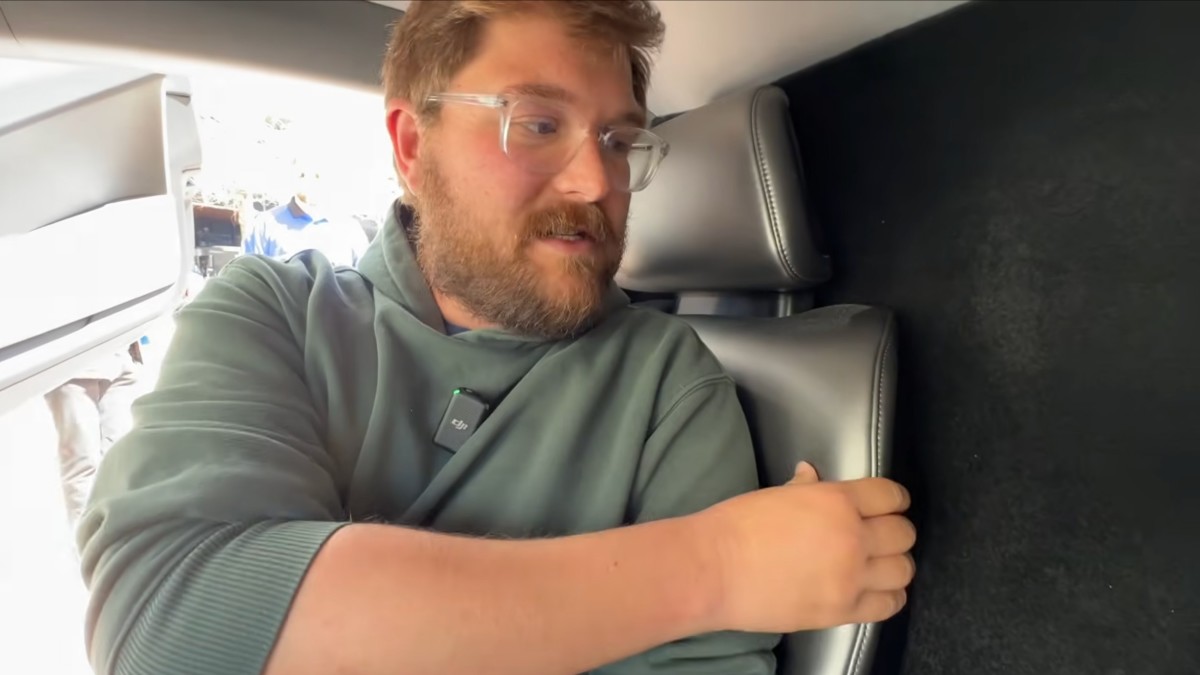
Once inside, the first thing that hits you is the massive legroom amplified on the left-hand side by the lack of pedals. Headroom is good, though Kyle Conner reckoned it could use more, and the seats are comfortable. He also noted that the shiny material that covers the seats looks cheaper than in Tesla’s other cars, and strongly believes Tesla should use its vegan leather in the Cybercab as well.
The 21-inch center screen is obviously impossible to ignore as it’s bigger than in any other Tesla vehicle; also, there’s no steering wheel next to it so it dominates the entire cabin. Interestingly, the window switches and USB-C ports are integrated into the bottom of the screen and are not easily visible, so riders might have a hard time locating them.
Now, although the guys didn’t get to ride in the Tesla Cybercab, they noticed the cabin is really quiet with the doors closed and windows rolled up, and also reckoned that the suspension is really soft by how much the car dipped when getting in the vehicle. It makes perfect sense for a robotaxi to have a cushy ride.
Check out the videos for more impressions of the Cybercab, which is expected to start high-volume production at the Giga Texas plant in April.