Research & Developments is a blog for brief updates that provide context for the flurry of news that impacts science and scientists today.
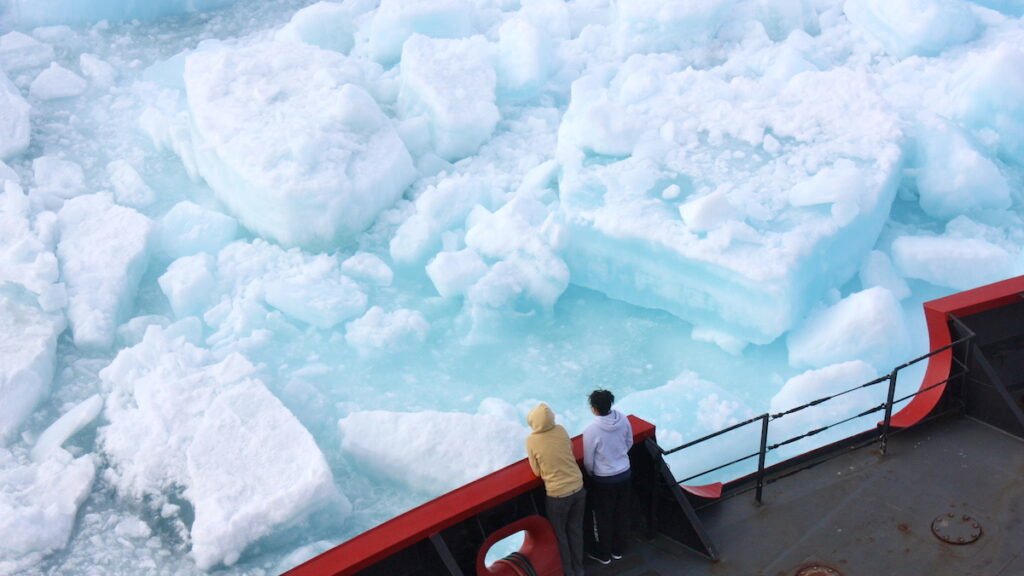
Sea ice in the Arctic has likely hit its maximum extent for the year, the National Snow and Ice Data Center (NSIDC) said on 26 March. That maximum extent is one of the lowest ever recorded, tying last year’s record for the least sea ice coverage in the 48-year observational record.
According to NSIDC scientists, the 2026 winter sea ice extent was 14.29 million square kilometers (5.52 million square miles) on 15 March, just slightly below the 2025 measurement of 14.31 million square kilometers (5.53 million square miles). Values within 40,000 square kilometers (15,000 square miles) are considered a statistical tie.
The records mark a “very alarming” winter for Arctic sea ice, Zack Labe, a climate scientist at Climate Central, told Carbon Brief. “Arctic sea ice is entering late winter in one of its weakest states in the satellite record.”
Arctic sea ice extent has been steadily declining for decades as warming air and ocean temperatures melt existing ice and prevent refreezing.
The decline of Arctic sea ice has consequences for Earth systems globally: Polar ice acts as a giant air-conditioner for Earth, reflecting the Sun’s heat and providing cool air that regulates global precipitation and storm patterns. The uncertain future of Arctic sea ice jeopardizes these regulatory functions.
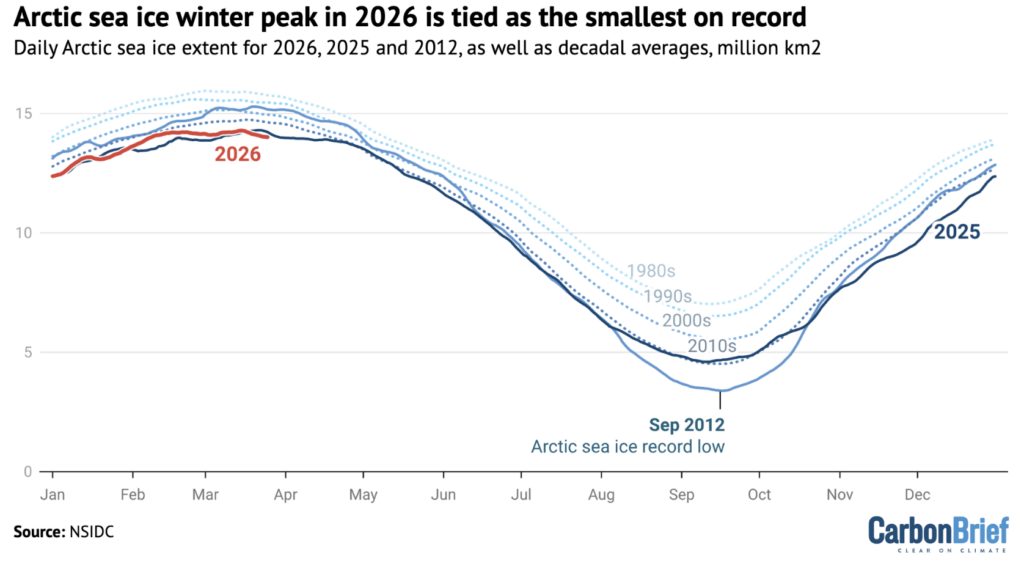
The extent of winter sea ice also sets the stage for summer sea ice conditions—if the Arctic starts the warm season with less sea ice, the summer minimum extent, measured each year on 15 September, will also likely be lower. The repeating pattern of low winter and low summer sea ice extent means less stable, multi-year ice accumulates, too.
“This record low maximum gives a head start to the spring and summer melt season,” said Walt Meier, a sea ice scientist at NSIDC, in a statement. And scientists say the chances of a warmer Arctic summer are rising: NOAA’s Climate Prediction Center estimates that there’s about an 80% chance that El Niño, a global weather pattern that can warm ocean surface temperatures, will arrive by late summer.
“One or two record low years don’t necessarily mean much by themselves, but in the context of the significant downward trend that we’ve observed since 1979, it reinforces the dramatic change to Arctic sea ice throughout all seasons,” Meier said.
Scientists anticipate that climate change could cause ice-free Arctic summers by as early as mid-century, which could drastically alter human activities in the Arctic, leading to an increase in commercial activities like fishing, mining, and shipping.
—Grace van Deelen (@gvd.bsky.social), Staff Writer
These updates are made possible through information from the scientific community. Do you have a story about science or scientists? Send us a tip at eos@agu.org.

Text © 2026. AGU. CC BY-NC-ND 3.0
Except where otherwise noted, images are subject to copyright. Any reuse without express permission from the copyright owner is prohibited.