There’s a particular kind of expectation that follows Apple and their iconic announcements—a belief that even the most familiar object can be recalibrated into something more ambient, more intuitive, or more essential. We’ve been spoiled lately. But with the introduction of AirPods Max 2, that expectation is less about reinvention than refinement. The quiet yet consequential upgrades to the unit actively shape the conditions in which we live, work, and move.
Powered by the H2 chip, the second generation of Apple’s over-ear headphones leans into listening as a series of adaptive experiences—shifting through context, intention, and identity to serve personas defined by how sound integrates into daily life.

The Traveler: Silence as Infrastructure
Movement has always been synonymous with noise—the low, constant roar of airplane engines, the unpredictable cadence of trains or cars, and the friction of shared space with pedestrian traffic. For the traveler, AirPods Max 2 operate as a kind of arbiter of quiet, better negotiating that boundary between calm and chaos.
With Active Noise Cancellation now up to 1.5x more effective, the headphones carve out a private auditory interior, dampening everything from cabin turbulence to commuter chatter. Paired with Adaptive Audio, which continuously calibrates the balance between noise cancellation and environmental awareness, the experience becomes fluid rather than fixed.
The Live Translation feature subtly repositions the weary traveler as an active participant in social situations otherwise inaccessible. Language barriers soften in real time to foster meaningful exchange. And sound creates connective tissue between otherwise disparate cultures.

The Remote Worker: Focus by Design
The office is no longer defined by cubicles or traditional commercial space. Today, it’s more often a balance between home, café, car, and everything in between. AirPods Max 2 respond to this ambiguity with a suite of features that treat focus as something engineered for efficiency.
Voice Isolation prioritizes speech clarity during calls by filtering out the ambient unpredictability of shared environments. Conversation Awareness recognizes when users step out of their workflow automatically lowering audio and enhancing nearby voices, allowing for seamless transitions between concentration and casual interaction.
Most intriguing is the introduction of studio-quality audio recording. For podcasters, journalists, and creators, the line between consumption and production dissolves. AirPods Max 2 becomes a tool for making, enabling high-fidelity recording with natural vocal texture directly from the device’s microphone.

The Aesthete: Sound as a Style Signifier
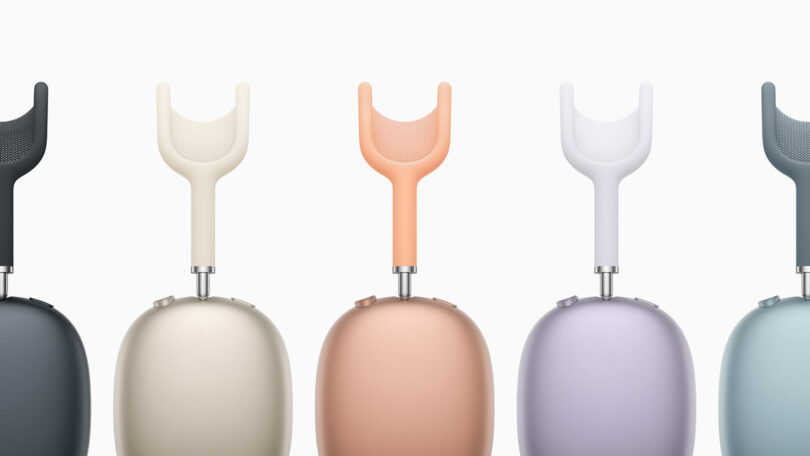
Apple has long understood that technology is as much about presence as performance. With AirPods Max 2, that philosophy extends into a palette of fresh finishes—midnight, starlight, orange, purple, and blue—that position the headphones as objects of self-expression as much as technical tools.
What’s more, Personalized Spatial Audio introduces a deeply individualized listening experience, mapping sound to the contours of the user’s perception. Using the iPhone’s TrueDepth camera, listeners can scan their ear shape to generate a custom audio profile, resulting in more precise, immersive surround sound. Instruments feel placed rather than played, and music becomes architectural occupying space with greater clarity and intention.

Even the addition of camera remote functionality gestures toward a broader lifestyle integration transforming the headphones into a tool for capturing, composing, and curating one’s image. For the aesthete, AirPods Max 2 operate at the intersection of design and identity.
While this list is far from exhaustive, a larger narrative begins to take shape. AirPods Max 2 are more about tuning into oneself than escaping the world. In a culture increasingly defined by noise—literal and otherwise—that kind of control feels quite lovely.
To shop the AirPods Max 2, visit apple.com.
Photography courtesy Apple.