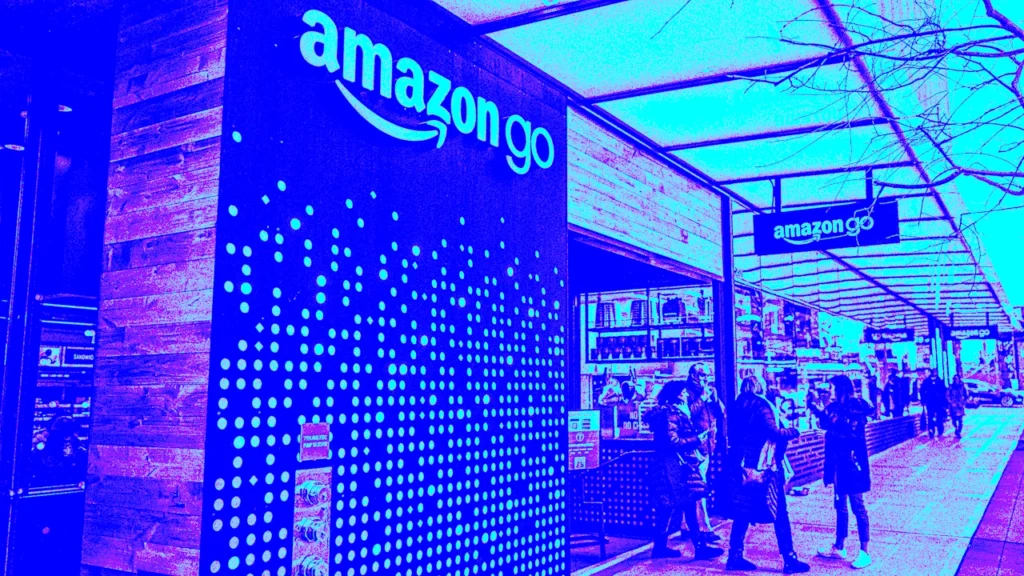
Hello, and welcome back to Fast Company’s Plugged In.
When Amazon announced this week that it’s shutting down Amazon Go, its 8-year-old chain of cashierless convenience stores, the news did not come as a shocker. Almost two years ago, the company shuttered all its Go stores in San Francisco, along with some locations in New York and Seattle. Another round of closures came in 2024. Now it’s going from a few stores to no stores, a footnote given that the same day brought the news that Amazon is laying off 16,000 people across the company.
Having shopped at the Amazon Go near my San Francisco office almost 200 times, I counted myself as a fan. Even back then, though, it felt like the company either didn’t understand what it had created or had already lost interest. The piece I wrote when the San Francisco stores closed felt like an obituary, even though other locations remained in business.
I said at the time that regardless of what happened to Amazon Go, I hoped startups would pursue the goal of freeing us from the drudgery of waiting in line to pay for stuff. One I mentioned in that piece, Grabango, folded the following year. Reportedly, the expense and complexity of equipping stores with its technology—which, like Go, involved a bevy of cameras using AI to keep track of shoppers and the products they’d plucked from shelves—played a part in its demise.
I should note that cashierless retail is not entirely dead. Amazon is still working on the “Just Walk Out” technology that powered the Go stores, which it makes available to other retailers. Some of its Whole Food Market stores continue to offer a variant of the tech in the form of smart shopping carts called Dash Carts, which it recently upgraded. Startups that remain in the game include Zippin, whose Go-like technology is widely used at sporting and concert venues, and Mashgin, which eliminates the need to configure an entire store with cameras by having shoppers place items on a tray for AI-assisted checkout.
The one place I’ve encountered checkout-free shopping lately is at airports, where I’ve bought items using both Amazon’s and Mashgin’s platforms. My experiences were positive. Let’s be honest, though: It isn’t tough to improve on airport retail in its traditional form.
Cashierless checkout surviving for niche applications would be a dramatic reversal from the days when the first Amazon Go stores opened and I wondered whether human-dependent checkout was on its way to becoming as quaint as sales transactions involving someone eyeballing price tags on items and laboriously punching keys on a cash register. Maybe it will someday. But surely not in this decade, and I wouldn’t bet on the one after that.
Why is that? Along with the cost of the tech, there’s the question of how well it works at all. In 2023, The Information’s Theo Wayt reported that Amazon had 1,000 people in India reviewing transactions from its stores, and that 70% of sales required a human in the loop. That made it sound like the main thing the company had achieved was to remote-control the checkout process rather than eliminate it. It was also a reminder that shopping in Amazon Go stores involved being monitored by cameras, giving the whole process a Big Brother vibe.
Amazon disputed details of Wayt’s report. And the fact that considerable human labor was required to train the Just Walk Out AI doesn’t mean it would be so forever. Still, the more you know about how technology of this sort works, the more daunting it sounds—especially in the context of retail, a business that has traditionally been resistant to experimentation and long-term thinking.
Back when I was popping into my neighborhood Amazon Go several times a week, I thought of what it was doing as being centered on making my life slightly better. Ultimately, though, retail technology is not about direct customer satisfaction. It’s about increasing sales. Making shoppers happier is only one way to accomplish that, and probably not the easiest one.
In 2018, my colleague Sean Captain wrote about Standard Cognition, which had opened a 1,900-foot demo cashierless shop in San Francisco and had plans to help retailers take thousands of stores cashierless in just a couple of years. That didn’t happen. Now known as Standard AI, the company has pivoted away from grab-and-go toward using cameras to “understand what shoppers actually see and respond to,” its website says. “Our proprietary models continuously track awareness, engagement, and conversion to prove media impact, refine promotions, and optimize performance across every in-store placement.“
Standard AI is not performing facial recognition or otherwise associating this data with specific identifiable individuals. But even in anonymized form, the idea of being monitored as I shop for the purpose of maximizing sales makes me wince. The company’s site—with close-up imagery of shoppers contemplating products, overlaid with stats Standard has collected about them—doesn’t help. (Yes, I am aware that club cards have long tied shoppers to purchases, and that online shopping has always been a minefield when it comes to merchants spying on customers.)
Much has changed since Amazon Go was a novelty. AI is now everywhere in our lives, and the list of areas where its impact is potentially transformative is almost literally endless. I still like the concept of grab-and-go shopping. For now, however, it seems most useful as a case study in why technology that works—kinda, in certain circumstances—can fall so short of working as a real-world business.
You’ve been reading Plugged In, Fast Company’s weekly tech newsletter from me, global technology editor Harry McCracken. If a friend or colleague forwarded this edition to you—or if you’re reading it on fastcompany.com—you can check out previous issues and sign up to get it yourself every Friday morning. I love hearing from you: Ping me at hmccracken@fastcompany.com with your feedback and ideas for future newsletters. I’m also on Bluesky, Mastodon, and Threads, and you can follow Plugged In on Flipboard.
More top tech stories from Fast Company
Yahoo claps back on AI search engines with Yahoo Scout
The legacy web company still commands staggering internet mindshare as it pivots into the AI age with an AI search engine of its own. Read More →
In Rochester, pay phones are working again—and they’re free
The GoodPhone Project upcycles old pay phones, converts them to VoIP, and places them in neighborhoods where some residents still don’t own mobile phones. Read More →
Where is Donald Trump’s strategic Bitcoin reserve?
The government seems to be amassing more Bitcoin. But little work seems to be happening to enact the terms of the executive order Trump signed to start the ‘strategic reserve.’ Read More →
TikTok is tracking you now. Here’s how to protect yourself
TikTok, under new ownership, is monitoring your physical location, internet activity, and anything you upload into its AI. It’s time to put some shields up. Read More →
The founders of Uber and Habitas want to disrupt your apartment
As more young, wealthy people choose to rent, Sekra aims to give them what they want: luxury living, game nights, and blackout shades. Read More →
AI face swapping video could be a bonanza for scammers
A new class of video generation tools could fool phishing victims, especially the elderly, into divulging information or sending money. Read More →