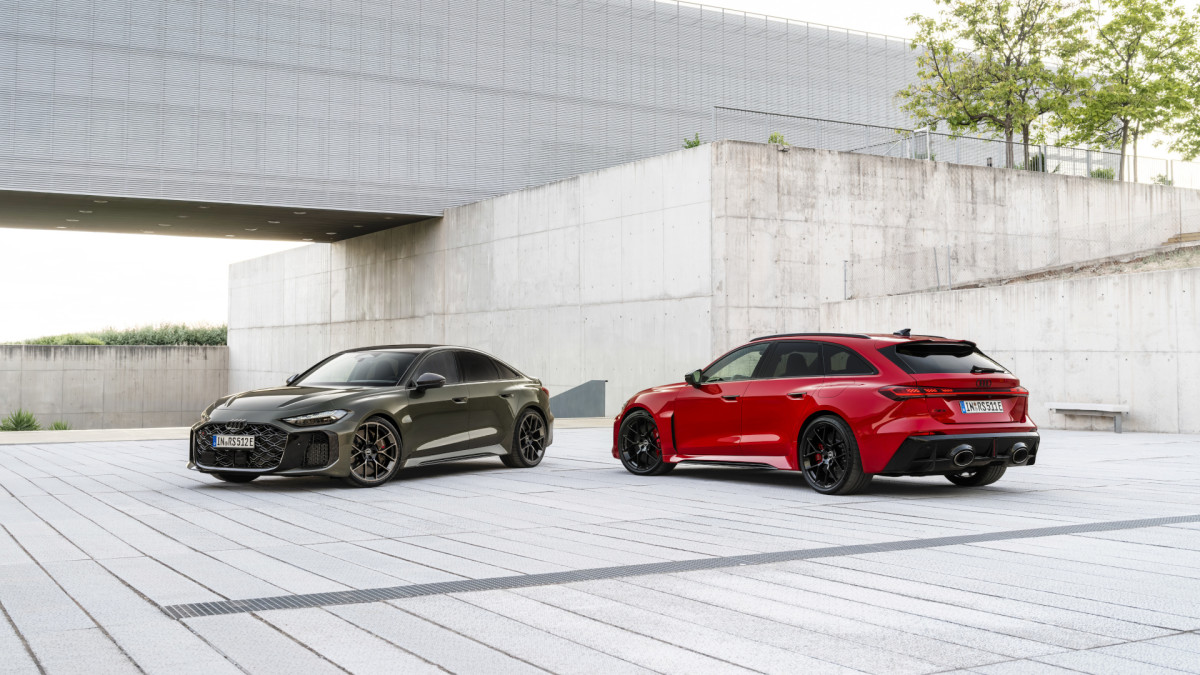
Audi has officially taken the wraps off the all-new Audi RS 5, and it’s a plug-in hybrid monster with an imposing presence, developing more power than any BMW M3 to date and even outmuscling the 621-horsepower C8 Audi RS 6 Avant. The refined 2.9-liter twin-turbo V6 is now joined by an electric motor to produce a beefy 630 hp, which goes to all four wheels through a hybridized eight-speed transmission and an all-new rear transaxle with electromechanical torque vectoring, which Audi claims is a world first for a production model. It’s unmistakably an Audi Sport product, with bulging arches and unique styling, and it’s expected to both handle beautifully and ride comfortably, thanks to twin-valve shock absorbers that quickly adapt to changing road surfaces, among other upgrades. Let’s take a closer look.
2027 Audi RS 5 Powertrain
Audi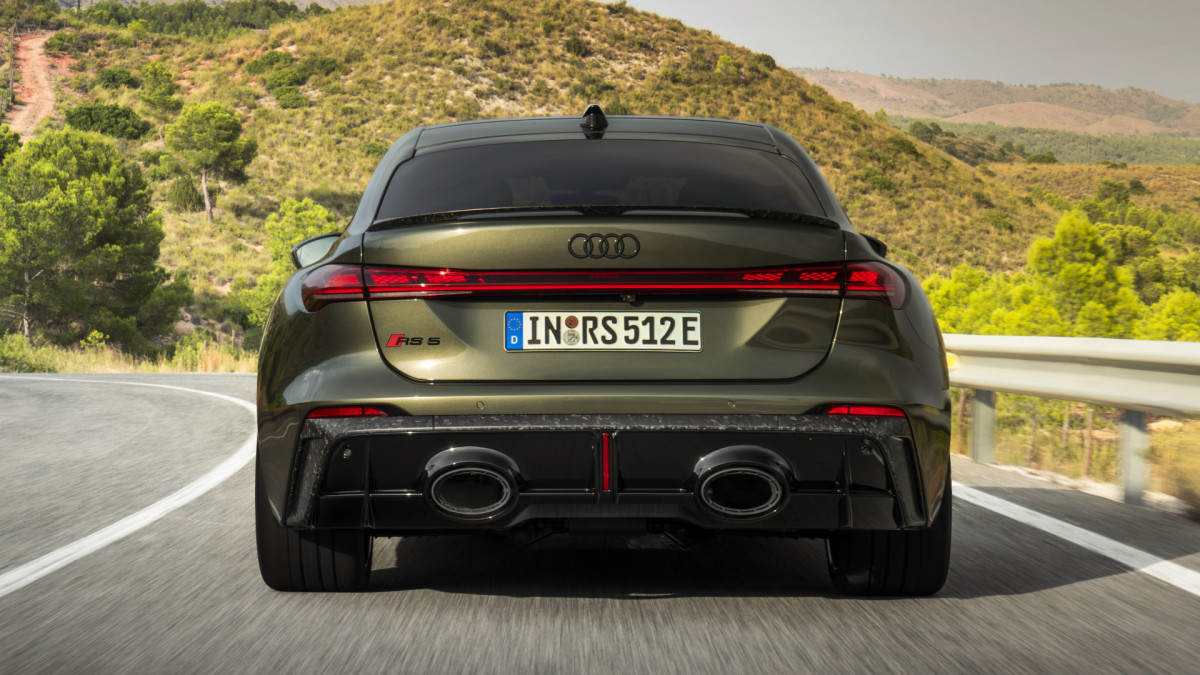
The 2.9-liter V6 with twin variable-geometry turbochargers makes 503 hp on its own, and a 130 kW/339 lb-ft electric motor is integrated for peak combined figures of 630 hp and 608 lb-ft of torque. Those clever turbos, aided by increased fuel pressures and the integrated electric motor, promise to improve throttle response, while water-to-air intercoolers appear on the RS 5 for the first time to lower intake temperatures. Speaking of the intakes, these are designed to be as short and as free-breathing as possible, with a nearly straight path to the turbos. The result? 0-62 mph takes 3.6 seconds, and with the optional Audi Sport package, the top speed is 177 mph. A boost function on the steering wheel deploys maximum output for 10 seconds in any driving mode, making overtaking easy in any mode (comfort, balanced, dynamic, or RS). This also opens the flaps in the exhaust, and everything returns to its previous mode once the boost is done.
Audi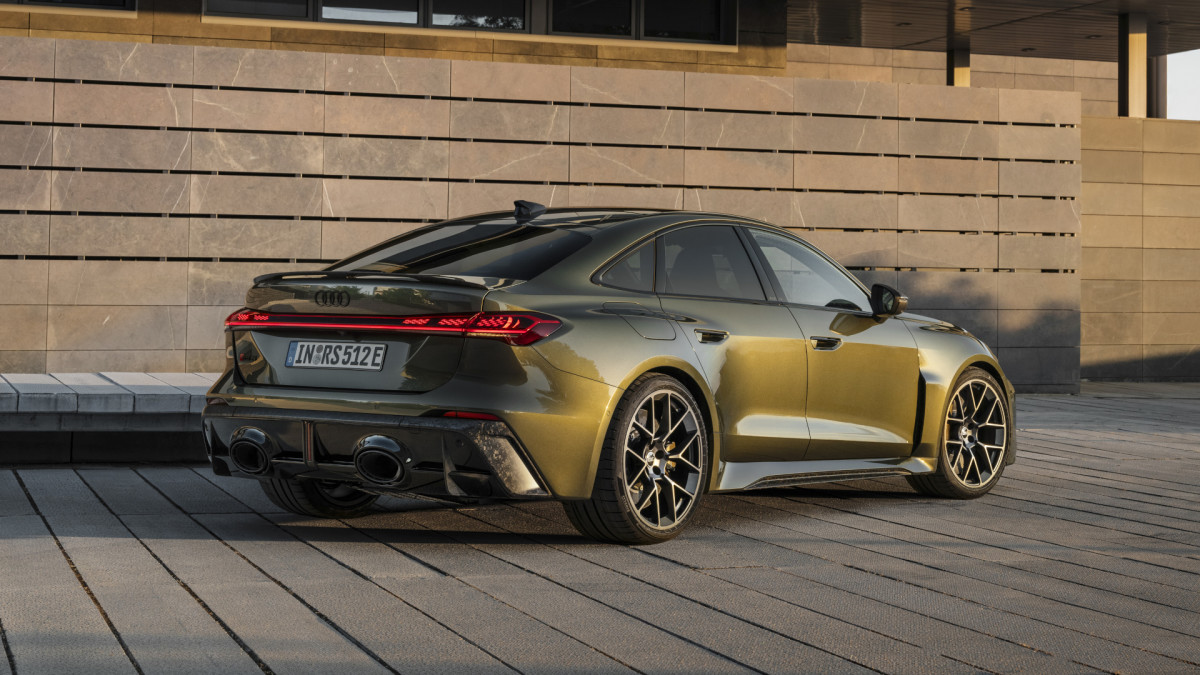
While the hybrid system has helped improve performance and efficiency, the engine improves in both those areas, too, thanks to a modified Miller combustion cycle, with Audi claiming the engine uses up to 20 percent less fuel under high loads than its predecessor. Preliminary estimates on the EPA’s test cycles are 52.3-61.9 mpg with the hybrid system in play and 23.1-24.8 mpg with the battery discharged. As a plug-in hybrid, the new RS 5 is also capable of up to 54 miles of all-electric city driving in comfort or balanced modes. In EV mode, the paddles behind the steering wheel can adjust the recuperation rate, and when depleted, the 25.9 kWh battery can be recharged at up to 11 kW, or to 100 percent in 2.5 hours. But won’t the added weight compromise handling?
2027 Audi RS 5 Is More Agile
Audi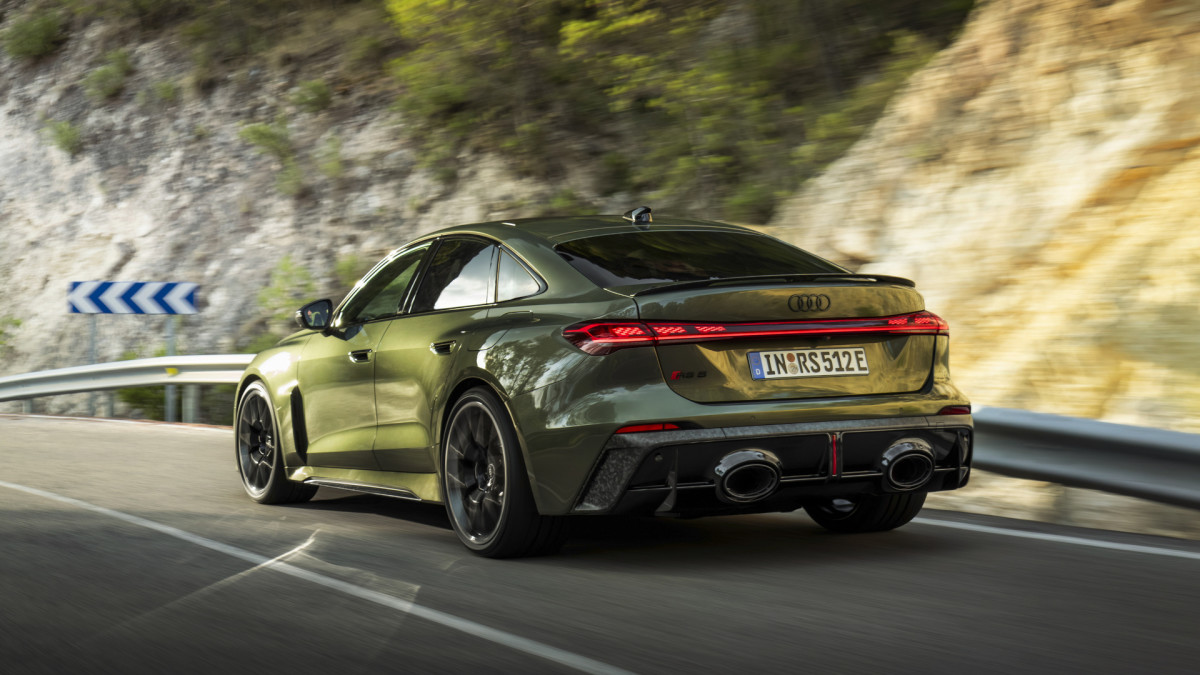
Audi has made the most of the hybrid situation by putting the battery under the trunk floor (which is probably why the automaker hasn’t yet revealed cargo capacities), optimizing weight balance, and the limited-slip center differential, which is always partially locked for improved handling, can switch torque between the two axles variably between 70/30 and 15/85. This means the new RS 5 should be even more willing to allow controlled oversteer than the old RS 5 Competition, and the driving dynamics controller calculates longitudinal and transverse G forces, yaw rate, slip angle, speed, and the estimated friction coefficient of the road every five milliseconds, helping pull one out of lairy situations nearly instantly. Like its M3 rival, there’s a drift recorder and analyzer. The body is also 10 percent stiffer than the A5 upon which this is based, and it’s an impressive 3.5 inches wider, too. Audi has also widened the wheels and increased camber to improve handling, and the engineers have reduced the resistance of the moving parts in the transmission to enable faster shifts, with the ratios closely stacked for rapid acceleration.
Audi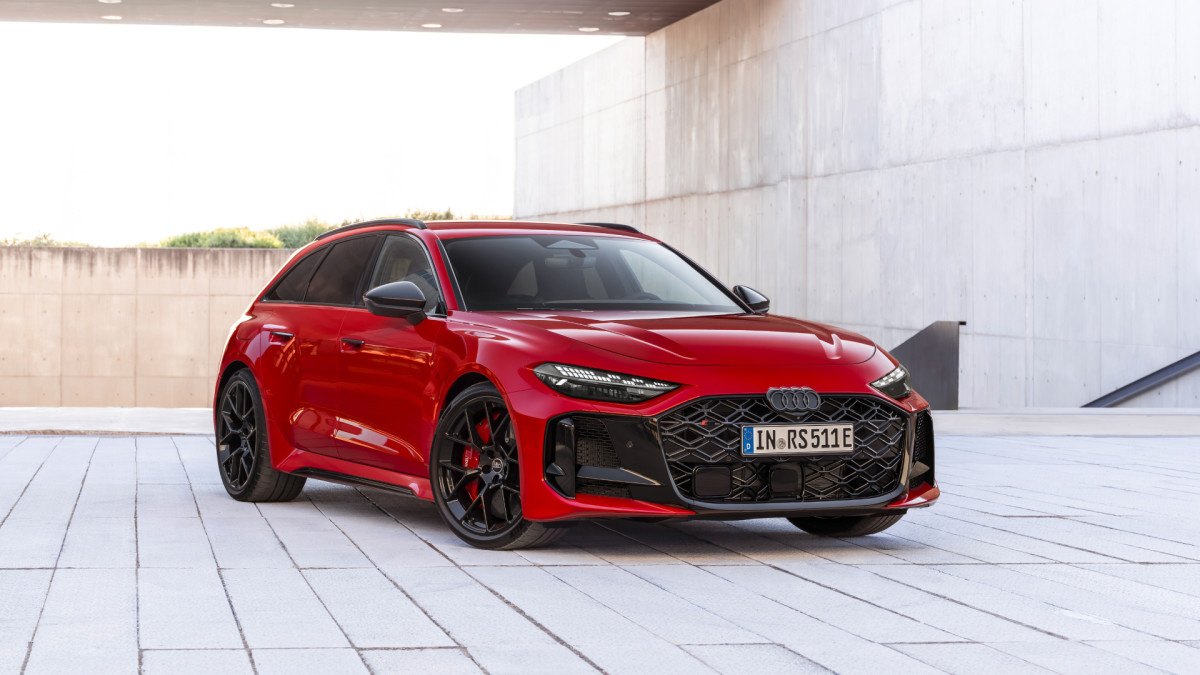
When it’s time to stop the 5,192-lb sedan or 5,225-lb Avant (wagon), the RS 5 uses 420 mm front and 400 mm rear steel brakes with black or red calipers as standard or 440 mm front/410 mm rear carbon-ceramics as an option, saving 66 lbs. These sit behind 20-inch front and 21-inch rear wheels in bespoke rubber, though forged 21s can be had in metallic black, Neodymium Gray matte, or a two-tone diamond-cut finish with black metallic accents.
2027 Audi RS 5: Unique Styling
Audi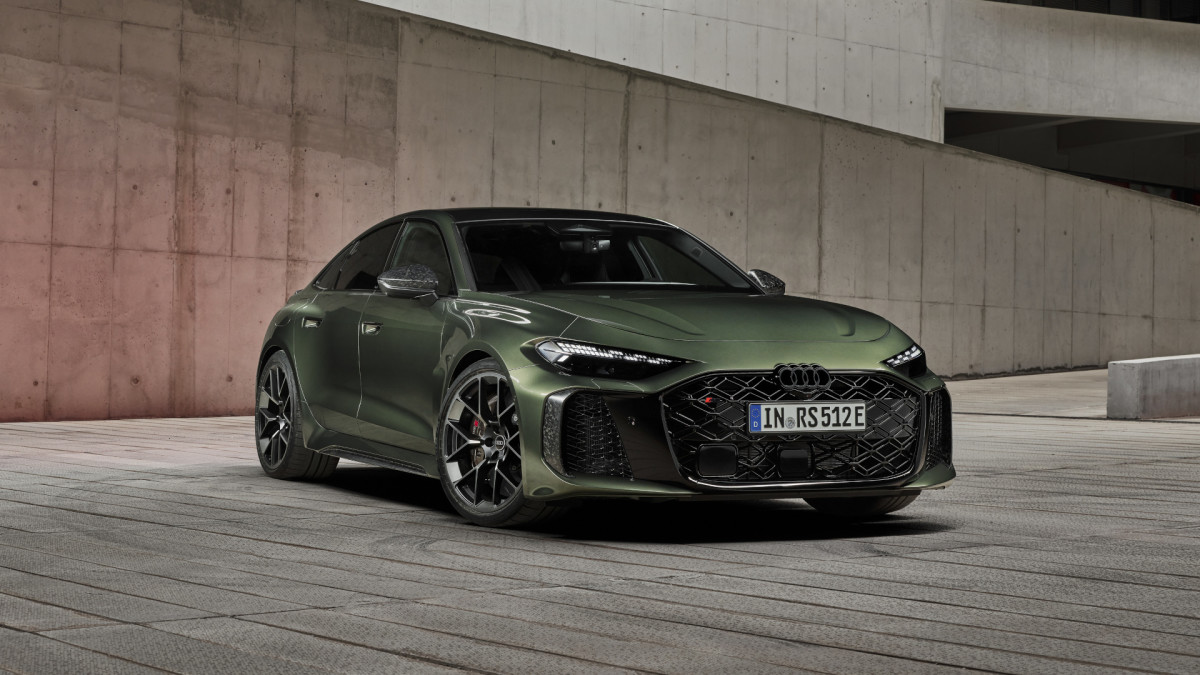
The massive Singleframe honeycomb front grille looks like a catfish’s mouth from some angles, bleeding into gloss black lower side intakes, but with the optional Carbon Design Package, these can be finished in carbon fiber, as can the wing mirror caps and rear diffuser trim. Matrix LED headlights can show an RS-specific light signature with a checkered-flag motif, and the OLED taillights also have an RS-specific look when locking or unlocking the car, continuing Audi’s signature evolution of the tech. These can even show special warning symbols to warn other drivers of accidents or breakdowns on the road ahead. Vents behind the front wheels show the RS 5’s relation to the 8Y RS 3, and unlike the M3 that uses the same rear doors as the base 3 Series, the RS 5’s muscular bulges aren’t awkwardly integrated. The tall diffuser houses an F1-style reflector (not a light) between two enormous oval exhaust tips. What about paint?
Nine colors are on offer, though we’ve only been given images of two. These include Ascari Blue, Mythos Black, and Progressive Red metallic finishes, with Audi Exclusive offering Merlin pearl, Goodwood Green, and Panther Black crystal, as well as Plateau Grey matte paint, which is only available on the RS 5.
2027 Audi RS 5 Interior: Screen Time
Audi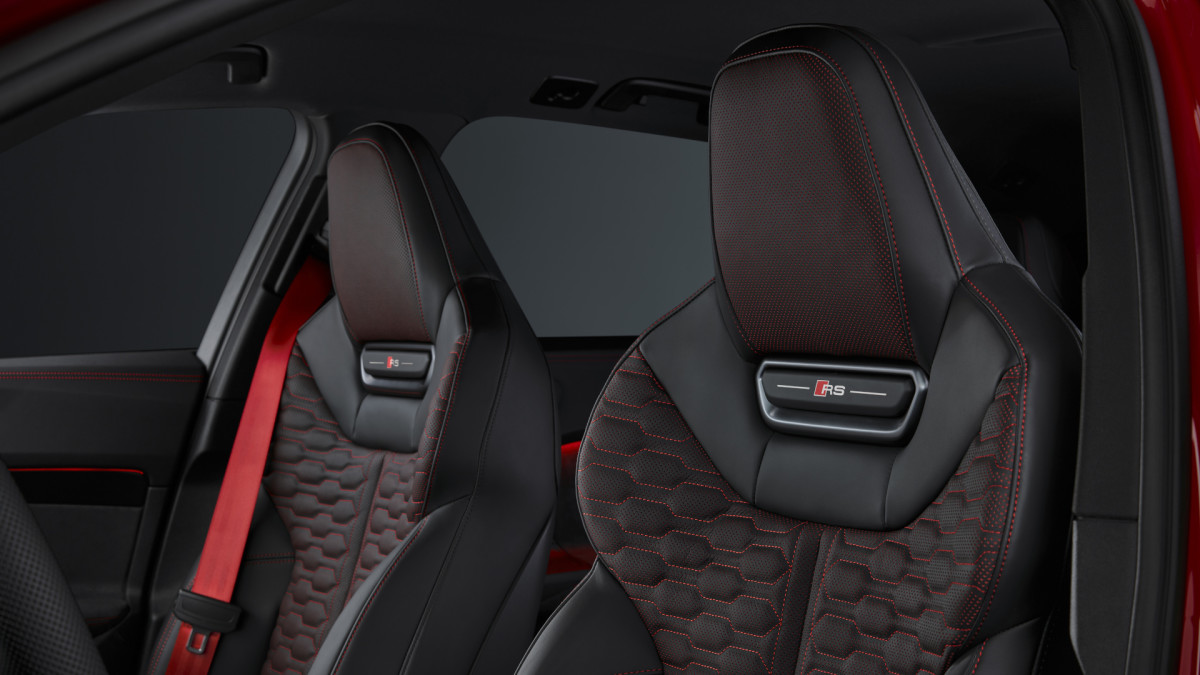
Like the A5, the center of the dash features a 14.5-inch MMI curved OLED touchscreen that can show a visualization of energy flows under acceleration or when regenerating energy under braking, as well as readouts for the temperatures of the tires, transmission, and rear transaxle. The driver gets an 11.9-inch screen behind the squared wheel, which has RS and boost buttons, plus a noon marker, in red. The passenger also gets a screen, like in a Ferrari 12Cilindri, measuring 10.9 inches, but unlike the Ferrari, this comes standard. Naturally, the screens have RS-specific features, like displays for engine RPM, speed, and a shift light. There are also modes showing G forces, pressures and temperatures for individual tires, lap times, and other performance data like power and acceleration. Optionally, a configurable head-up display shows RPM, speed, and the selected gear, and this can be shown as a dial. The HUD also includes a shift indicator and acceleration readouts, and there’s a launch control guide for maximum explosiveness off the line.
Audi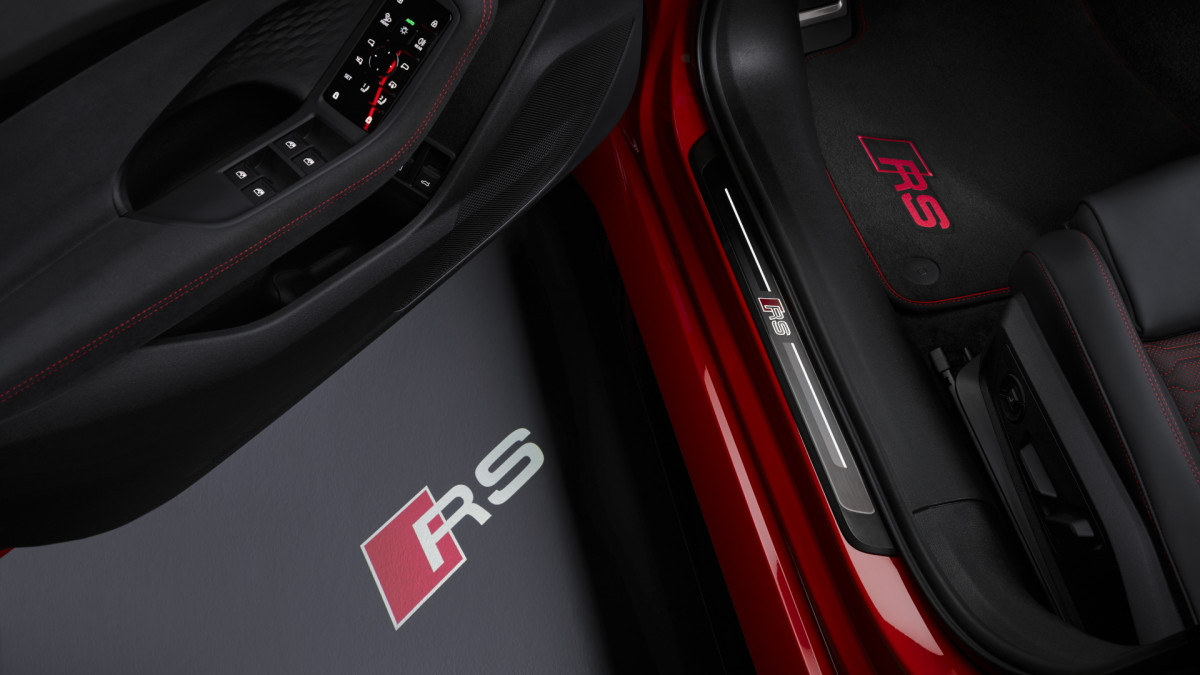
Five designs are available for the interior, which gets honeycomb quilting on the sports seats and massage functions up front. Each has different color themes, with red and gold showcased in these images, and the base interior has no leather, instead using Cascade cloth for the seat centers and Dinamica microfiber for the inner seat bolsters. The latter material also appears on the knee pad, instrument panel, armrests, and door mirror areas. If you opt for genuine leather, red or gray is on offer, and the seats gain climate control. Accent trims can be had in carbon fiber, matte brushed aluminum, or an RS-specific aluminum rhombus design in black.
Optional RS 5 Packaging and Prices
Audi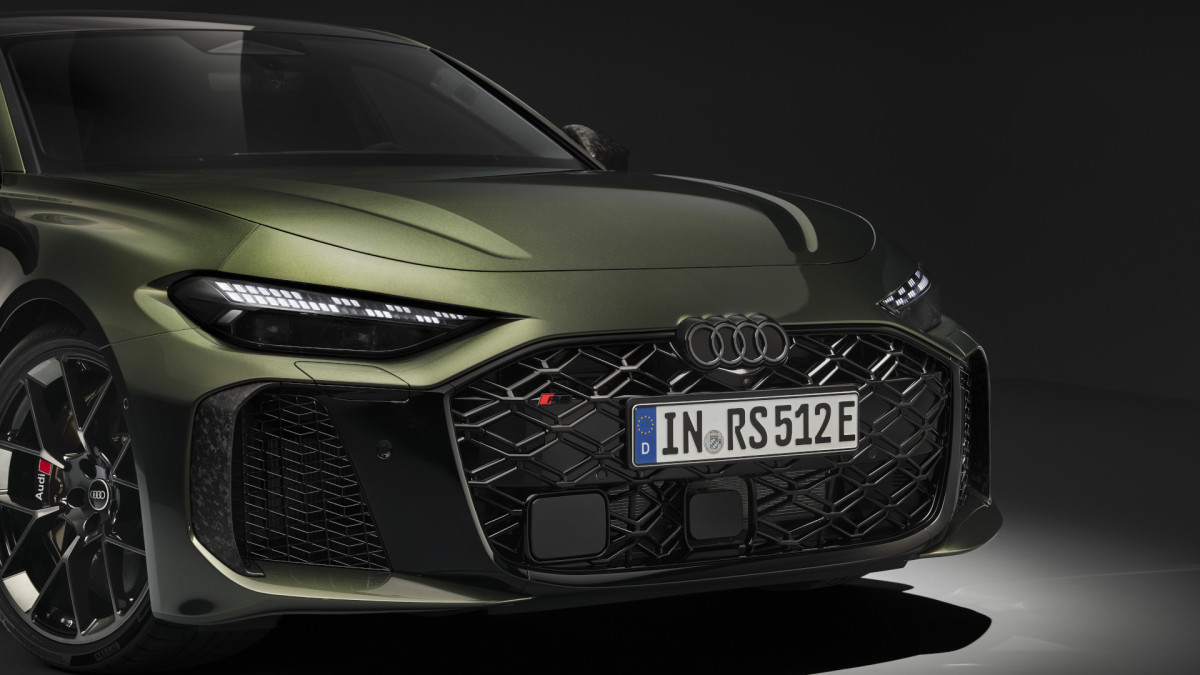
The Audi Sport package mentioned earlier enlarges the front intakes and makes the diffuser more aggressive. It also unlocks Bedford Green metallic paint and unique 21-inch bi-color wheels with the carbon-ceramic calipers in bronze. Matte black exhaust tips are also added, and inside, the cabin gets brass accents and Serpentine Green contrast stitching, plus a unique 6 oçlock insert on the steering wheel. The Carbon Camouflage pack is also available when you spec the Audi Sport package, adding forged carbon fiber elements inside and out.
U.S. pricing and availability have not yet been announced, but in Germany, the RS 5 Sedan starts at €106,200 (~$125,000) and the Avant at €107,850 (~$127,000). Which would you have?
Audi