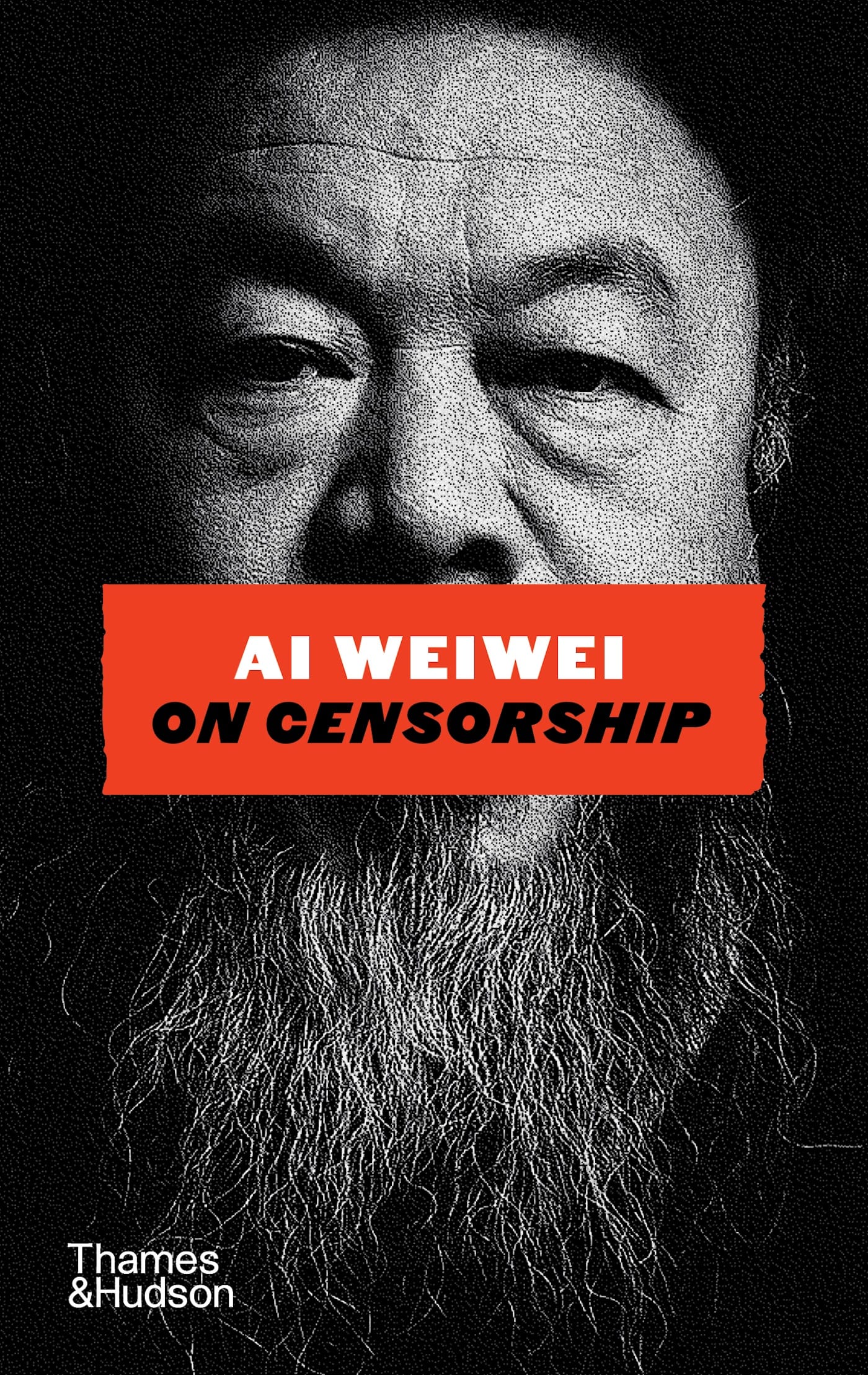
It’s hard to maintain dignity and self-respect when your mouth is gagged.
You keep your head low, lips tight, and social media feed squeaky clean. You distrust friends and colleagues you used to run your mouth to. You feel temporary relief when it’s not you who’s snatched from bed in the middle of the night and sent to a remote detention camp. But you know you’re living on borrowed time: How long can you silence the very thing that makes you human?
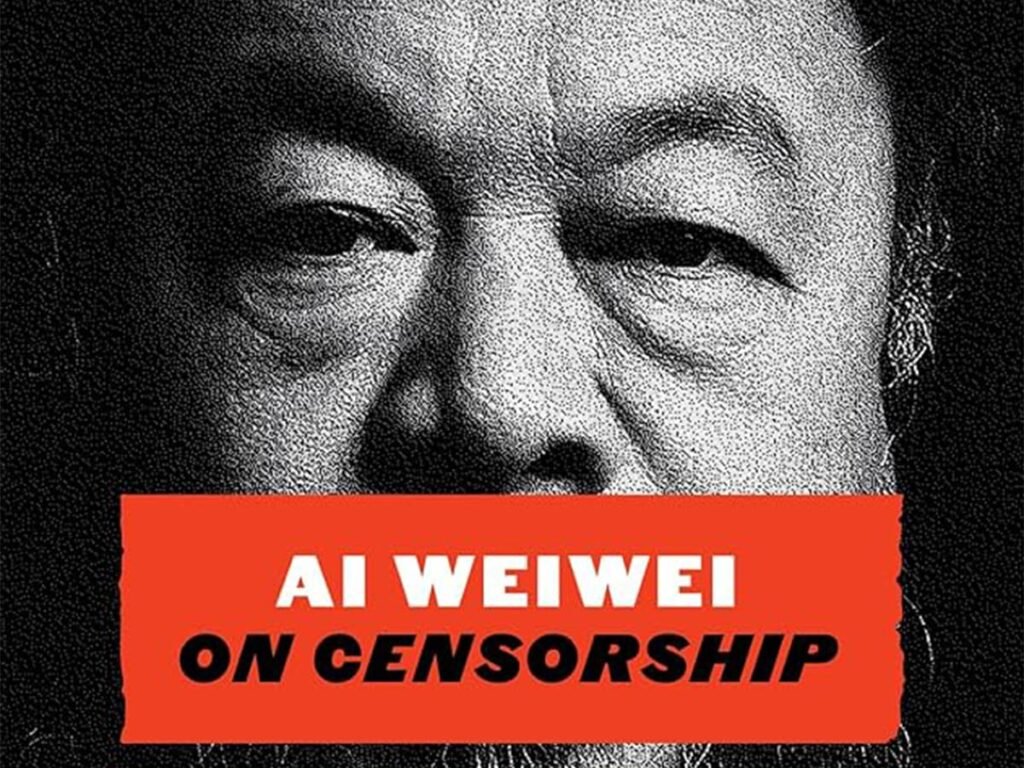
Censorship, writes dissident Chinese artist Ai Weiwei in a small but mighty new book, “strips innocence from the young and kindness from the elderly. It discourages people from valuing justice, fostering selfishness instead.”
On Censorship (2026) packs in ever-timely reflections from an artist whose entire life and career have been marked by state persecution. As a child, he saw his father, poet and activist Ai Qing, clean communal toilets in a labor camp. As an adult, his exhibitions were axed, his reputation was tarnished, and his studio was raided and surveilled. And when that wasn’t enough to silence him, the ruling Communist Party detained him for 81 days without charge in 2011. He was later condemned to a life of exile. More recently, authorities even made sure the Chinese AI chatbot DeepSeek would forget him.
In the early days of Israel’s genocide in Gaza, Ai learned the hard way that sheltering in the West had its limitations, too. In November 2023, Lisson Gallery canceled his show at its London location after he posted his thoughts about the conflict on social media. For a moment, one of the world’s biggest artists became as powerless as the university students being penalized for protesting for Palestinian rights.
“In the western world, censorship alone cannot achieve its goals; it relies heavily on self-censorship,” he explains, reminding people in self-styled democracies that they’re not safe, either.
Self-censorship, this silent killer, is perhaps the most soul-eroding part of life under an authoritarian regime. In a distorted, upside-down world of fear and inhibition, war is peace, submission is freedom, and ignorance is strength.
We end up with a society that is “numb, devoid of emotional depth, perception and creativity,” and that is “marked by self-mockery and self-consolation,” warns Ai.
What else could we call the recent tragic example of filmmaker Wim Wenders, who twisted himself into pretzels while trying to answer a question about the Berlin International Film Festival’s silence on Gaza? You could see the shock and misery, almost grief, on his face when he realized that the words “we have to stay out of politics” had just left his mouth.
To be fair to Wenders, how many of us have pursed our lips at the bitter aftertaste of biting our tongues and swallowing our words over the past two and a half years? How many of us have played dumb to keep out of trouble?
The most useful part of On Censorship is a reminder that the power to reclaim freedom of speech is in our hands. Censorship and surveillance only work if we participate in them. The moment we stop fearing it, the system will collapse all at once.
On Censorship (2026) by Ai Weiwei is published by Thames & Hudson and is available online and through independent booksellers.