Research & Developments is a blog for brief updates that provide context for the flurry of news regarding law and policy changes that impact science and scientists today.
After large reductions in staffing last year, the National Science Foundation (NSF) is now seeking to hire more employees.
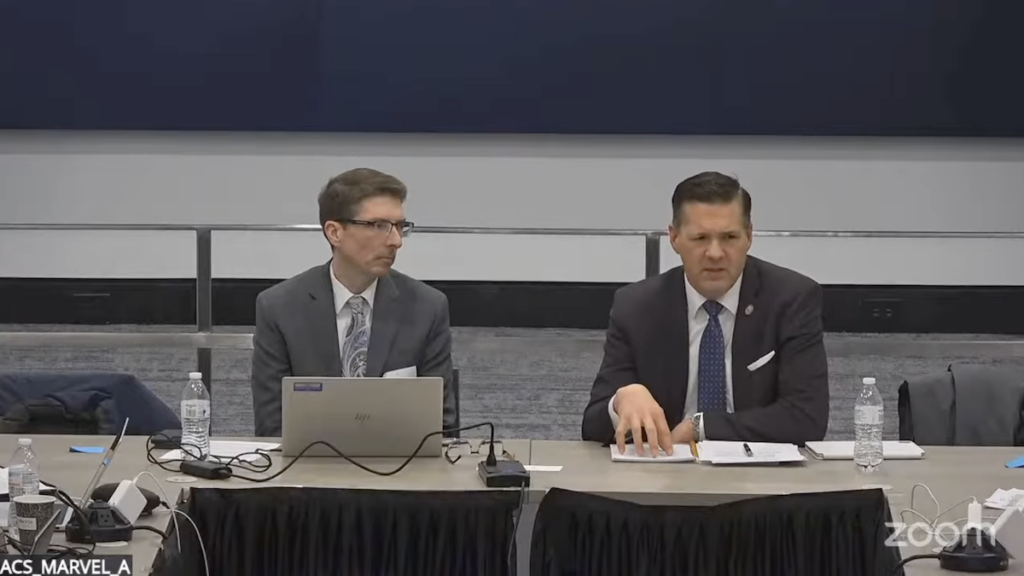
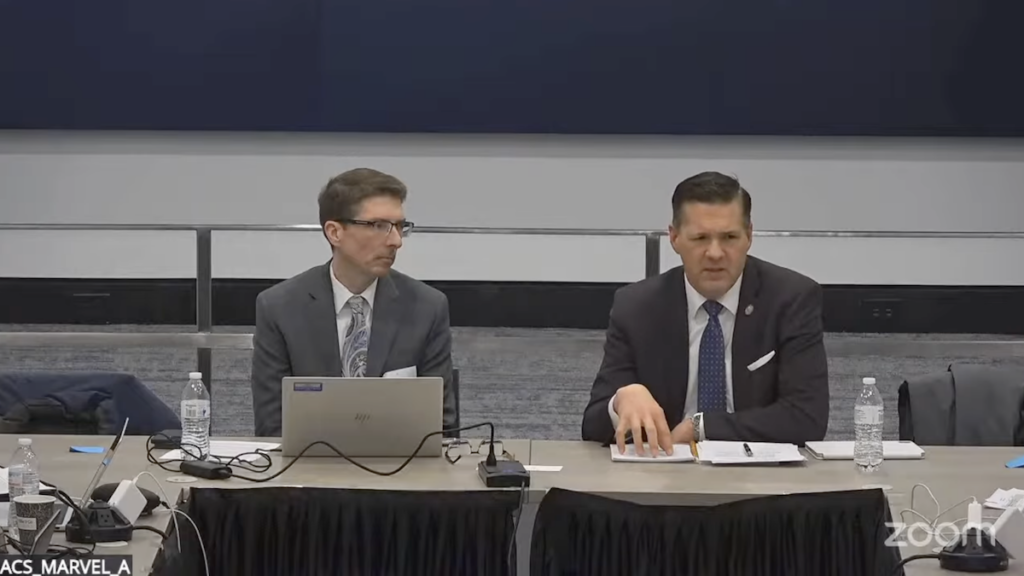
The National Science Board, which determines NSF policies, met on 25 February. At the meeting, NSF’s chief management officer, Micah Cheatham, said the agency is seeking approval to bring staffing numbers up to “at least” a level allowed by President Trump’s federal FY26 budget request. Cheatham did not say how many staff members the agency was seeking to hire.
In 2025, NSF faced multiple waves of staffing reductions, first from a Department of Government Efficiency-related executive order on “workforce optimization,” then three additional rounds via a deferred resignation program that offered employees the choice to enter a period of administrative leave followed by resignation or retirement. In total, NSF lost 18.3% of its workforce between September 2024 and October 2025.
“Today, we are at about 1,300 on [pay]rolls,” Cheatham said at the board meeting, “which is too low.”
Cheatham said the 2025 staff reductions reduced the ratio of executives to nonexecutives, which he called “extreme,” and reduced bureaucratic distance between staff. “Most employees at this time last year had five layers of management between the heads of the agency and themselves. Now, today, most employees just have three layers,” he said.
In June, NSF was also evicted from its headquarters in Alexandria, Va.. Since then, staff have been working remotely and out of multiple other government buildings.
Uncertainty over the agency’s funding, fear of retaliation, and lack of job stability led to a loss of expertise and an uptick in early retirement and resignation, a July letter from NSF employees alleged.
Regardless, Brian Stone, NSF chief of staff and acting director, said changes to the agency last year were an opportunity to “fix things that needed to be changed.”
Fewer Grant Solicitations
At the meeting, Cheatham announced that in addition to hiring more staff, NSF also plans to cut the number of grant solicitations—opportunities offered by NSF to apply for research funding—from the current count of more than 200 to 100 or fewer. He said that fewer solicitations would reduce workload for NSF staff and also help applicants better manage their time.
“The fewer solicitations you have, the less time grant applicants have to figure out which of our pigeonholes they fit into,” he said. “Reducing administrative burden is part of the President’s management agenda.”
Over the past year, thousands of NSF grants were terminated, spurring legal challenges. And recently, applicants for NSF’s major graduate research award noticed their applications had been returned without review, even though their proposals seemingly qualified for the program solicitation.
In the meeting, Dorota Grejner-Brzezińska a geodetic engineer at the University of Wisconsin-Madison and a member of the National Science Board, questioned whether fewer solicitations would result in fewer scientists receiving awards.
Stone, in response, said that solicitations would be broader and that NSF was developing ways to better route solicitations so that they are reviewed by the correct staff.
—Grace van Deelen (@gvd.bsky.social), Staff Writer
These updates are made possible through information from the scientific community. Do you have a story about how changes in law or policy are affecting scientists or research? Send us a tip at eos@agu.org.

Text © 2026. AGU. CC BY-NC-ND 3.0
Except where otherwise noted, images are subject to copyright. Any reuse without express permission from the copyright owner is prohibited.