Welcome to the 330th installment of A View From the Easel, a series in which artists reflect on their workspace. This week, artists listen to their paint and create molds out of high-heeled shoes.
Want to take part? Check out our submission guidelines and share a bit about your studio with us through this form! All mediums and workspaces are welcome, including your home studio.
Georgina Arroyo, Westchester, New York
How long have you been working in this space?
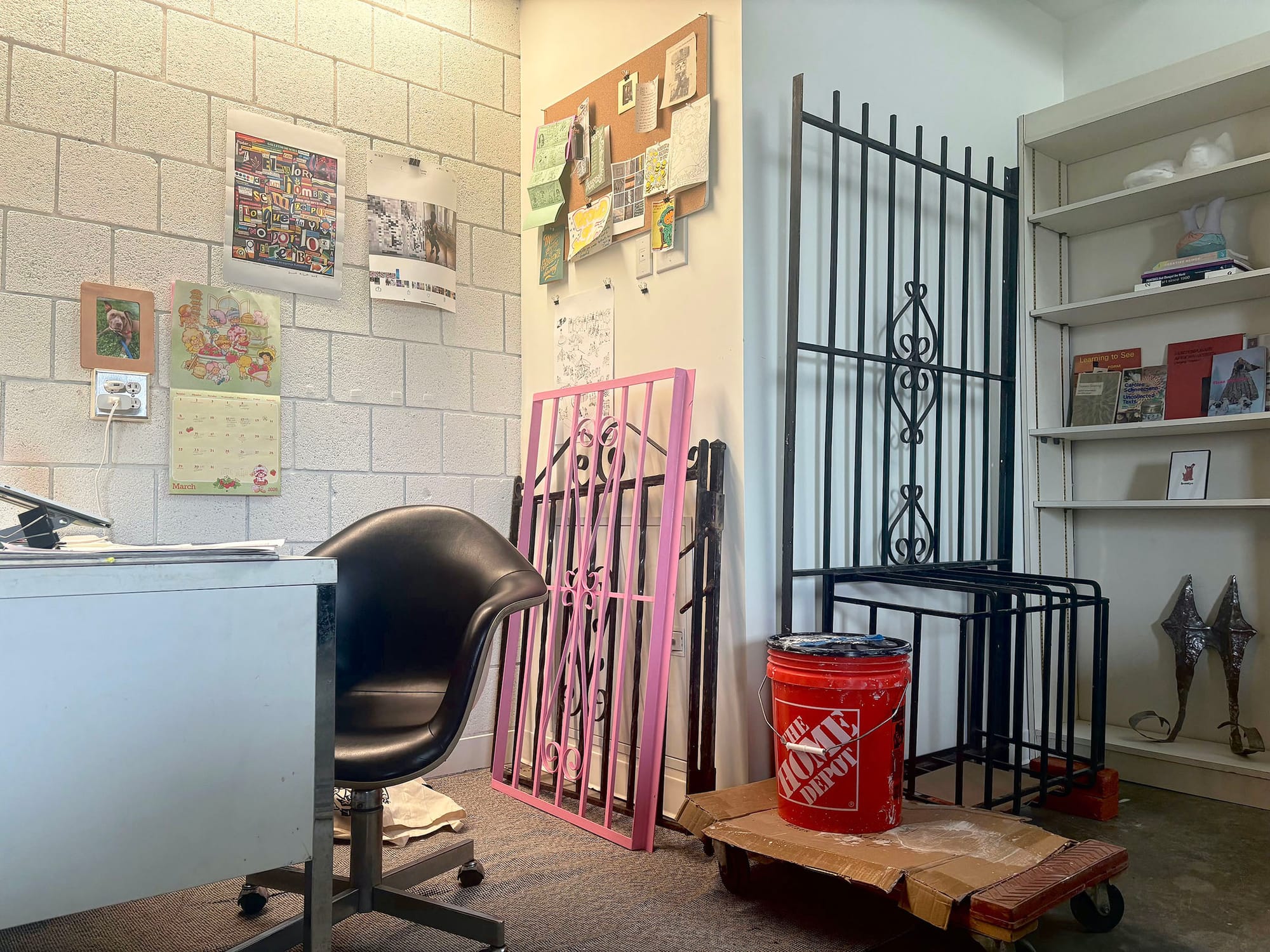
I’ve been making work on and off here since I got this job, in 2023.
Describe an average day in your studio.
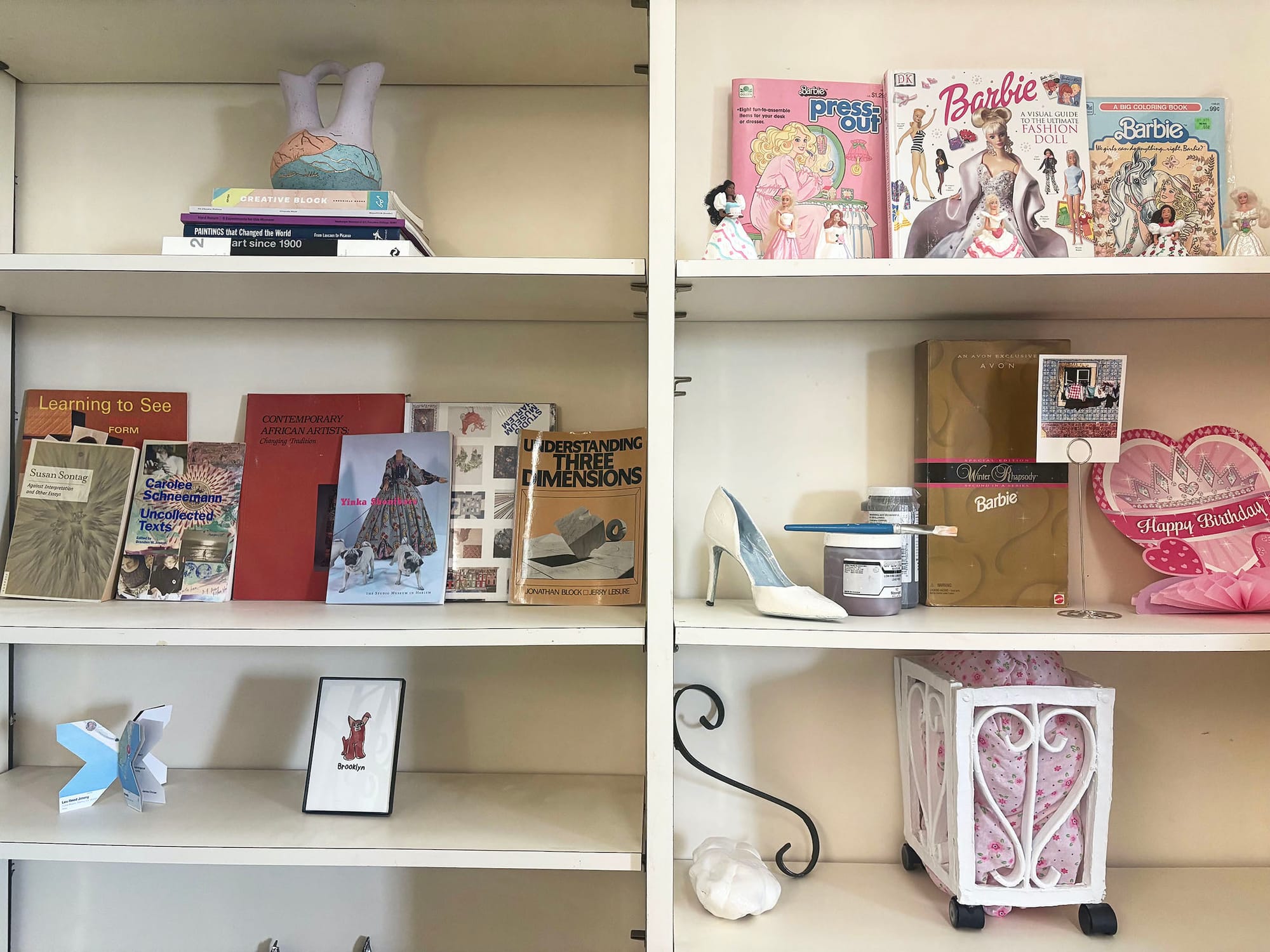
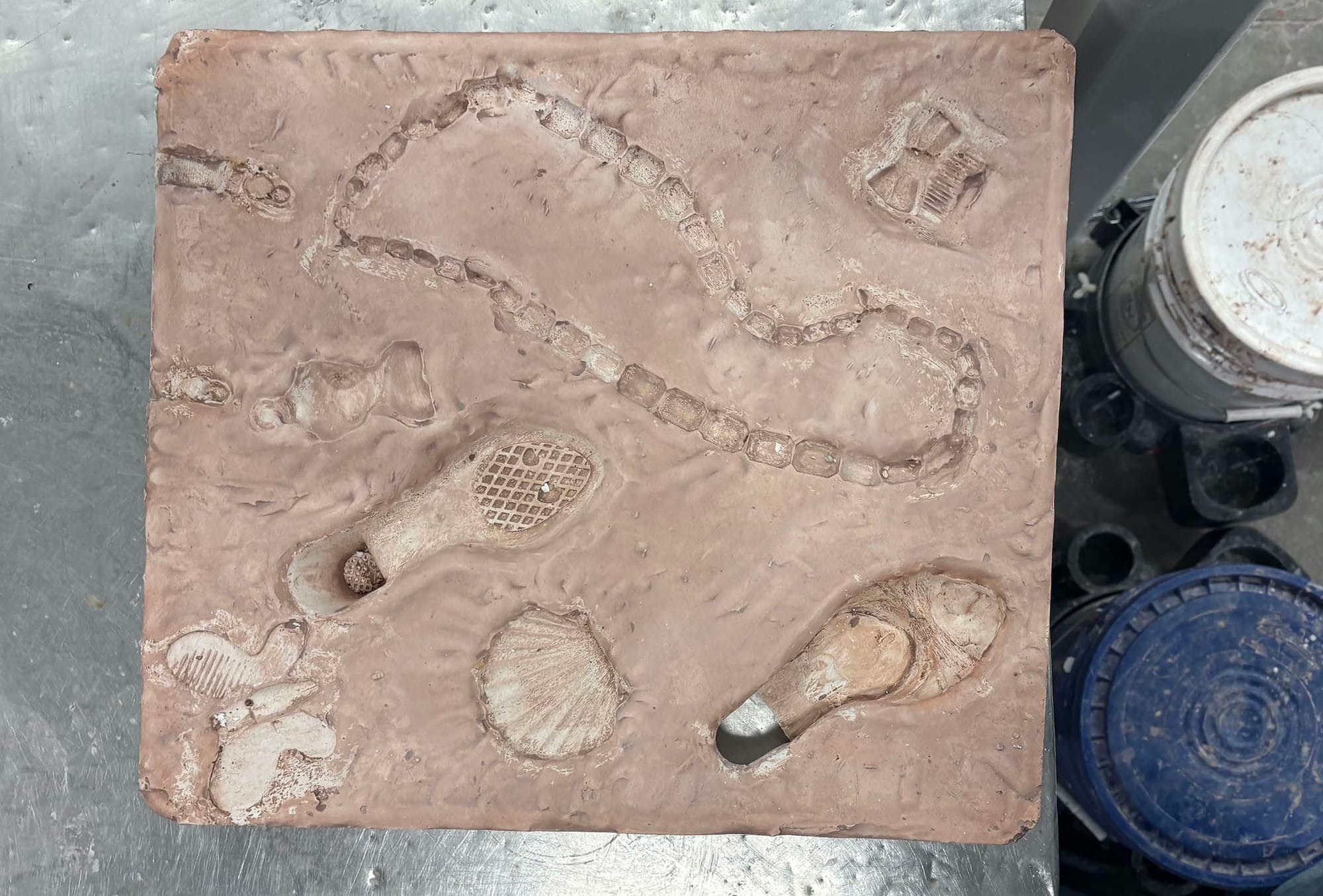
I don’t technically have a traditional “studio” at the moment, so my process is a bit compartmentalized. I now make most of my work at my job at Purchase College. Idea generation and sketching might happen at home or during my commute. And because I have limited time, I plan my work flow well in advance. I will plan to come up to my office on a day there is no classes and get things done there, trying to stay out of anyone’s way. I usually work on one thing at a time, so I will arrive, settle up my plans for the day, then grab any of my materials necessary and work. I store my materials and works in progress in my office. A lot of my work is process-intensive, like mold making and casting, so one day might just be making a bunch of molds, and the next day would be all casting.
How does the space affect your work?
The space makes me more calculated, which can actually be good for me. Since I am working in shared space (like the casting studio or print shop), I need to be able to leave the space super clean when I’m done. When I had my own studio, it was regularly a mess, and although I enjoyed the chaos of that, this is a nice change. I think it makes my work a bit neater and more precise.
How do you interact with the environment outside your studio?
I’m lucky because I’m working in a school, where the students are all amazing artists. And my colleagues are great artists, too. It’s inspiring to hear colleagues discuss projects they’re excited about! And there are always people around that I can ask questions about processes or materials. That sense of community is really essential for me, and it’s something I felt was missing from a more traditional studio set up. I was a printmaker in undergrad, so my first fine arts experience was in a print shop and I’ve never stopped loving a shared workspace.
What do you love about your studio?
I love that it just fits into my life. I know that some people have strict rules about how often they go to the studio and how long they stay there — that doesn’t really work for me. Instead, I’m usually letting ideas simmer and then carving out the necessary time to materialize them. So this really works for me!
What do you wish were different?
Sometimes I wish I had my own space, more like a traditional set up. But the reality is that I’ve had that, and I never felt like I had all the things I wanted in that set up. I didn’t have designated plaster working areas, no presses, no kiln. So I always needed to pay for more and more. I decided to leave that studio to save money and just figure out a way to make work otherwise. So, in theory, I would love to be able to walk to the studio, but I know that it would limit me in other ways.
What is your favorite local museum?
I have to shout out the Neuberger Museum. It’s on campus and it has a great permanent collection. Plus they always have really interesting exhibitions, sometimes in collaboration with folks on campus.
What is your favorite art material to work with?
Plaster. There’s not a lot of plaster in my work, but I make a lot of molds. Getting a mold to work still feels like magic to me!
Linda Jacobson, Venice, California
How long have you been working in this space?
I have been working here for 17 years.
Describe an average day in your studio.
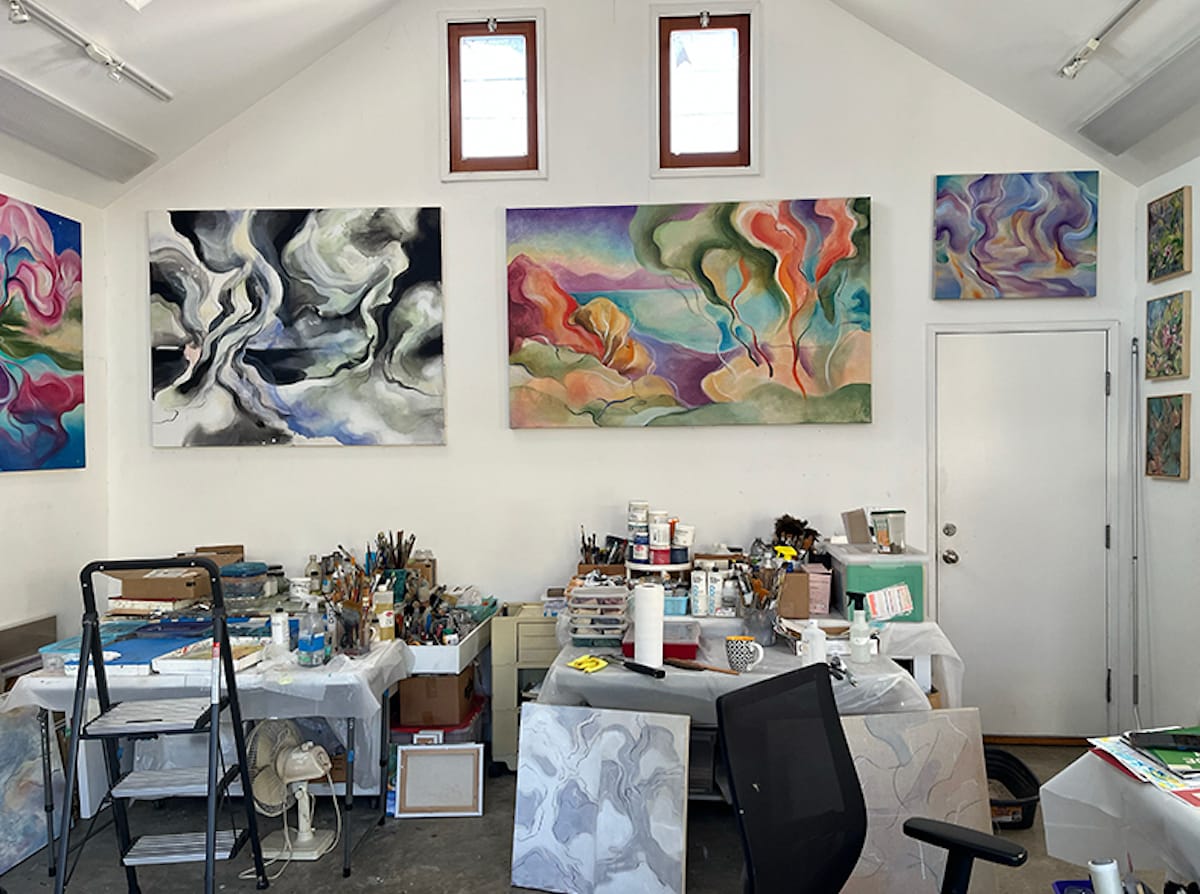
I enjoy working on several pieces at once, though at the moment my focus is on a 60-by-48-inch commissioned painting. I typically begin my studio day after exercising, arriving around 1pm and working until about 8pm in the evening. I start by laying out my paints and spending time quietly looking at the work from the previous day, letting it tell me what it needs next. I don’t usually paint on teaching days — Wednesdays and Saturdays — which gives me a clear rhythm between making and mentoring. While I work, I listen to podcasts or music that fuels different energies: sometimes inspiring ’80s rock, other times meditative sounds like Sheila Chandra or healing sound baths. I like to listen to audiobooks, too.
How does the space affect your work?
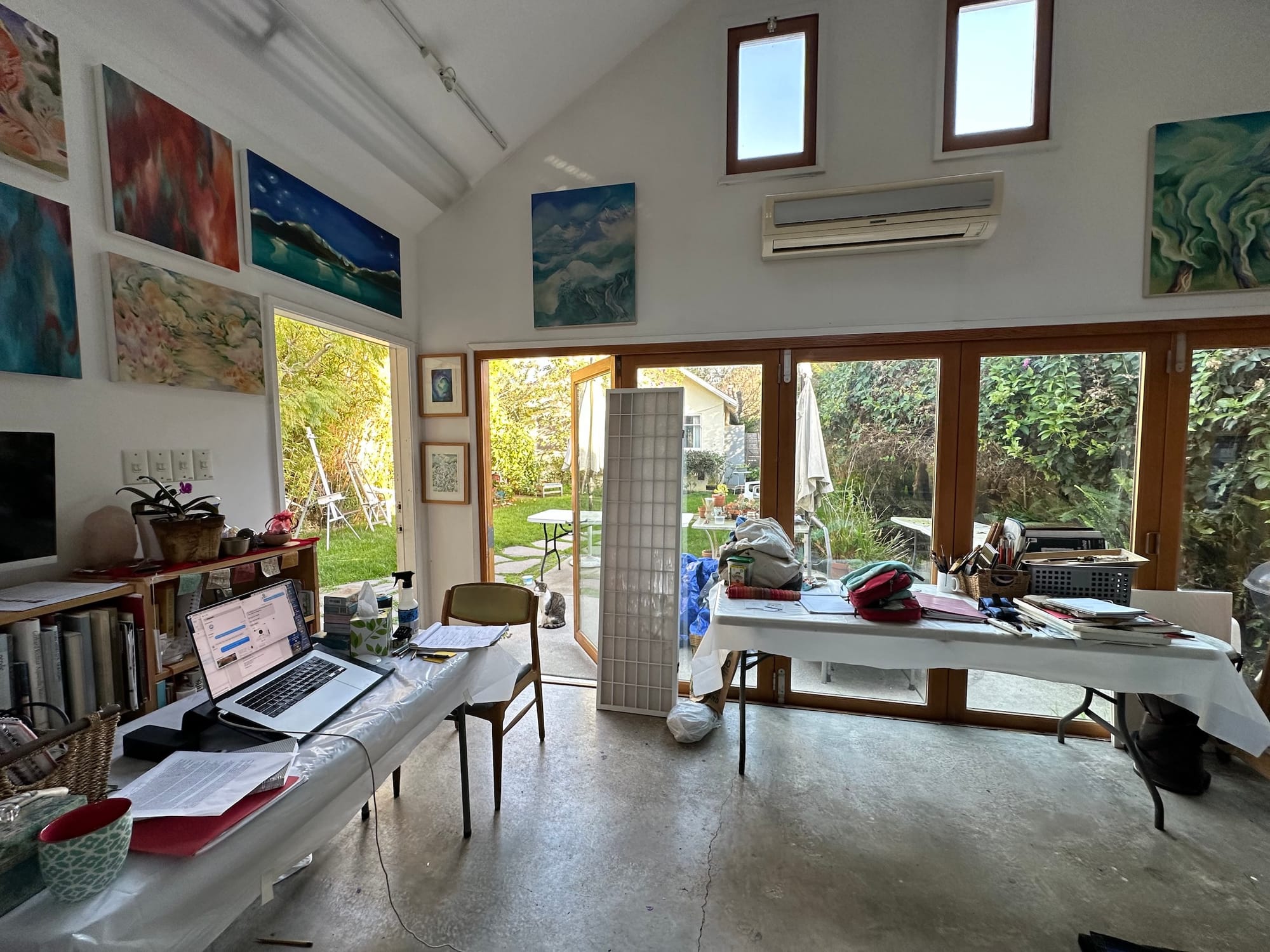
My studio uplifts me deeply. The high ceilings, views of my garden, birdsong, and my two cats lounging outside create a sense of calm and vitality. The light is extraordinary — it pours in through glass doors, skylights, and transforms windows, filling the space throughout the day.
How do you interact with the environment outside your studio?
Just down the block, a group of artists regularly gather at a café, and I join them when I can. Los Angeles has a rich and generous art community, and whether I’m in West Hollywood or downtown, I almost always run into someone I know at galleries. That continuity — built over many years — is one of the great gifts of being part of an art community for so long. Last December, during Venice Open Studios, I had the joy of reconnecting with many nearby artists as well. I also love taking walks in the neighborhood, around a nearby golf course that has a really nice footpath around it that feels like being in the country in the midst of the city. Also love amazing walks on the beach nearby.
What do you love about your studio?
What I love most about my studio is the light, the open glass doors, the connection to nature, airiness, and the sense of openness created by the high ceilings.
What do you wish were different?
If I could change anything, I’d make it larger and add more storage.
What is your favorite local museum?
My favorite museum in the area is the Norton Simon Museum — it’s extraordinary.
What is your favorite art material to work with?
Acrylic on canvas is my primary medium, but I also love integrating drawing materials such as charcoal and pastel into the work.