Chrysler isn’t the first automaker to use the ‘Peanuts’ gang to sell cars
Chrysler is betting that nostalgia and family-friendly charm can move the sales needle in a minivan segment that has steadily shrunk under the weight of crossovers and SUVs. Rather than revisiting its own history, Chrysler is borrowing a cultural icon with nearly universal recognition. The automaker announced Monday that a new national advertising campaign for the Pacifica will feature characters from Charles Schulz’s “Peanuts” comic strip. The first three videos will launch across Chrysler’s YouTube, Instagram, Facebook, and TikTok social media channels and include “The Next Adventure,” “Perfect Pair,” and “Ready, Set, Ride.” The marketing campaign was created in partnership with Austin, Texas-based creative agency GSD&M.
Chrysler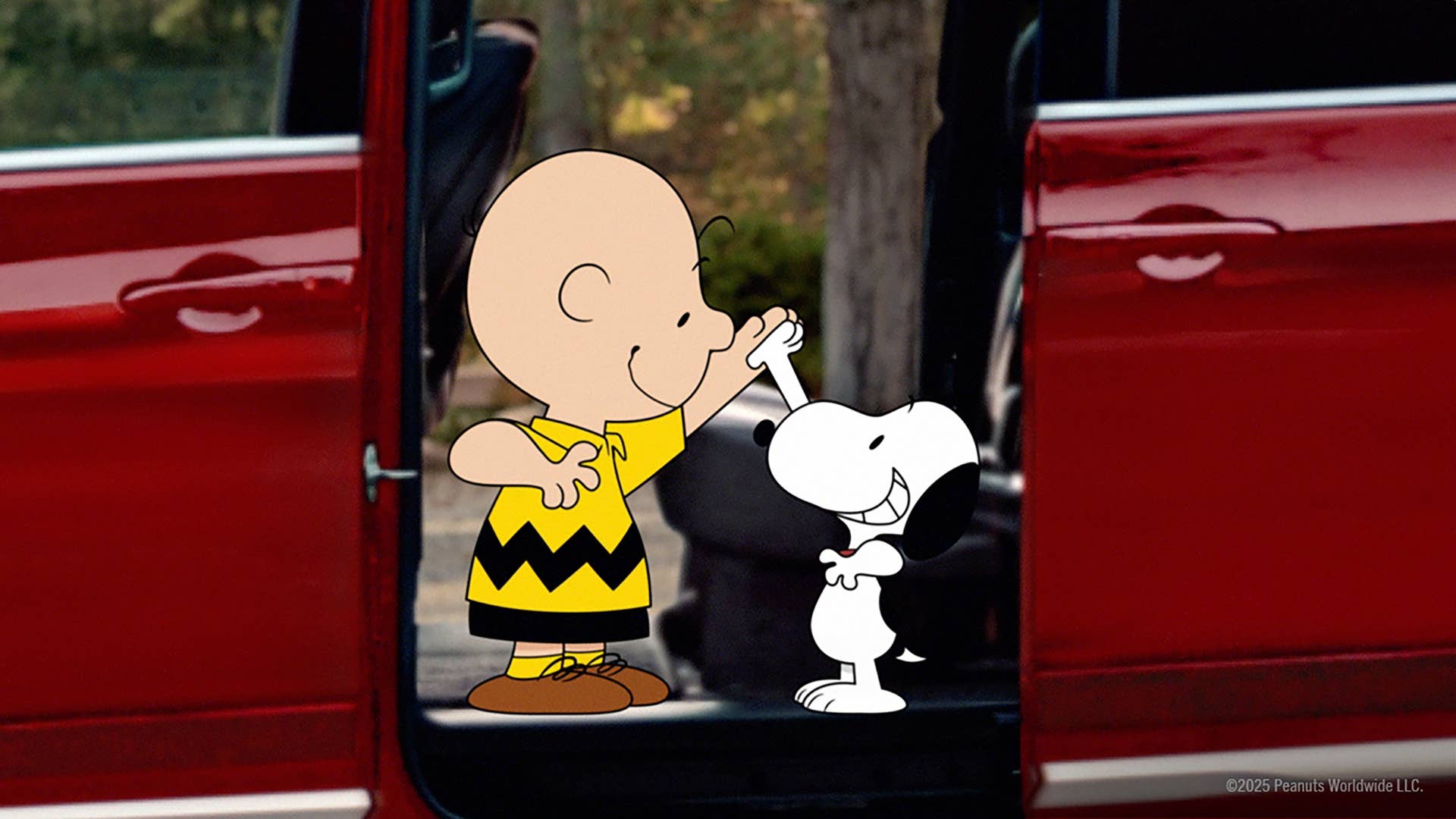
If it seems incongruous, guess again. “Both our Chrysler Pacifica minivan and ‘Peanuts’ are known for bringing families together,” said Olivier Francois, global chief marketing officer at Stellantis. The timing is deliberate, as the ads will undoubtedly run heavily during holiday programming, where Peanuts specials have long played.
A small market segment
The new marketing effort comes at a critical juncture. Minivans, once the darling of American driveways, have seen their market share erode to barely 2.4% of U.S. light vehicle sales through August, according to Automotive News’s new vehicle registration data. By comparison, SUVs and crossovers now account for more than half of all new vehicles sold. Minivan volume remains modest, with a little more than a quarter million sold this year among five brands. That’s down significantly from Chrysler’s heyday in the 1990s, when Chrysler’s minivan sales alone routinely topped 500,000 annually across multiple nameplates.
Chrysler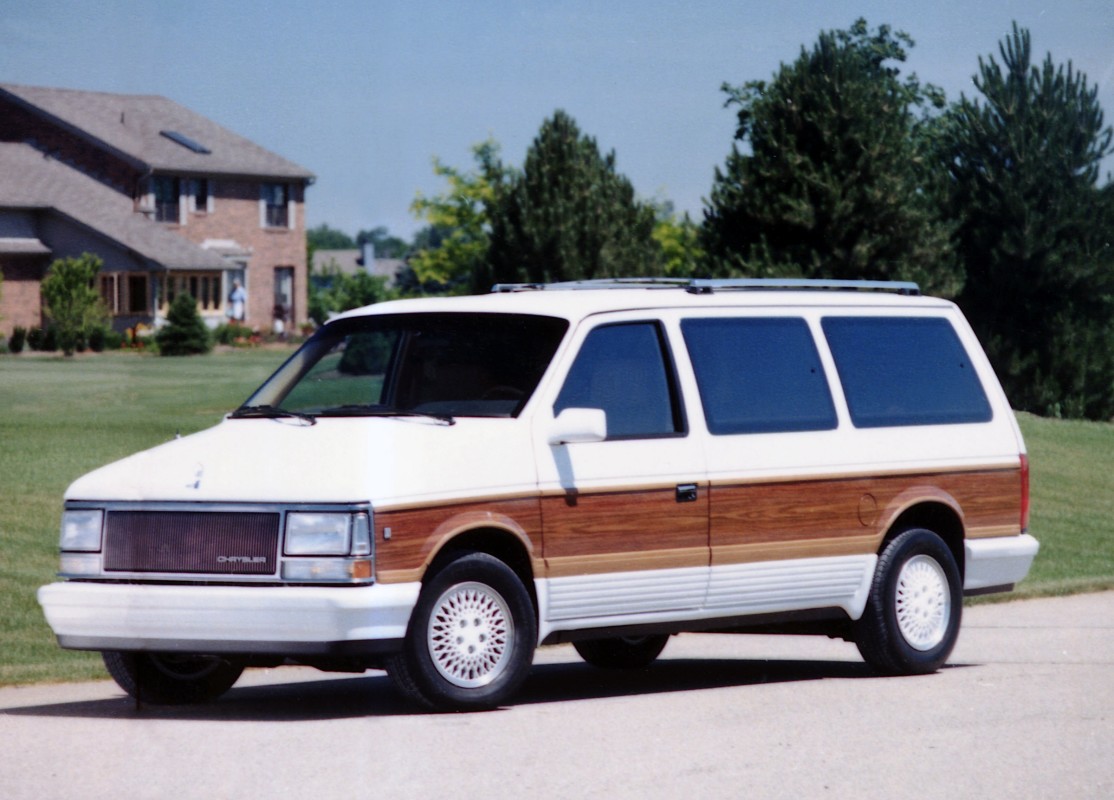
Year-to-date, Chrysler maintains its spot as America’s top purveyor of minivans through August, but its lead is slim. The Chrysler Pacifica accounts for 60,529 units, ahead of the Honda Odyssey at 59,017 units, the Toyota Sienna at 58,400 units, the Kia Carnival at 39,336 units, the Chrysler Voyager at 6,399 units, and the Volkswagen ID.Buzz at 3,219 units. Chrysler, however, faces unique pressures within Stellantis, its parent company. The 300 sedan is no longer produced, and the brand has promised to pivot toward electrification, with a full battery-electric crossover slated for 2026. In the meantime, Pacifica and its detrimmed variant, the Voyager, must carry the brand’s volume and profitability targets.
Not a first for Peanuts
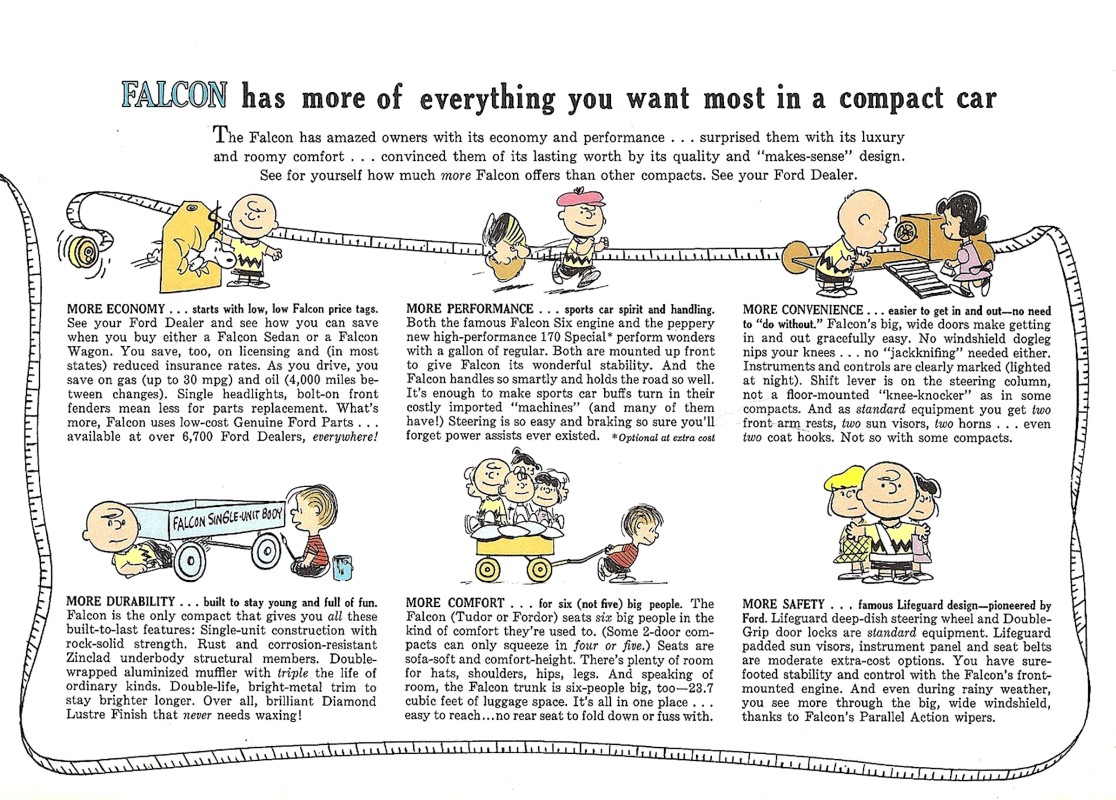
If the idea of using Charlie Brown, Snoopy, and Woodstock to move cars seems a little off-base, it’s not the first time the characters have been used for automotive marketing. As it turns out, Ford Motor Company used the “Peanuts” gang in 1960 after a regional animated cartoon ad for Ford Dealers of Southern California elicited enough of a response that Ford’s national agency, J Walter Thompson, picked it up for use nationwide. It was the work of director Bill Melendez at Playhouse Pictures, who had started his career at United Productions of America, an animated cartoon studio that revolutionized the look of animated cartoons in the early 1950s.
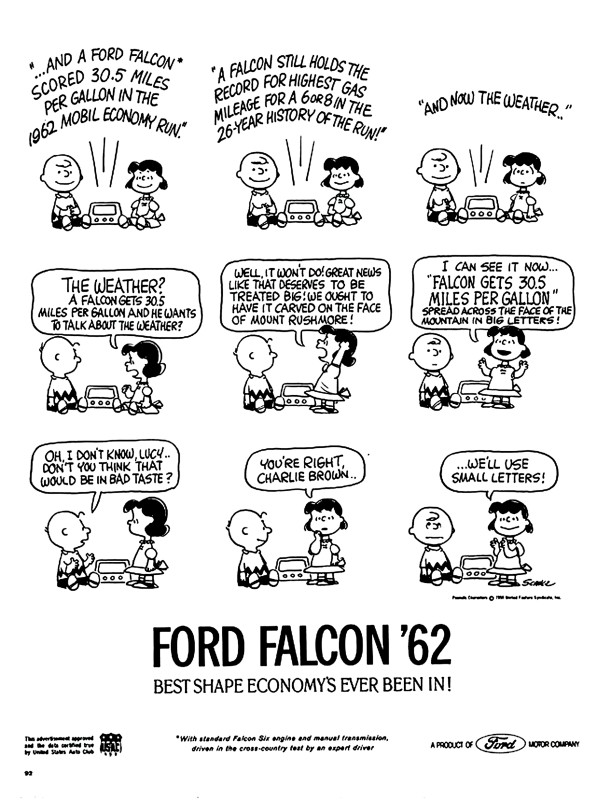
Ford executives wanted to use Charles Schulz’s characters to advertise its new compact car, the 1960 Ford Falcon. Lucky for them that, until then, Schulz had only driven Fords. Schulz insisted that he maintain control of how his characters were used, and an agreement was reached. The first ad appeared on “The Tennessee Ernie Ford Show” and marked the characters’ first appearance on television. The Peanuts TV ads ran through 1964 and led to the first Peanuts TV special, “A Charlie Brown Christmas,” in 1965, also directed by Melendez. The show was a hit and would go on to win an Emmy and a Peabody award, making Peanuts and Schulz household names. His ‘Peanuts’ characters would be used for marketing by Kodak, Dolly Madison snack cakes, MetLife insurance, and many other companies during their 75-year existence.
Final thoughts
For Chrysler, the stakes are unusually high. The Pacifica is more than just another model; it’s a bridge to the brand’s future, buying time until new EVs arrive. If the Peanuts gang can help sustain sales, Chrysler might preserve its place in Stellantis’s sprawling brand lineup. If not, the future of the brand itself could come under renewed scrutiny. For now, Snoopy and Charlie Brown are along for the ride, and Chrysler is hoping that families will want to come along too.