
A new report by Counterpoint Research has dropped, and this one focuses on smartphone OLED display shipments. Global OLED smartphone display shipments are expected to fall nearly 3% YoY (Year-over-Year) in 2026, to 829 million units.
Global OLED smartphone display shipments are expected to fall in 2026
Why? Well, that one is easy to guess… a memory supply crisis and rising production costs. All that weighs on phone demand and production. OLED smartphone revenue is actually said to decline by more than 5% in 2026.
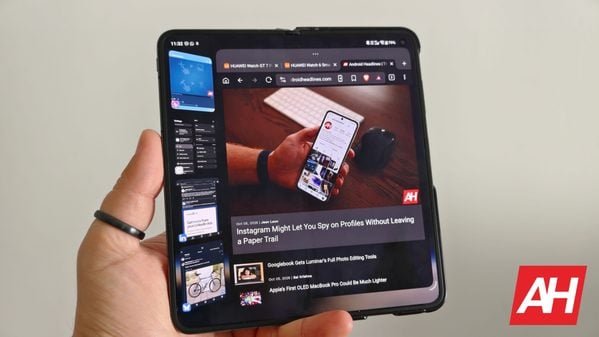
What’s interesting is that foldables are the fastest-growing segment in the whole equation. Foldables/rollable OLED panels are expected to grow more than 23% YoY, says Counterpoint, while rigid OLED panels will drop 24%.
Foldable OLED panels are expected to grow more than 23% YoY
If you take a look at the chart below, you’ll see Counterpoint’s forecast for OLED smartphone panel shipments across rigid, flexible, and foldable/rollable technologies from 2024 through 2028.

Total OLED smartphone panel shipments are projected to decline from 894 million units in 2025 to 829 million units in 2026. Sales are expected to gradually recover to 858 million units by 2028.
Shipments are expected to register a CAGR decline of approximately 1.4% between 2025 and 2028. “Rigid OLED panels are expected to face continued pressure from the transition towards flexible OLED, while foldable/rollable displays are emerging as a promising growth opportunity,” says Counterpoint.
LTPO adoption continues to expand
LTPO adoption, on the other hand, continues to expand across premium smartphones. Its share of flexible OLED smartphone panel shipments is expected to exceed 50% in 2026.
Some new technologies are also coming. At SID 2026, Tianma demonstrated its polarizer-less GCL OLED panel and Multi-Frequency Drive AMOLED technology, offering approximately 15-20% lower power consumption.
BOE, on the other hand, showcased an AMOLED panel with over 20% lower power consumption through improved optical transmittance and voltage optimization. Samsung Display also highlighted its LEAD 2.0 tech, which combines a polarizer-free OLED architecture with Flex Magic Pixel privacy technology, which enhances light efficiency while enabling integrated privacy functionality.
The post OLED Phone Panels Are Getting Squeezed by Memory Costs, but Foldables Keep Growing appeared first on Android Headlines.