Welcome to AI Decoded, Fast Company‘s weekly newsletter that breaks down the most important news in the world of AI. I’m Mark Sullivan, a senior writer at Fast Company, covering emerging tech, AI, and tech policy.
Sign up to receive this newsletter every week via email here. And if you have comments on this issue and/or ideas for future ones, drop me a line at sullivan@fastcompany.com, and follow me on X @thesullivan.
There were 41 ballot initiatives limiting data centers; all but one are on track to pass
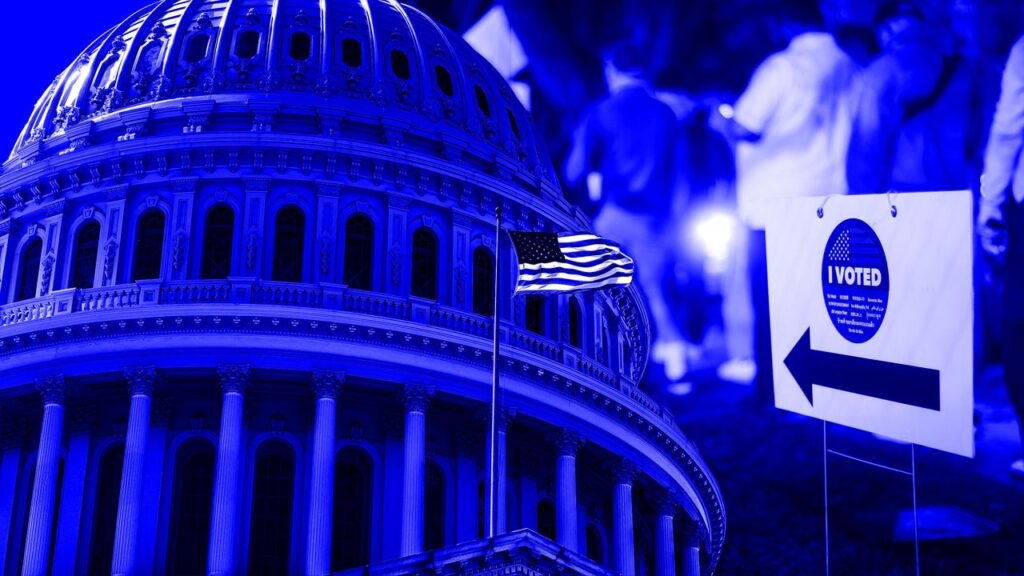
Voters in 10 states weighed in Tuesday on 41 local ballot measures related to data centers, Forbes reported. Ohio led with 21 measures, followed by Illinois with seven, Maine with four, and Kansas with three. Six other states—California, Florida, Nevada, New Jersey, North Dakota, and Wisconsin—had one each. Of the measures with reported results, all but one went against data center development, reflecting widespread opposition to the facilities.
In Ohio, voters overwhelmingly backed restrictions on data centers, including outright bans in several municipalities. More than 80% of voters in Ashville rejected an agreement involving two proposed data centers, though the vote does not itself halt construction. In Kansas, Emporia approved a ban on high-impact data centers, while Ottawa voted to prohibit facilities consuming more than 25 megawatts of power. Boulder City, Nevada, rejected a proposal to permit data centers in the Eldorado Valley Transfer Area. One notable exception came in Harwood, North Dakota, where voters rejected a measure that would have required additional review of certain industrial developments, including data centers.
Democrats say AI hearings and legislation are coming
“Two things will change next term,” Representative Ted Lieu of California, vice chair of the House Democratic Caucus, said at a press conference Wednesday. “We will hold public hearings on AI. We will pass legislation, reasonable guardrails, on AI.” Lieu criticized Republicans for failing to regulate the industry while they controlled Congress and said Democrats would also consider restrictions on new data center construction.
The odds of strong AI legislation “just shot up,” Shakeel Hashim wrote in Transformer. He argues that Democrats’ commanding congressional majorities would reduce the need for compromise. If the party wins 56 Senate seats—it currently has 54, with two races uncalled—it would need just four Republicans to overcome a filibuster. Hashim believes that support could be easier to secure as Republicans begin distancing themselves from Trump. Hashim predicts that Congress could within months pass legislation tougher than the bipartisan FRONTIER Act (cosponsored by Jay Obernolte, Republican of California, and Lori Trahan, Democrat of Massachusetts), including mandatory testing and approval of the most powerful artificial intelligence models and tighter limits on federal preemption of state laws.
Stocks rallied on the blue wave
Trump was supposed to be the president Wall Street and the AI industry wanted. Yet markets rallied on news that he had lost control of Congress. Global stocks initially fell as Tuesday’s midterm results trickled in, then rebounded as the scale of the Democratic sweep became clear, The New York Times reports. The S&P 500 closed 1.6% higher on Wednesday. Asian stocks initially tumbled amid fears that Democratic control of Congress would slow the AI buildout. Taiwan Semiconductor fell 1.5%, while SoftBank dropped 3.2%. But those concerns quickly faded. South Korea’s KOSPI reversed course to close up 0.6%, while European and U.S. stocks rallied. As the Times notes, investors have historically welcomed divided government, and the resolution of election uncertainty can matter more to markets than the outcome itself.
CoreWeave, a bellwether for the AI bubble, saw its bonds hit new lows
CoreWeave’s bonds tumbled Wednesday after Democratic candidates who campaigned on slowing data center construction won governorships, Bloomberg reports. Its unsecured debt due in 2031 traded as low as 79.5 cents on the dollar, among the worst performers in high-yield bonds, with its 2030 and 2032 obligations near distressed levels and yields above 15% (issuers must offer higher yields as confidence that the debt will be repaid erodes). In Texas, Gina Hinojosa ousted Greg Abbott to become the state’s first Democratic governor in more than 30 years after repeatedly calling for an immediate moratorium on data centers. Two governors-elect, Amy Acton in Ohio and Keisha Lance Bottoms in Georgia, also ran on slowing construction.
CoreWeave’s stock was already falling. CoreWeave shares had declined approximately 40% over the preceding month as investors grew concerned about the company’s debt, according to Morningstar data. Its bond yields had reached 15% or higher in October, well before the election. The company reports third-quarter results on November 10. Among the questions facing investors is whether rising bond yields have increased CoreWeave’s cost of borrowing, and whether it is bringing new data center capacity online on schedule.
The last constraint on the AI buildout is political
Ben Thompson, a business and tech analyst, argued in his newsletter Stratechery that the main constraint on building more AI data centers will soon have little to do with physical resources. “First we were short on compute, but that ramped; now we are short on memory, but that will ramp; we were coming close to being short on power, but that will be rectified,” Thompson wrote. “The final constraint is political, and that may be the most imposing constraint of all.”
Thompson refers to the public angst over new data center builds that was clearly expressed in the midterms, and he doesn’t expect that angst to lift anytime soon. “This isn’t a partisan issue, where the pendulum will swing back in two years. Both parties see opposition to data centers as a winning cause,” he says, pointing to local officials recalled for approving projects in their own communities.
A scarcity of compute power could have some unintended, and positive, effects. The fierce competition among frontier AI labs has prevented them from moderating the pace of their research on new models, which, evidence shows, may be outpacing the development of effective safety guardrails. A slowdown might also reduce the terrific amounts of money the labs must spend to reserve computing power in the future, which could improve their overall financial position.
Elon Musk spent $474 million and still lost Texas
Elon Musk poured roughly $474 million into the midterms—nearly twice what he spent helping elect Trump in 2024—and had little to show for it. Of the 106 congressional candidates he backed, 44 lost, including Ken Paxton in Texas. Musk also backed the losing gubernatorial candidates Greg Abbott in Texas and Vivek Ramaswamy in Ohio. Just 18 of his congressional candidates had won as of Wednesday, all in seats Republicans were already expected to hold, while 44 races remained uncalled. Musk spent $212 million backing Paxton alone, only to see him lose to James Talarico, the Democrat, by 12 points.
The defeats could have real consequences for Musk’s business empire. Roughly a fifth of SpaceX’s $18.7 billion in 2025 revenue came from federal agencies, and Democrats will soon chair the congressional committees overseeing some of its biggest government customers. Democrats have discussed investigating DOGE, federal contracts involving SpaceX and Tesla, and Starshield’s role in Ukraine. As the Democratic wins piled up Tuesday night, Representative Robert Garcia of California, the incoming House Oversight Committee chair, tweeted simply “LAWYER UP”.
Meanwhile, in Texas, Hinojosa has proposed a moratorium on new data centers and will gain influence over state incentives and the commission that could decide whether to sell Boca Chica State Park to SpaceX. Investors appeared rattled: SpaceX shares fell 3.8% on Wednesday, while Tesla dropped 3.3%.
The AI industry’s biggest donors mostly lost
Democrats turned frustration with the tech industry into a midterm advantage, Politico reported, and, like Musk, Silicon Valley’s biggest donors have little to show for their GOP campaign donations. Marc Andreessen and Ben Horowitz contributed $116 million, mainly to Republicans. OpenAI’s president, Greg Brockman and his wife, Anna, put $50 million primarily into GOP campaigns.
Candidates ran against data centers and won. Much of Silicon Valley’s donation money went toward electing data center-friendly Republicans in Texas and Ohio, states where new facilities are planned. Hinojosa, in Texas, and Sherrod Brown, Ohio’s senator-elect, both ousted Republicans on voter unease about the facilities. Rebecca Cooke used the same playbook in Wisconsin, as did several Pennsylvania Democrats: Paige Cognetti, Bob Brooks, and Bob Harvie. Manny Rutinel, congressman-elect in Colorado’s 8th, made his record on state AI laws central to his campaign. “Allying with the worst parts of the AI industry is just kryptonite for a campaign, and the results tonight double down on that,” said Alex Bores, the New York state lawmaker who got buried by Big Tech money in a U.S. House primary this spring.
More AI coverage from Fast Company:
- He got a religious exemption from using AI at work. Maybe you can too
- I auditioned 12 AI agents to be my chief of staff. Here’s how they compared
- AI wearables want to remember everything. What happens when we can’t forget?
- Texas wanted to power the AI boom. Its new governor could change that
Want exclusive reporting and trend analysis on technology, business innovation, future of work, and design? Sign up for Fast Company here.