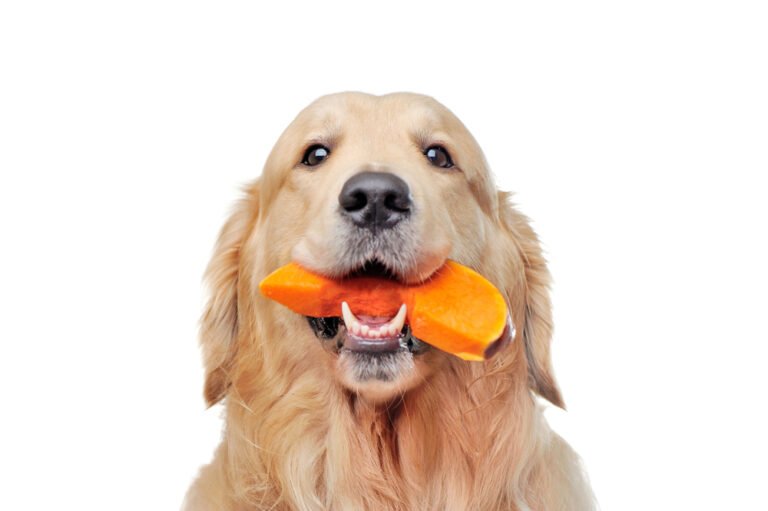
Jesy, Zuza, and Raspapur at the balcony door, waiting to be let in to eat. Shot from inside, through the glass.
Meet three of mine. Jesy is our yellow Lab, Zuza is our brown mixed-breed, and the tabby-and-white cat is Raspapur. I know, it’s an unusual name.
Our balcony leads down to a set of stairs. At about the same time every day, they all turn up at the door, waiting to be let in for something to eat.
That’s how I got all three facing the same way. I took the picture from inside, through the glass door.
The trouble is that a dog and a cat rarely want the same thing at the same time. The dog is watching your pocket for treats while the cat is already dozing by the window. And most cat photography guides are written around a single cat. A second pet gets a passing line at most.
Start With a Dog and Cat Who Already Share a Room
A photo session is a bad time for an introduction. If your two can’t yet lie in the same room calmly, the camera can wait.
We also look after other dogs, strays we found nearby and dogs whose owners could no longer keep them, so we’ve had to introduce new dogs to Raspapur. It takes a few days.
I keep them apart at first. Then I bring the dog in on a leash and let the two get closer slowly, ready to step in before anything can happen.
The San Francisco SPCA puts the main rule plainly: never force either animal into proximity “by holding, caging, or otherwise restricting their desire to escape.” That rules out a few things.
· Holding the cat in your lap.
· A crate or carrier as a prop.
· Any setup where the cat can’t get out. It needs a clear exit, and somewhere high the dog can’t follow.
· A tight leash. International Cat Care says that means the dog is overwhelmed and it’s time to stop.
A dog dozing three feet from a cat that’s ignoring it is the photo you’re after.
Shoot Where They Already Hang Out
Most homes have a spot where the two end up close on their own. Bring the camera there, then pick your moment.
· After the dog’s walk, when lying down is suddenly the whole plan.
· Around midday. Cats are generally most active at dawn and dusk, according to the American Animal Hospital Association, and that’s when the least daylight comes through your windows. A cat that’s sleepy at noon will hold still while you fiddle with the zoom.
· In a patch of sun. Purdue researchers put a cat’s thermoneutral zone, its no-effort comfort range, at roughly 86 to 100°F, while most homes sit closer to 72°F. A cat in a sunbeam tends to stay put.
Indoor cats are easiest to photograph wherever they already settle, like a windowsill or the back of the sofa. Move yourself until the cat faces the window rather than carrying it somewhere nicer. Cats at home “know the places that they like to be,” cat photographer Larry Johnson told Mental Floss, and that’s where to capture them.
Ours is the balcony door, when it’s nearly time to eat.
A Treat for the Dog, Something Quieter for the Cat
A squeaky toy gets many dogs going, since the squeak sounds like caught prey, but it can startle a resting cat. Rattle a treat bag and the dog comes over fast, which might stress the cat.
The ASPCA notes that some dogs might react aggressively when another animal approaches while they’re eating, so never toss treats into the space between them.
Split the job instead. The dog gets a treat held beside the lens. The cat gets something quieter: crinkle a scrap of paper, flick a wand toy just above the phone, or say its name.
A 2019 study in Scientific Reports found cats can tell their own name apart from other words. They may not come, but a glance at the lens is plenty.
You can also try a slow blink. Researchers at the Universities of Sussex and Portsmouth found that cats narrowed their eyes more often after their owners slow-blinked at them. That soft look photographs well.
Keep each try short. AAHA suggests a few short bursts of play rather than one long session, because cats lose interest when it runs long.
Bring a Helper
International Cat Care suggests, where possible, one person supervising each pet during dog and cat introductions, and a photo session is no different. Your helper handles the dog and holds the treat by the lens while you work the wand toy.
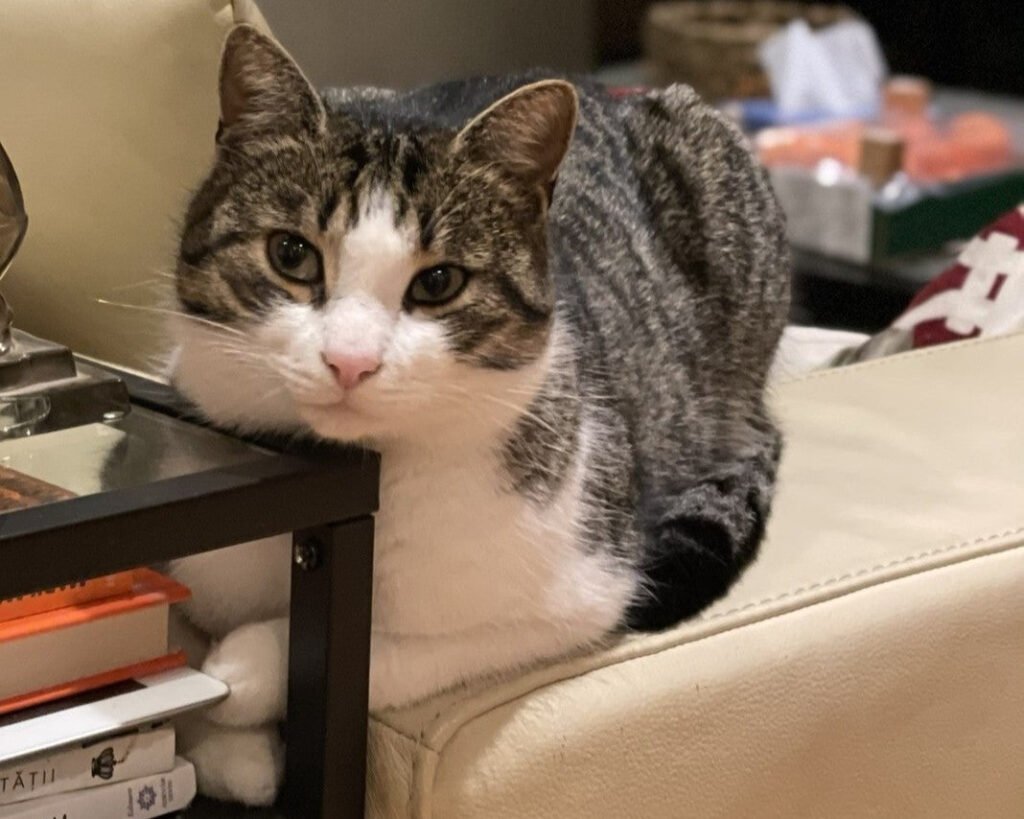
A Lab’s eyes and a cat’s eyes are rarely level. Give the cat a perch near the dog’s head height, like the arm of the sofa, which doubles as its way out.

Raspapur on the sofa, shot at eye level.
Keep the phone down near their eye level. Lens maker Tamron notes that shooting from above a pet tends to make it look small in the frame.
Getting Both in Focus
· Leave Portrait mode off. It keeps one subject sharp and blurs what’s in front of and behind it, so a cat two feet behind the dog can go soft along with the sofa. Supported iPhones can add the effect later in Photos, and it tends to work best when both are about equally far from the lens.
· Move yourself, not them. Shift sideways until they’re about the same distance from you.
· Step back and zoom to 2x or 3x. Up close at 1x, a big dog in front of a small cat turns into a bigger dog and a smaller cat.

Zuza and Reno, our German Shepherd: both the same distance from the lens, with a plain wall behind, so both stay sharp.

Reno, shot too close. Step back and zoom in, and the proportions look natural.
On iPhone, press and hold on one animal’s eyes until AE/AF Lock appears, so a waving wand toy can’t steal the focus. Next to a darker animal, the camera may brighten the scene and wash out a yellow Lab’s coat, so drag the sun icon down a little.
Shoot a burst or a Live Photo, then pick the frame where both look right. Pixel’s Top Shot does much the same.
Through glass, put the lens flat against a clean pane and turn off the lights behind you. A balcony only works if the cat can’t climb or slip out and someone is watching. The ASPCA warns that cats fall from windows and terraces, sometimes after locking onto something like a bird.
Stress Signals in Both Animals
The ASPCA describes an anxious dog as trying to look smaller. It may crouch, lower its head, lick its lips repeatedly, tuck its tail, flatten its ears and yawn. A wag proves nothing, since an aroused dog can wag too.
Around a cat, the SF SPCA counts “out-of-control straining at the leash” as a bad sign, and International Cat Care flags a stiff body and suggests a “look at me” cue so the dog doesn’t stare.
Cats are subtler, so don’t wait for a hiss. In a scared cat, the ears turn sideways or go flat, whiskers press back against the face, and the body sinks with the head pulled in. A tail tucked tight, or thumping the floor while the cat crouches, is the same message.
Often the cat just gets up and leaves. That’s the end of the session, not a cue to fetch it back. If things get tense, don’t grab either animal. Lure one away with a treat or toy, and next time wrap up sooner.
When to Shoot Them Separately
Some pairs won’t share a frame, and cats have never been easy subjects. In 1900, Pearson’s Magazine called them “the most difficult of all living creatures to photograph satisfactorily.”
If yours won’t cooperate, photograph them one at a time. Separate photos still look like a set when you match the light (same window, same time of day), the angle and camera height (each animal’s own eye level), the distance and zoom, and the framing and background.
Photograph the cat first, while it’s still interested. Your dog will probably still be around when the treat bag comes back out.
About the Author
I’m Iulian Doilet, founder of Erica Prints, an online shop that turns pet photos into canvas portraits. I took all the photos in this post. Jesy, Zuza and Raspapur are the three at our balcony door, and Reno is our German Shepherd. We also care for other dogs, some found as strays near home and some handed over by people who could no longer look after them.