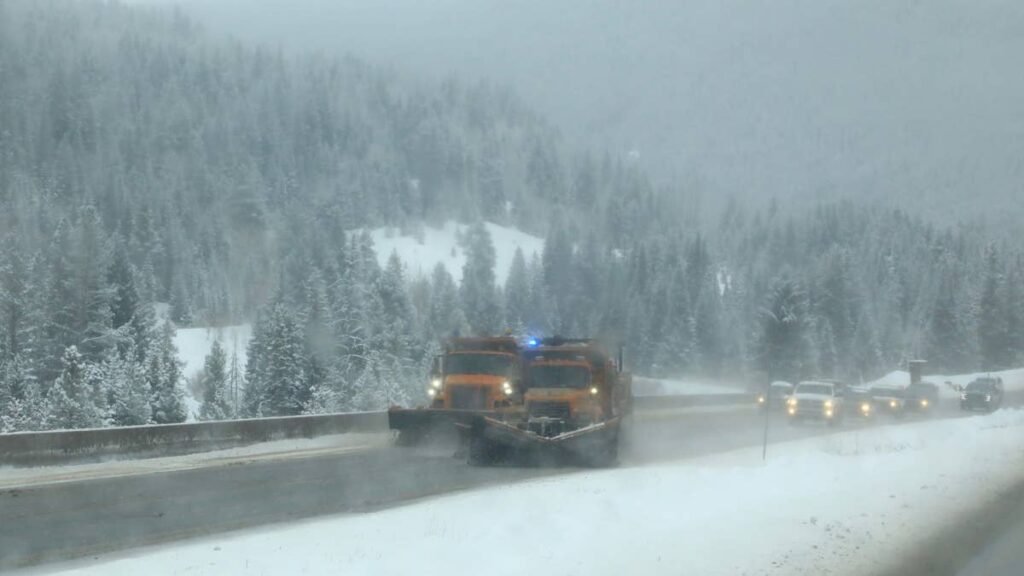
Snow will reach the high country this afternoon, and the National Weather Service expects slick roads on bridges, overpasses and mountain highways into Thursday. Three high mountain routes wlll close by Wednesday evening, and none of them has a reopening time.
Where The Advisories Apply
Two NWS offices have issued winter weather advisories on either side of the Sierra crest, and both apply above 8,000 feet. On the western slope, the NWS Hanford advisory covers Yosemite outside the valley, Kings Canyon and Sequoia national parks, the upper San Joaquin River and the southern end of the upper Sierra from 2 p.m. ET Wednesday to 2 p.m. ET Thursday. It gives Tioga Pass and Highway 120 an 80% chance of 4 inches or more, and puts the odds at 50% to 60% elsewhere above 8,000 feet in Tulare, Madera and Fresno counties.
East of the crest, the NWS Reno advisory covers Mono County from 2 p.m. ET Wednesday to 8 p.m. ET Thursday, with 4 to 8 inches, up to 10 inches on the highest peaks and gusts up to 35 mph. That takes in Lee Vining, Mammoth Lakes, Bridgeport and Coleville, and the office expects both the Wednesday evening and Thursday morning commutes to be affected.
Pass Closures
Caltrans closes Highway 108 over Sonora Pass and Highway 4 over Ebbetts Pass at 11 a.m. ET Wednesday, three hours before either advisory starts. Sonora Pass shuts at Kennedy Meadows eastbound and Brownie Creek westbound, and Ebbetts Pass at Lake Alpine and the Raymond Meadows gate. Both will stay in intermittent closure until maintenance crews reassess them.
Tioga Road, the stretch of Highway 120 through Yosemite, closes at 8 p.m. ET Wednesday. Overnight parking is already not allowed on Tioga Road or in the lots reached from it, according to the park’s conditions page, and the same page notes that Hetch Hetchy Road closes whenever snow is forecast overnight.
Related: The 10 most dangerous cars for winter driving: #1 might surprise you
Chain Controls And What Your Car Needs
Roads that remain open can still come under chain controls once snow accumulates. Caltrans has three levels of restrictions, and R2 is particularly important for crossover drivers. It exempts four-wheel and all-wheel drive vehicles only if they run snow-tread tires on all four wheels, and even then Caltrans requires them to carry traction devices in a chain control area. R3 requires chains or traction devices on every vehicle.
Chains go on the drive wheels, which means checking whether the car is front- or rear-wheel drive before the trip. Whether chains are worth buying depends on how often a driver heads into the mountains, and anyone who does buy them should try them on at home first. Caltrans advises checking that they are the right size for the tires, carrying a flashlight and spare repair links, and fitting them only after pulling completely off the road to the right.
NWS Hanford singles out bridges and overpasses as the surfaces most likely to turn slick, and Caltrans adds shady spots, which can stay icy when the rest of the road is clear.