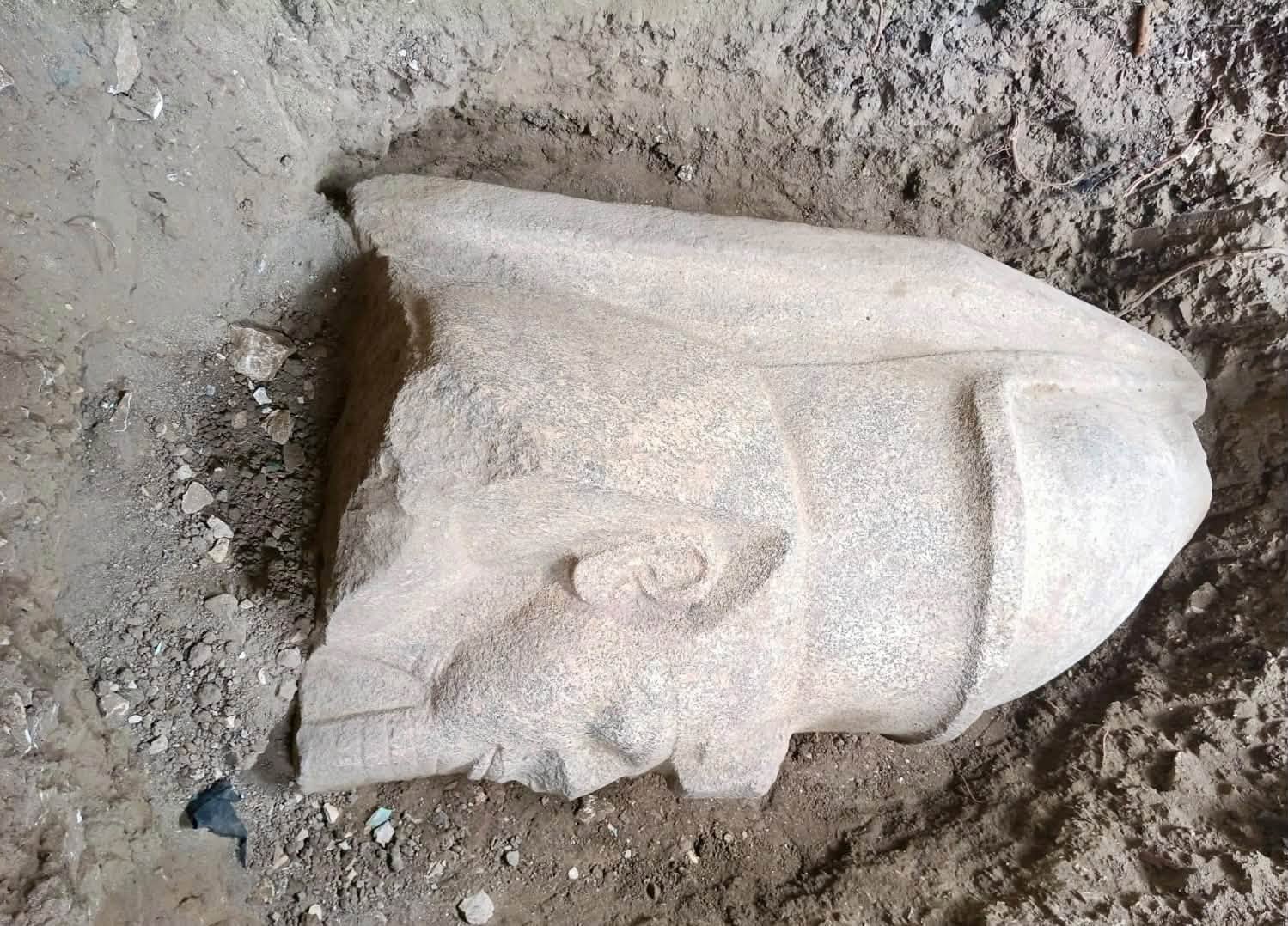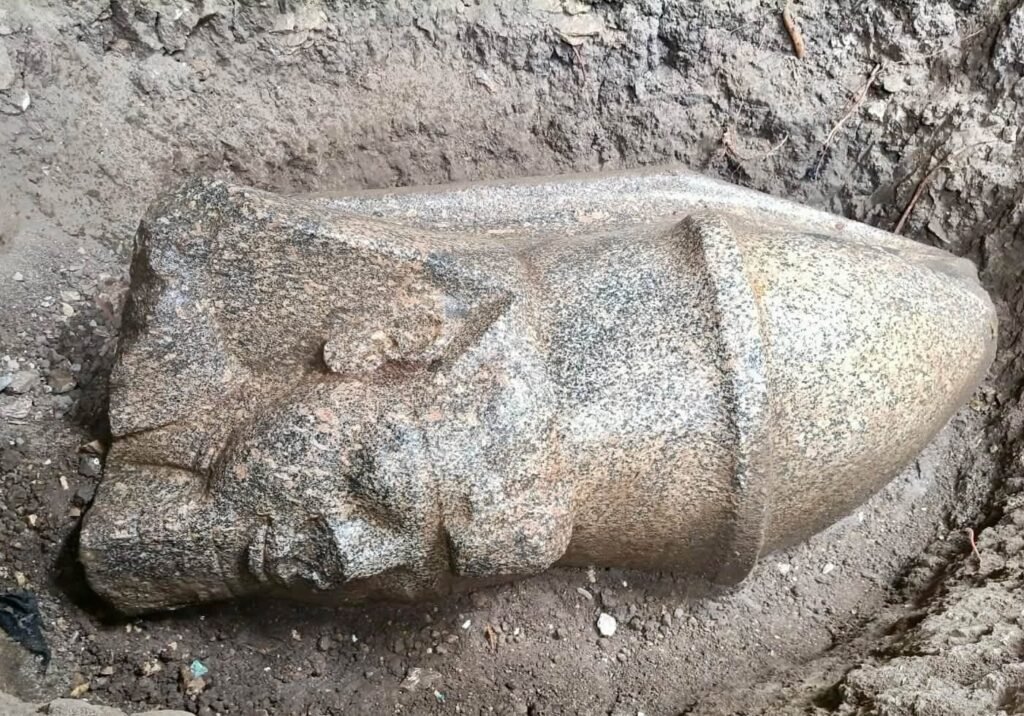
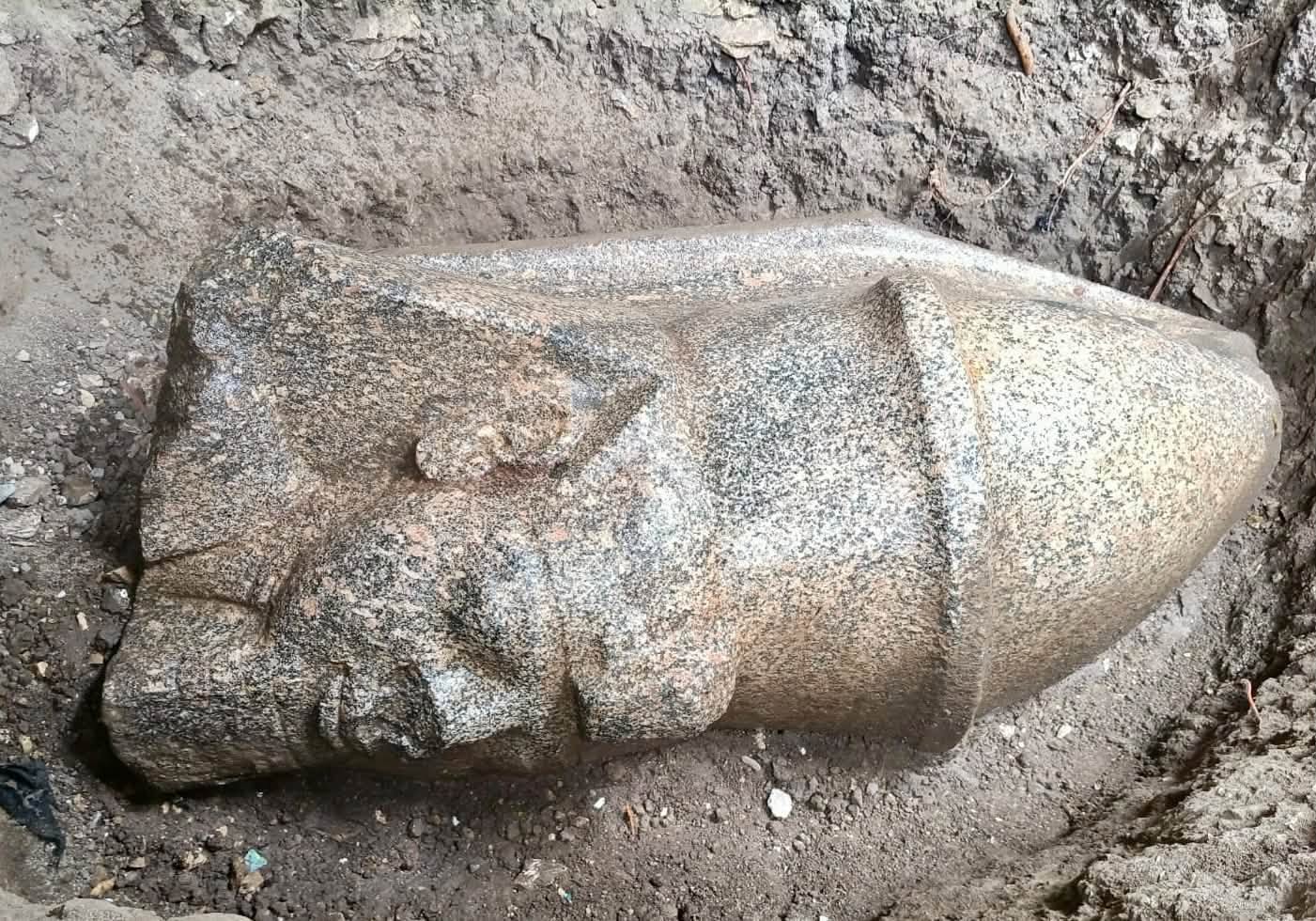
The Egyptian Ministry of Tourism and Antiquities announced the discovery of the remains of two enormous statues depicting King Ramses II in the village of Behbeit Al-Hagar, a known archaeological site in the Nile Delta. The artifacts were uncovered after a citizen notified antiquities authorities about finding a stone with hieroglyphic inscriptions on his property.
Behbeit Al-Hagar is best known for the ruins of the Iseion, an ancient Egyptian temple devoted to the goddess Isis.
Per the Ministry’s press statement, the excavation yielded one carved stone head of Ramses II wearing the double crown that signified the pharaoh’s unified rule over Upper and Lower Egypt. The head is around 5’3″ (1.6m) tall, indicating that the height of the entire statue would likely have exceeded 27 feet (8.5m) — a scale connoting immense artistic significance. Remains of the upper portion of the statue’s back pillar were also found nearby, bearing an inscription of the King’s Horus name: “Hor-Ka-Nakht-Mery-Maat.”