Research & Developments is a blog for brief updates that provide context for the flurry of news regarding law and policy changes that impact science and scientists today.
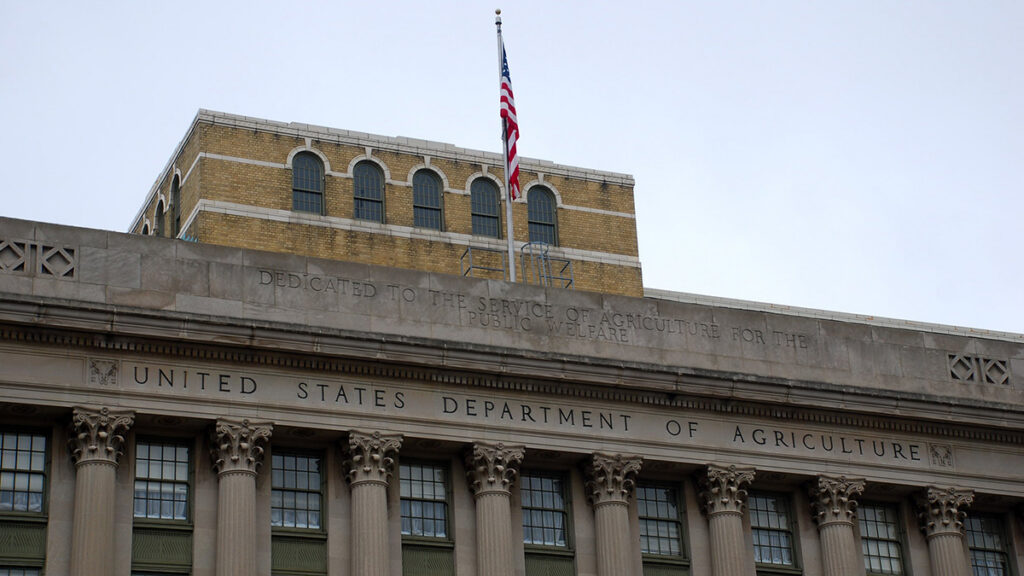
In March, the U.S. Department of Agriculture (USDA) announced a sweeping restructure of the agency, which would involve moving the U.S. Forest Service’s (USFS) headquarters to Salt Lake City, Utah, and closing 23 research facilities as well as all nine USFS regional offices. It followed a July 2025 announcement about relocating thousands of USDA employees from Washington D.C. to offices in North Carolina, Missouri, Indiana, Colorado, and Utah.
While agency secretary Brooke L. Rollins publicly said the restructure did not involve reductions in force (RIFs), the agency’s RIF and Reorganization Plan acknowledged that the approach would cut the workforce by 23%, which led some to call the relocation efforts a “RIF in disguise.”
Yesterday, a judge ruled that the USDA can’t move forward with its efforts, at least until 11 December.
“The administration’s attempt to gut this essential agency is blatantly illegal, and we’re thankful the court has stopped it, for now, from proceeding with a reckless plan that would threaten public benefits like SNAP, endanger public safety by hindering wildfire response, and hurt American farmers at a time working families can least afford it,” Patrick Moran, president of the American Federation of State, County and Municipal Employees (AFSCME) said in a statement.
A lawsuit filed by several defendants, including AGU, AFSCME, and the American Federation of Government Employees, argued that the federal government broke the law in its attempt to close offices, because congressional appropriations funding USDA specify how funds should be used, and the appropriations did not allocate for such a relocation.
“The law deems funds to be reprogrammed if an agency uses them for a purpose not contemplated by Congress at the time the appropriation was made. Congress did not contemplate USDA using its appropriated funds to shut down offices or relocate employees. To the contrary, Congress was actively working to restrict the agency’s ability to do so,” wrote U.S. District Judge Vince Chhabria in his ruling granting the preliminary injunction.
A preliminary injunction essentially asks that the status quo is maintained until a ruling is reached. In this case, it means disallowing major restructuring for the time being.
Judge Chhabria also noted that the USDA efforts “risk disrupting programs on which many Americans depend,” including the Food and Nutrition Administration’s SNAP program and USFS’s role preventing and fighting wildfires.
However, the judge noted that the relief could be relatively short: The applicable appropriations statutes expire in less than two months, which means that the agency could convince Congress to appropriate funds toward initiatives like office closure and employee relocation in the future.
—Emily Gardner (@emfurd.bsky.social), Deputy Editor
These updates are made possible through information from the scientific community. Do you have a story about how changes in law or policy are affecting scientists or research? Send us a tip at eos@agu.org.

Text © 2026. AGU. CC BY-NC-ND 3.0
Except where otherwise noted, images are subject to copyright. Any reuse without express permission from the copyright owner is prohibited.