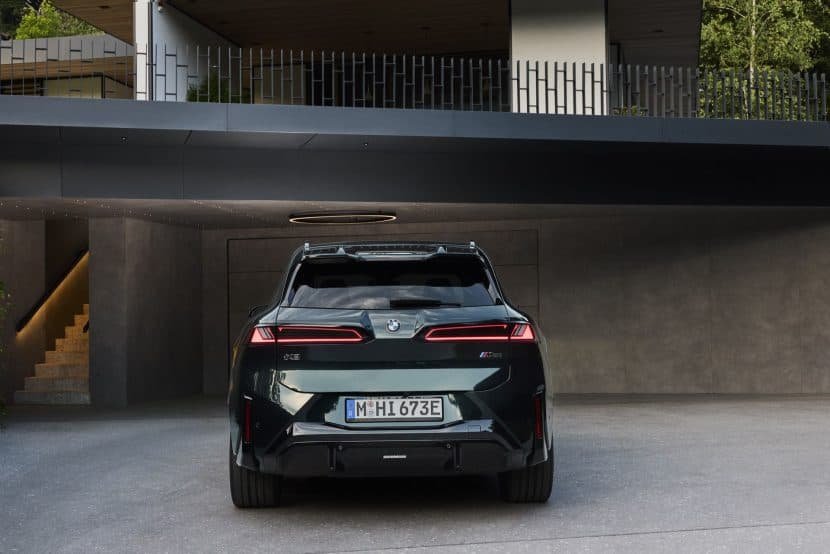
BMW Group’s sales are heading in the wrong direction as a prolonged sharp downturn in China outweighs growth in Europe and the United States. Although the German automaker gained customers in both Western markets in the third quarter, worldwide deliveries still fell as its China business continued to struggle.
The BMW Group delivered 551,072 vehicles between July and September 2026, down 6.3% compared with the same period last year. The biggest problem remains China, where deliveries plunged 24.8% to 114,355 units. That decline proved too steep for the company to overcome, even as two of its most important markets moved in the opposite direction.
Europe provided some relief, with deliveries increasing 2.7% to 235,628 vehicles during the quarter. The United States also grew, with BMW and MINI deliveries up 2.5% to 106,741 units. However, neither market offset the slump in China, underscoring the challenge BMW faces as competition from local automakers intensifies in the world’s largest car market.

BMW Group Sales Are Down So Far This Year
The picture becomes even clearer in the first nine months of 2026. BMW Group delivered 1,707,799 vehicles worldwide through September, down 4.9% year over year. Europe rose 4.5% to 732,279 units, while US deliveries rose 3.4% to 307,402 vehicles.
China, meanwhile, fell 21.8% to 376,128 units over the same period. For the BMW brand alone, the decline reached 21.2% year-to-date in China. The company says its performance reflects the broader automotive market, where domestic manufacturers continue to put pressure on established foreign brands.
BMW isn’t the only German luxury automaker feeling the squeeze. Mercedes, Audi, and Porsche have also reported weaker sales in China, as local brands compete aggressively on pricing, technology, and features. BMW’s upcoming long-wheelbase i3, iX3, and X5/iX5 could help improve its position, but they won’t turn the situation around overnight.
Encouraging news on the electrification front. BMW Group delivered 110,257 fully electric vehicles worldwide in the third quarter, up 7.2% from the same period in 2025. That represents a welcome improvement against the broader decline in deliveries.


Europeans Are Buying EVs In Droves
Europe was particularly strong, with fully electric vehicle sales jumping 37.5% to 81,941 units during the quarter. Fully electric models accounted for 34.7% of the group’s deliveries in the region, meaning roughly one in every three vehicles sold didn’t have a combustion engine. Germany also recorded substantial growth, with electric deliveries rising 38.5%.
The Neue Klasse is expected to play an increasingly important role in BMW’s recovery. The automaker says the new iX3 has already racked up more than 100,000 orders in Europe within a year of its launch. That makes the “NA5” its most successful model launch to date, and BMW has also reported strong customer interest in the new 3 Series/i3 and X5/iX5.
However, the global picture remains mixed. Despite the third-quarter increase, BMW Group’s fully electric deliveries fell 2.7% to 314,552 units in the first nine months of the year. Meanwhile, total electrified deliveries, including plug-in hybrids, fell 5.1% to 446,202 vehicles.
MINI Grows While Rolls-Royce Slips
The group’s individual brands also delivered mixed results. MINI was a notable bright spot, with deliveries increasing 6.8% to 220,247 vehicles through September. Fully electric models accounted for 37.2% of MINI’s year-to-date sales, while John Cooper Works models and the Paul Smith Edition helped support demand.
BMW’s core brand struggled, delivering 1,483,960 vehicles in the first nine months, down 6.4%. The M side of the business also declined 6.1% to 148,510 vehicles, while Rolls-Royce deliveries fell 12.4% to 3,592 units. When it comes to only two wheels, Motorrad followed a similar downward trajectory, with motorcycle and scooter deliveries slipping 6.1% to 149,452 units.
First published by https://www.bmwblog.com